
Lantana plume moth
Platyptilia pusillodactyla
Description
How to identify
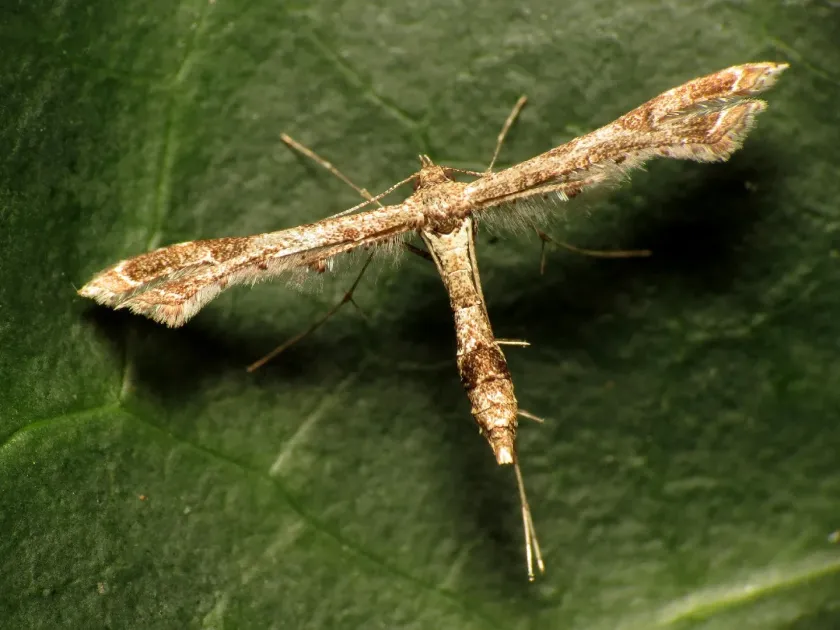
The Lantana plume moth (Platyptilia pusillodactyla) is a member of the Pterophoridae family. It is recognized by its unique wing structure, where the forewings and hindwings are divided into narrow, plume-like lobes, giving the insect a distinct appearance.
The adult moth is small, with a wingspan of approximately 10 to 15 mm. Its coloration is typically brownish-grey or mottled, which provides excellent camouflage against the flower clusters and stems of its host plant.
The larvae are small, cylindrical caterpillars, usually yellow-green to pinkish in color. They are covered in sparse, fine hairs and are highly adept at concealing themselves within the dense floral tissue of the host plant.
The pupae are often found attached to the stems or the undersides of leaves. They are cryptically colored to resemble bits of dried vegetation, a trait that helps them evade detection by both predators and gardeners.
Their life cycle is highly temperature-dependent. In favorable, warm conditions, the moths can complete their entire developmental cycle in less than a month, leading to multiple generations per season.
What it damages
The primary host for this pest is Lantana camara. The moth targets the reproductive parts of the plant, specifically focusing on the flower buds and young developing fruits.
Larvae bore into the floral buds, consuming the internal parts before the flowers have a chance to bloom. This prevents pollination and effectively sterilizes the affected parts of the plant.
Besides buds, the larvae may sometimes feed on the growing tips of new shoots. This feeding habit causes stunted growth, distorted stems, and a reduction in the overall aesthetic quality of the ornamental plant.
Infested flowers often turn brown, wilt, and drop prematurely. Without effective intervention, the cumulative damage can weaken the plant's vigor and significantly reduce the period of successful flowering.
In cases of heavy infestation, the plant can lose its entire reproductive output for the season, which is particularly problematic for nurseries that rely on seed production or high-quality floral displays.
Signs of infestation
The most visible sign of an infestation is the presence of fine silk webbing surrounding the flower clusters. The larvae produce this silk to bind parts of the buds together, creating a protected feeding chamber.
Frass (larval waste) appearing as tiny dark specks around the flower heads is a clear indicator that larvae are actively feeding within the buds.
Malformed or shriveled buds that fail to open are a strong diagnostic feature of plume moth activity. Gardeners should examine these damaged buds closely to find larvae inside.
- Premature browning and abscission of flower clusters.
- Small, circular entrance holes bored into the side of the buds.
- Sudden flight of small, plume-winged moths when the plant foliage is lightly shaken.
If you suspect an infestation, gently opening a deformed bud will usually reveal the small larva, which will likely attempt to drop to the ground or wiggle away when exposed.
Control measures
Sanitation is the first line of defense. Regularly inspect the plants and manually remove or prune off all infested or wilted flower clusters to kill the larvae before they reach maturity.
Chemical control can be achieved using systemic insecticides. Applications should be timed to coincide with the larval stage, ideally targeting the period shortly after egg hatching but before the larvae bore deep into the buds.
Encouraging natural predators, such as spiders, lacewings, and predatory wasps, can help manage the moth population naturally, reducing the need for broad-spectrum chemical interventions.
Biological control methods, specifically formulations containing Bacillus thuringiensis, are highly effective against plume moth larvae while remaining safe for beneficial insects and the surrounding environment.
Maintaining plant health through proper irrigation and balanced nutrition helps the Lantana bush recover from light feeding damage and strengthens its natural defenses against further pest pressure.
Taxonomy
- Latin name
- Platyptilia pusillodactyla
- Order
- Lepidoptera (butterflies)
- Family
- Pterophoridae
- EPPO code
- PLALPU
Discussion
No discussions yet — be the first.