
Brown-horned plume moth
Platyptilia fuscicornis
Description
How to identify
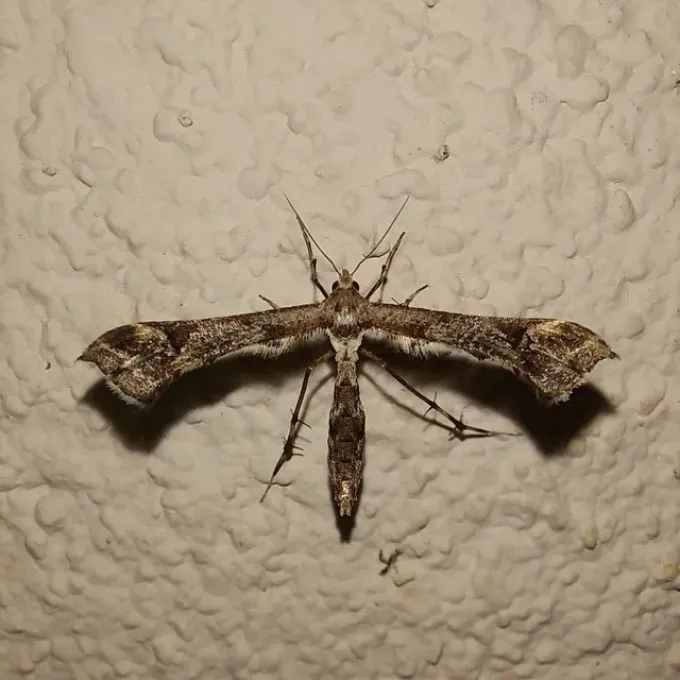
The brown-horned plume moth Platyptilia fuscicornis is a small moth belonging to the Pterophoridae family. Its most distinctive feature is the split wing structure, which gives it a feathered or finger-like appearance at rest.
Adult moths have a wingspan of approximately 18–22 mm. Their color is typically brownish or ochre with darker patterns, serving as camouflage against dry leaves and plant stems.
The life cycle involves complete metamorphosis, consisting of four stages: egg, larva (caterpillar), pupa, and adult. The duration of each stage is highly dependent on ambient temperature and host plant quality.
Larvae are relatively small, covered with sparse hairs, and typically feed in secluded locations like flower buds or tightly folded leaves, making them difficult to detect during early infestations.
Pupation usually occurs on the underside of leaves or along stems. The pupae are often brownish, blending in perfectly with the plant tissue to avoid predation.
What it damages
This pest primarily affects plants within the Brassicaceae family. It is a known threat to commercial crops including cabbage, broccoli, rapeseed, and mustard plants.
Wild cruciferous weeds often host the moth, allowing it to maintain a stable population near fields before migrating to target crops during the growing season.
Caterpillars inflict damage by feeding on the generative organs of the plants. By burrowing into buds and flowers, they prevent seed formation and cause significant yield loss in seed-producing fields.
Additionally, larvae can mine leaves and tunnel into young stems. This feeding behavior stunts plant growth and creates entry points for various bacterial and fungal pathogens.
Severe infestations result in structural deformities of the plants, such as twisted stems and poorly developed flower clusters, which significantly reduce the market value of the produce.
Signs of infestation
A primary indicator of infestation is the presence of small holes in leaves and silken webs spun between buds or leaves to create a protective shelter for the larva.
The appearance of dark frass (insect excrement) on leaves or near the base of flowers is a strong sign that larvae are active and feeding in the immediate vicinity.
Wilting of terminal buds or the cessation of primary shoot growth is often caused by larvae feeding on the apical meristem, leading to stunted or distorted plant development.
Discolored or prematurely yellowing leaves often point to internal damage caused by leaf-mining caterpillars, which disrupt the normal transport of water and nutrients.
Monitoring using pheromone traps or light traps during the dusk period can help identify the onset of adult moth activity, signaling the need for intervention.
Control measures
Integrated pest management starts with sanitation: removing wild cruciferous weeds from field edges helps eliminate early-season habitats for the moth.
Crop rotation remains the most effective cultural practice to disrupt the life cycle of the pest, ensuring that sensitive crops are not planted in or near previously infested fields.
Biological controls, specifically the application of Bacillus thuringiensis, provide an effective solution by targeting younger larval stages while preserving beneficial predator populations.
When chemical intervention is necessary, systemic insecticides should be applied upon the detection of egg-laying or early larval emergence to prevent damage to the flower buds.
Regular field scouting is essential to determine the economic threshold and ensure that applications are timed correctly for maximum efficacy against the pest population.
Taxonomy
- Latin name
- Platyptilia fuscicornis
- Order
- Lepidoptera (butterflies)
- Family
- Pterophoridae
- EPPO code
- PLALFU
Discussion
No discussions yet — be the first.