
Plume moth
Platyptilia albiciliata
Description
How to identify
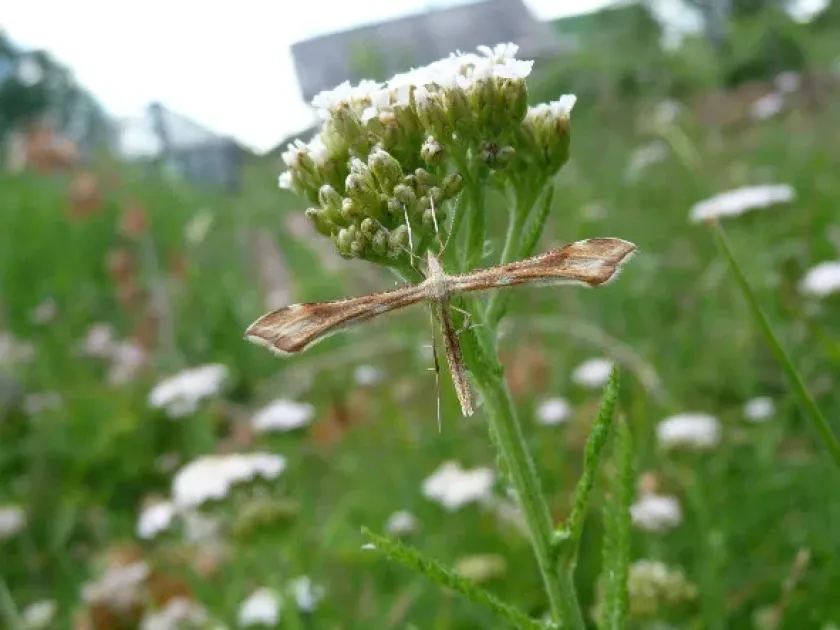
The Plume moth (Platyptilia albiciliata) belongs to the Pterophoridae family, a group of Lepidoptera easily recognized by their unique wing structure. Each wing is divided into thin, feathery plumes or lobes, giving the insect a distinct, fragile appearance.
Adult moths are typically small with a wingspan that matches their natural surroundings, often displaying brownish or grayish tones. This cryptic coloration allows them to hide effectively against stems and dry leaves during daylight hours.
The life cycle follows a complete metamorphosis: egg, larva (caterpillar), pupa, and adult. The caterpillar stage is the most significant in terms of agricultural impact, as these larvae are specialized feeders.
These moths have a relatively elusive behavioral pattern. Adults are mostly nocturnal, making them difficult to track without specific monitoring tools like light traps or pheromone baits.
Proper identification usually requires close inspection of the foliage, as the larvae are known for their habit of concealing themselves within spun leaves or developing flower buds.
What it damages
This pest primarily affects herbaceous perennials, particularly species within the Asteraceae family. The larvae are the main agents of damage, targeting both vegetative and reproductive plant parts.
By boring into flower buds and developing inflorescences, the larvae prevent proper seed formation and significantly reduce the aesthetic and commercial value of the crop.
Injured tissues often suffer from secondary infections, as the feeding sites provide entry points for bacteria and fungi, leading to rot and premature decay.
Besides targeting flowers, caterpillars may consume tender foliage, which reduces the plant's photosynthetic capacity and weakens its overall vigor.
High infestations can lead to total crop failure, especially in ornamental gardens or seed-production fields, making early intervention critical for successful management.
When it appears
Adult activity typically begins in the summer months, coinciding with favorable temperatures for mating and oviposition on suitable host plants.
The emergence of larvae is highly synchronized with the host plant's phenology, specifically the budding and early flowering stages, which provide the essential nutrients for development.
Overwintering usually occurs in the pupal or late larval stage, with the insects seeking refuge in plant debris or just beneath the soil surface for protection against cold weather.
Spring activity restarts as temperatures rise, allowing larvae to begin feeding on fresh vegetation, which is vital for their survival and subsequent growth into the adult stage.
Environmental factors, including photoperiod and moisture levels, play a key role in regulating the number of generations per season, which can vary by geographic location.
Signs of infestation
The most common indicator of an infestation is the presence of silk webbing, which larvae spin to tie leaves together or enclose buds, creating a protective hideout.
Malformed or stunted flower buds that fail to open properly are classic signs of larval boring and internal feeding activities.
The accumulation of frass, which appears as small dark pellets, near the feeding sites or on the leaf surfaces confirms the active presence of the pest.
Wilting of terminal shoots or buds, even when soil moisture is adequate, indicates that the larvae have disrupted the plant's internal vascular system.
Visual observation of the caterpillars themselves, usually found hidden within folded leaves or deep inside buds, provides definitive proof of the infestation source.
Control measures
Cultural control practices, such as the consistent removal of weeds and debris, are essential to minimize overwintering sites and reduce the pest population density.
Tilling the soil in late autumn can effectively destroy many of the pupae resting in the top layer of the ground, disrupting the insect's life cycle before winter.
Chemical control involving systemic or contact insecticides should be applied during the initial larval hatching stage to prevent the insects from entering the buds.
Biological control, including the use of entomopathogenic bacteria like Bacillus thuringiensis, offers an environmentally friendly alternative for managing populations.
- Deploy pheromone-based traps to monitor flight patterns and determine optimal treatment timing.
- Maintain proper crop spacing to improve air circulation and reduce pest hiding spots.
- Implement early detection programs through regular scouting of susceptible plant species.
- Encourage beneficial predators, such as parasitic wasps, to naturally regulate the population levels.
Taxonomy
- Latin name
- Platyptilia albiciliata
- Order
- Lepidoptera (butterflies)
- Family
- Pterophoridae
- EPPO code
- PLALAL
Discussion
No discussions yet — be the first.