
Plume moth
Platyptilia
Description
How to identify
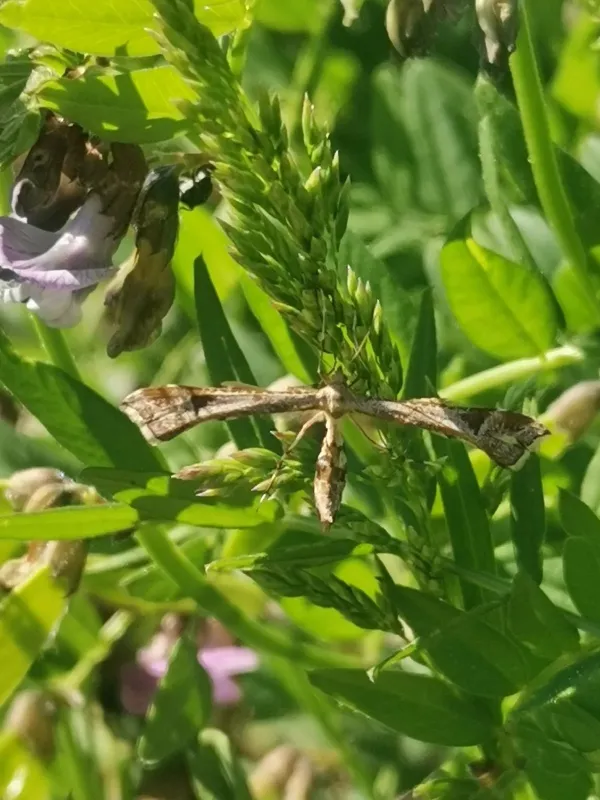
The Plume moth (genus Platyptilia) belongs to the Pterophoridae family of the order Lepidoptera. They are easily recognized by their distinct wing structure, where the wings are divided into narrow, plume-like lobes.
When at rest, these moths fold their wings into a tight, T-shaped posture. Their wingspan usually ranges from 15 to 30 millimeters, and their coloration typically mimics dried plant matter, ranging from pale tan to dark brown.
The larvae, or caterpillars, are often hairy and match the color of their host plant, making them difficult to detect. They possess well-developed mouthparts designed for boring into plant tissues.
Pupation occurs on the host plant, often within a light silken cocoon or inside the hollowed-out parts of the stem. The pupae are often slender and can be green or brownish depending on the substrate.
Biology of the Platyptilia genus is specialized, with most species feeding on specific host plants within the Asteraceae or Lamiaceae families, making them significant pests in specific horticultural sectors.
What it damages
These moths primarily target crops such as artichokes, various medicinal herbs (like mint), and ornamental flowers. They can cause substantial damage to both leaf tissue and reproductive organs.
The larvae are the destructive stage, feeding internally within stems, leaf stalks, and buds. This boring behavior leads to structural damage that disrupts nutrient flow throughout the plant.
When the larvae feed on developing buds, it prevents proper flowering and fruit set. This is particularly devastating for crops grown for their floral parts or seeds.
In addition to direct consumption, the damage creates entry points for secondary infections such as fungal pathogens and bacteria, which can lead to further decay of the plant tissue.
The economic impact is high because the damaged plants are often unmarketable due to malformation, stunted growth, or loss of vitality caused by the tunneling larvae.
When it appears
The flight period of adult moths typically begins in late spring or early summer. They are largely nocturnal or crepuscular, hiding during the day to avoid predators.
Female moths lay eggs on the undersides of leaves or near the growing points of the host plant. The life cycle can complete in a few weeks, allowing for multiple generations per season in warmer climates.
Larval development occurs rapidly during the warmer summer months. During this time, they are highly active in feeding and will shift to new locations on the plant if the food source becomes depleted.
Overwintering occurs in a dormant stage, usually as a pupa or a late-stage larva, hidden in plant debris or the soil, allowing the population to survive harsh winter conditions.
The peak of pest pressure usually aligns with the primary growth phase of the host crop, making early-season monitoring vital for preventing severe outbreaks.
Signs of infestation
A classic sign of infestation is the presence of webbed leaves or buds. Caterpillars often pull nearby leaves together with silk to create a protected micro-environment.
The presence of frass (larval excrement) near small entry holes in the stem or at the base of buds is a clear indicator that a larva is currently feeding inside.
Wilting of the terminal shoot or the failure of buds to open are reliable signs of internal damage. Affected buds often turn brown or shriveled long before they would naturally bloom.
Stunting or twisted growth of stems is common, caused by the larva tunneling through the vascular tissue, which interferes with the plant’s growth hormones and transport system.
A careful inspection of the undersides of leaves or the inside of curled foliage during the day may reveal the presence of the larvae or their silk-covered retreats.
Control measures
Sanitation is a primary defense; removing and destroying crop residues after harvest significantly reduces the number of overwintering pupae and larvae in the field.
Implementing a rigorous crop rotation strategy helps break the lifecycle of host-specific populations, preventing the moth from establishing a permanent residency in a particular area.
Biological control using Bacillus thuringiensis (Bt) products is effective against young larvae before they penetrate too deeply into the plant tissues.
Systemic insecticides are often employed when infestation levels exceed economic thresholds, as they ensure the active ingredient reaches the hidden larvae inside the stems.
- Use pheromone traps to monitor adult flight and time insecticide applications precisely.
- Control weeds that act as alternative hosts for the moth in surrounding areas.
- Encourage beneficial insects, such as parasitic wasps, to suppress larval populations naturally.
Taxonomy
- Latin name
- Platyptilia
- Order
- Lepidoptera (butterflies)
- Family
- Pterophoridae
- EPPO code
- PLALSP
Discussion
No discussions yet — be the first.