
Oak gall wasp
Plagiotrochus quercusilicis
Description
How to identify
The oak gall wasp (Plagiotrochus quercusilicis) is a small hymenopteran insect belonging to the family Cynipidae. It is recognized for its specialized life cycle involving the induction of galls on oak host plants.
Adult wasps are tiny and often elusive, spending most of their adult lives in a relatively short window focused on reproduction. Their identification is typically facilitated by the specific types of galls they induce on their host.
This species exhibits a complex biological cycle, with different generations developing on different parts of the tree or having varying morphological characteristics.
The insect is host-specific, primarily targeting certain species within the Quercus genus. This host preference is a critical factor for field identification and monitoring efforts.
Entomologists classify these wasps based on the structural characteristics of the galls they create, which are essentially the plant's response to the wasp's chemical cues.
What it damages
The primary damage caused by Plagiotrochus quercusilicis involves the development of galls on various parts of the host oak tree, including leaves and young shoots.
As the larvae feed within the plant tissue, they stimulate abnormal cell growth, which diverts nutrients away from the plant's normal growth and development processes.
Severe infestations can lead to significant foliage deformity and reduced photosynthetic efficiency, as the plant's resources are channeled into gall development.
On young or stressed trees, heavy gall loads can result in stunted growth, reduced vigor, and increased susceptibility to secondary infections by pathogens.
While mature trees can often tolerate moderate infestations, chronic exposure to the gall wasp can weaken their overall health over multiple growing seasons.
Signs of infestation
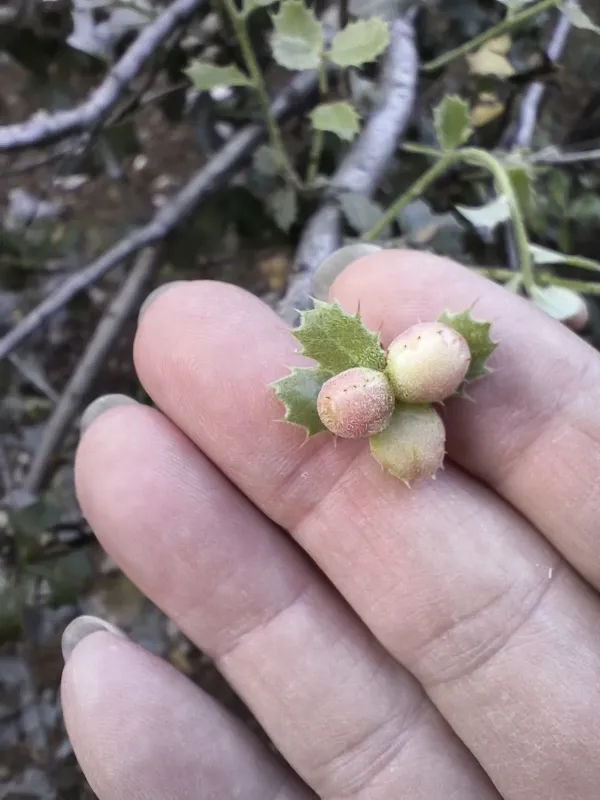
The most distinctive signs of infestation are the galls themselves, which appear as swellings or abnormal growths on leaves and branches of the oak tree.
These galls vary in size, color, and texture depending on the developmental stage of the wasp and the specific host tissue involved in the process.
Leaf distortion is frequently observed, as galls may cause the leaf tissue to twist or curl, often becoming more apparent as the season progresses.
Small exit holes on the surface of the galls indicate that the adult wasps have emerged, signifying the completion of that specific generation's life cycle.
Early leaf drop or branch dieback in heavily infested areas of the canopy are also clear indicators of significant pest pressure within the tree.
Control measures
Sanitation is a primary management tool: pruning and destroying infested twigs before the adult wasps emerge can help significantly reduce the local population.
Promoting tree health through adequate irrigation and proper soil management is essential, as vigorous trees are better able to tolerate and recover from pest damage.
Biological control, such as conserving or introducing natural parasitoids that target the gall wasp larvae, is an environmentally sustainable approach for long-term management.
Chemical control with systemic insecticides may be used on high-value ornamental trees, though it should be timed carefully to coincide with the emergence period of adults.
Regular inspections throughout the spring and early summer allow for early detection, making it easier to manage the population before it reaches outbreak levels.
Taxonomy
- Latin name
- Plagiotrochus quercusilicis
- Order
- Hymenoptera
- Family
- Cynipidae
- EPPO code
- PLATQI
Discussion
No discussions yet — be the first.