
Andricus gall wasp
Andricus
Description
How to identify
Andricus is a genus of gall wasps within the Cynipidae family of the order Hymenoptera. These are tiny, often cryptic insects measuring only a few millimeters in length.
Adult females use a specialized ovipositor to insert eggs into oak tissues, which triggers the plant to develop complex structures known as galls around the developing larvae.
The larvae are legless, white, and C-shaped, perfectly adapted to live and feed within the nutrient-rich interior of the gall tissue created by the host plant.
Each gall acts as a fortress, providing the wasp larva with both protection from predators and a concentrated, high-quality food source during its development.
Identifying the specific species of Andricus is primarily based on the morphology of the galls they produce, as adult wasps are rarely observed in the field.
What it damages
Andricus wasps are almost exclusively associated with oak trees (Quercus). They can infest various plant parts, including buds, leaves, petioles, and young stems.
The primary damage is the formation of galls, which are abnormal growths that draw significant amounts of energy and nutrients away from the tree's normal growth processes.
Heavy infestations can cause significant stress to the host tree, leading to leaf deformation, premature senescence, and reduced photosynthetic capacity throughout the summer.
In ornamental nurseries, the presence of these conspicuous growths significantly reduces the market value and aesthetic appeal of oak saplings and young trees.
While usually not fatal to mature trees, chronic infestation by massive populations can contribute to branch dieback and overall tree decline over time.
When it appears
The lifecycle of Andricus is closely synchronized with the phenology of oak trees. Oviposition typically occurs in early spring when buds are breaking or leaves are expanding.
The galls develop throughout the spring and summer months, during which time the larvae complete their development and transition into the pupal stage.
Many Andricus species exhibit heterogony, a life cycle involving the alternation of sexual and asexual generations, often with different host plant tissues involved.
Adult wasps emerge from the galls in late summer or autumn, depending on the species, to start the next phase of their reproductive cycle.
Environmental conditions such as temperature and humidity play a critical role in determining the speed of larval development and the timing of adult emergence.
Signs of infestation
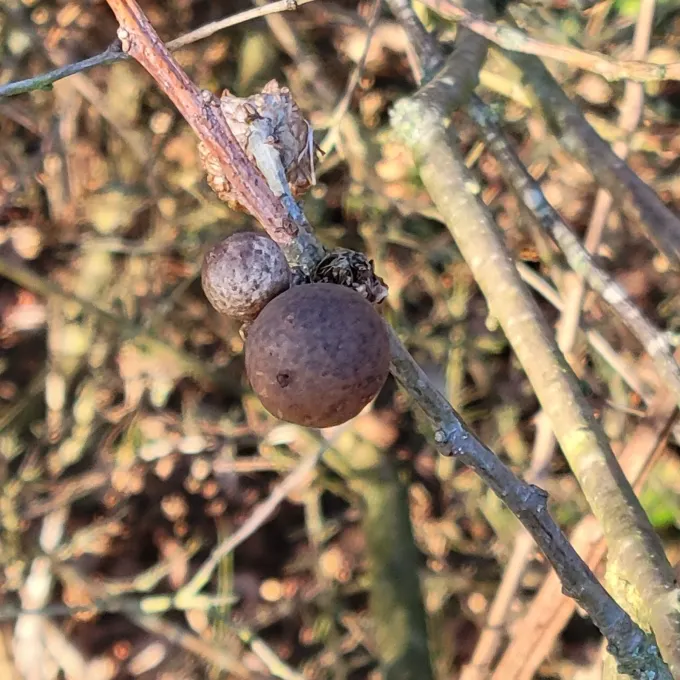
The most distinctive sign of an Andricus infestation is the presence of galls, often referred to as "oak apples" or simply insect galls, on leaves, twigs, or buds.
Galls vary significantly in shape and appearance, ranging from smooth, round spheres to complex, spine-covered, or hair-covered structures depending on the wasp species.
Cross-sectioning a fresh gall usually reveals one or more chambers containing white larvae or pupae nestled within the internal plant tissue.
Visible circular exit holes on the surface of the gall indicate that the adult wasp has already completed its development and successfully emerged.
Yellowing, curling, or early leaf drop in specific areas of the canopy often alerts arborists and gardeners to a potential gall wasp infestation.
Control measures
Management of Andricus in forestry settings is generally not considered necessary, as trees usually tolerate moderate gall formation without significant long-term harm.
In nurseries or high-value landscapes, sanitation is the most effective manual control, involving the collection and destruction of galls before adult wasps emerge.
Encouraging natural predators, such as parasitoid wasps that specialize in controlling gall wasp populations, is essential for long-term ecological balance.
Chemical control is largely ineffective, as the larvae are shielded inside the thick, woody, or fleshy walls of the gall, protecting them from contact pesticides.
- Prune and dispose of heavily infested twigs where feasible.
- Maintain tree vigor through proper watering and soil nutrition.
- Use physical barriers or nets on small, valuable specimens if required.
Taxonomy
- Latin name
- Andricus
- Order
- Hymenoptera
- Family
- Cynipidae
- EPPO code
- ANDISP
Discussion
No discussions yet — be the first.