
Chinquapin gall wasp
Andricus chinquapin
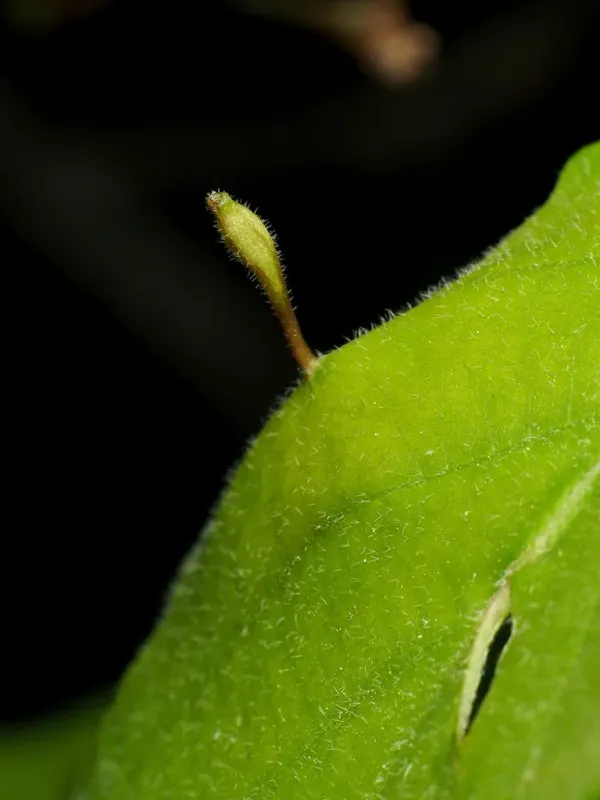
Description
How to identify
The chinquapin gall wasp (Andricus chinquapin) is a member of the family Cynipidae within the order Hymenoptera. These tiny wasps are primarily known for their complex relationship with oak trees, leading to the formation of galls.
The adult insect is very small, often barely visible to the naked eye. Its reproductive strategy involves injecting eggs into plant tissues, which triggers the tree to create a protective, nutrient-rich growth known as a gall.
The galls produced by this species have a distinct, often woody, nut-like appearance. These structures are the primary diagnostic feature used by agronomists to identify the presence of the pest.
Systematically, this species is highly host-specific, having evolved to thrive on specific oak species. They rely on the host plant's physiological response to initiate their development.
Identifying the wasp itself is rare; instead, the focus remains on observing the specific morphology and placement of the galls on the host tree.
What it damages
The chinquapin gall wasp targets oak trees (Quercus), particularly those within the chinquapin group. Damage is centered on leaves, buds, and young, tender twigs.
The development of the gall diverts significant metabolic resources from the tree's growth processes to the nourishment of the developing wasp larvae inside the gall.
While a single gall rarely kills a mature tree, high-density infestations can cause significant stress, leading to stunted shoot growth and reduced photosynthetic capacity in leaves.
The physical damage caused by the galls can create entry points for opportunistic fungal pathogens and secondary wood-boring insects.
In nursery settings, heavy infestations can compromise the commercial value and structural integrity of young oak trees, impacting growth rates significantly.
When it appears
The life cycle of the chinquapin gall wasp is tightly synchronized with the phenology of the oak tree. Activity typically commences in early spring during bud burst.
This period is critical as the female wasps lay their eggs into the newly developing tissues of leaves and buds, setting the stage for gall formation.
The larval stage resides and feeds within the gall throughout the summer months, utilizing the protected environment to complete its growth cycle.
As summer draws to a close, the cycle often concludes with the emergence of the new generation of adult wasps from the hardened galls.
Environmental factors such as temperature and humidity significantly influence the timing and speed of larval development, with seasonal variations dictating the intensity of the outbreak.
Signs of infestation
The most prominent sign of infestation is the appearance of distinct, rounded, nut-like galls on leaves or young branches. Initially, these may be green or light-colored.
As the larvae mature, the galls harden and turn brown or woody. These structures remain on the plant or branch long after the insect has emerged.
Exit holes found on the surface of these galls are clear indicators that the wasp has completed its developmental stage and has vacated the structure.
Deformed shoots or localized yellowing of the foliage adjacent to the gall site are classic signs that the tree's health is being impacted by the larvae.
In the autumn, as leaves fall, the presence of these woody galls on the remaining twigs allows for an accurate assessment of the previous season's infestation levels.
Control measures
Managing the chinquapin gall wasp is challenging because the larvae are sequestered within the galls, effectively shielding them from most contact pesticides.
Sanitation is the most reliable control method. Pruning and destroying infected branches before the emergence of adult wasps is crucial for reducing the population.
Systemic insecticides may provide some protection if applied precisely at the time of oviposition, although this requires exact timing based on local phenological observations.
Encouraging general tree health through proper irrigation, fertilization, and site maintenance helps trees better withstand the stress caused by gall wasp populations.
- Inspect young oak saplings frequently during early spring.
- Remove and incinerate galls to break the reproductive cycle.
- Maintain clean surroundings under the trees to reduce overwintering sites.
- Promote biodiversity to encourage natural predators of gall wasps.
Taxonomy
- Latin name
- Andricus chinquapin
- Order
- Hymenoptera
- Family
- Cynipidae
- EPPO code
- ANDICH
Discussion
No discussions yet — be the first.