
Horned oak gall wasp
Andricus corniger
Description
How to identify
The horned oak gall wasp is a tiny insect belonging to the family Cynipidae, known for inducing abnormal plant growths called galls.
The adult insect is a very small wasp that is rarely noticed by the casual observer due to its size and nocturnal habits.
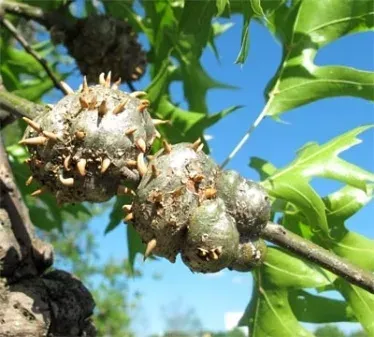
The species is primarily identified by the distinct, horn-shaped woody galls that protrude from the branches of infested oak trees.
The insect's biological cycle is complex, often alternating between generations with different life forms and reproductive patterns.
Development is tightly linked to the tree's physiological status, ensuring the wasp can derive nutrients from the host throughout its development.
What it damages
The primary hosts of this species are various oak tree species, particularly those within the white oak group.
The wasp induces the tree to form galls, which act as sinks for nutrients, diverting energy away from normal tree growth and development.
Heavy infestations can cause structural damage to branches, leading to dieback and making the tree susceptible to other stressors.
Gall formation disrupts the vascular tissues of the branches, which can lead to reduced nutrient transport throughout the canopy.
In ornamental landscaping, the presence of numerous woody galls significantly degrades the aesthetic value and health of mature oaks.
When it appears
Adult wasps typically emerge in the spring, coinciding with the period when oak buds are opening and new shoots are forming.
Females lay eggs into the developing plant tissues, where the larval feeding triggers the gall initiation process.
Galls begin to grow rapidly in late spring and summer, eventually hardening and turning brown as the larvae mature inside.
The insects spend the winter within the woody structures, which serve as protective chambers against cold temperatures.
The emergence of the next generation of adults happens in the following spring, completing the cycle and starting a new infestation.
Signs of infestation
The most diagnostic sign is the appearance of woody, horn-like projections emerging from the bark of oak twigs and small branches.
These galls are often clustered together, leading to significant deformation of the affected branch sections.
Small, pin-sized exit holes on the surface of the galls indicate that the adult wasps have emerged from their protective structures.
Dieback of individual twigs or branches is commonly associated with heavy gall wasp pressure in the canopy.
Overall thinning of the foliage on infested branches is another indicator that the tree's health is being impacted by the larvae.
Control measures
The most effective cultural management practice is the physical pruning and destruction of infested branches before the wasps emerge in spring.
Proper disposal of infested plant material is crucial, as burning or composting helps kill the larvae inside the galls.
Maintaining tree vigor through proper irrigation and mulching helps the oak tree tolerate infestations by providing optimal nutrient reserves.
Chemical control is generally not recommended for large forest trees, but systemic insecticides may be used on small, high-value nursery stock.
- Regular monitoring and removal of affected twigs
- Encouraging natural predators such as parasitic wasps
- Implementing integrated pest management practices
Taxonomy
- Latin name
- Andricus corniger
- Order
- Hymenoptera
- Family
- Cynipidae
- EPPO code
- ANDICN
Discussion
No discussions yet — be the first.