
Andricus collaris
Andricus collaris
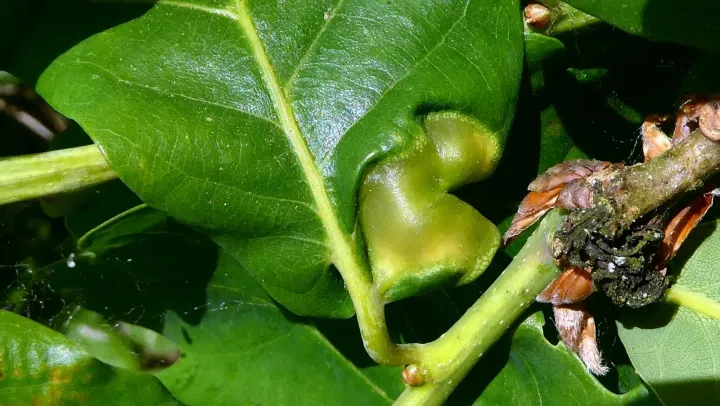
Description
How to identify
Andricus collaris is a species of gall wasp belonging to the family Cynipidae. These tiny hymenopteran insects are best known for the complex, often spherical galls they induce on oak trees.
The adult insect is very small and typically goes unnoticed by casual observers. The identification of the pest usually relies on the specific morphology of the galls it produces rather than the presence of the adult wasp itself.
The name "collaris" refers to the distinctive collar-like structure at the base of the gall. This physical trait is a key identification feature for arborists and foresters assessing tree health.
The wasp's lifecycle is complex and often involves alternation of generations, where different broods produce slightly different types of galls or utilize different plant parts.
To identify this pest, one must inspect the underside of leaves and petioles of oak trees. Finding these unique "collared" growths is a definitive sign of an Andricus collaris infestation.
What it damages
This pest primarily attacks various species of oak, causing damage to foliage and petioles. The formation of galls is an induced pathological process that diverts the tree's energy reserves.
Heavy infestations lead to a decline in the tree's overall vigor. The energy lost to gall production could have been used for tree growth, structural development, or defense against other pathogens.
Increased leaf drop during the summer is a common consequence of high gall density. This reduces the photosynthetic capacity of the oak tree, leading to weaker growth in subsequent seasons.
The gall sites often create entry points for secondary infections. Fungi and bacteria can invade the weakened tissues, potentially leading to more severe systemic health issues for the host tree.
In forest nurseries, high levels of infestation can significantly stunt the growth of young saplings, rendering them unsuitable for sale or healthy plantation establishment.
When it appears
The activity begins in the spring when adult wasps emerge and deposit eggs into developing buds or leaves. This timing is critical, as it coincides with the flush of new growth.
During the summer months, the larvae develop within the protective enclosure of the gall. The gall continues to grow as the larva feeds on the nutrient-rich inner tissues.
As autumn approaches, the adult wasps emerge from the galls to mate and seek overwintering sites. Empty galls are often left on the fallen leaves.
The overwintering phase often takes place within the fallen leaf litter or in protected crevices, ensuring the survival of the population until the next spring season.
Consistent monitoring during the spring and early summer is essential to catch the infestation early before the population reaches damaging levels.
Signs of infestation
The primary symptom is the presence of small, solid, spherical galls with a characteristic collar near the base. These are typically found on the underside of leaves or on leaf stalks.
If you section a gall, you will typically find a single larva inside a central chamber. The external appearance of the gall remains largely intact until the adult wasp emerges.
Small, neat exit holes on the surface of the galls indicate that the adult wasp has already emerged. This signifies the completion of that specific generation's life cycle.
Heavily infested trees show yellowing and premature leaf fall. The loss of foliage can create a thin canopy appearance, especially during late summer.
- Collared spherical galls on leaves and petioles.
- Premature yellowing and drop of oak leaves.
- Small exit holes on existing gall growths.
- Deformed growth of tender spring shoots.
Control measures
The most effective cultural control is the thorough cleanup and removal of leaf litter in the autumn. By removing the fallen leaves, you remove the primary overwintering habitat of the pest.
In ornamental or nursery settings, sanitary pruning of affected branches can reduce local populations. This should be done before the adult wasps emerge from the galls.
Systemic insecticides may be used in professional settings if applied early in the spring as buds begin to burst, targeting the adult wasps before they successfully lay eggs.
Promoting a healthy environment for natural predators, such as parasitic wasps and birds, helps maintain a natural equilibrium and suppresses gall wasp numbers.
Focusing on tree health through proper fertilization and irrigation helps the host tree tolerate light infestations without significant loss of vitality or aesthetic value.
Taxonomy
- Latin name
- Andricus collaris
- Order
- Hymenoptera
- Family
- Cynipidae
- EPPO code
- ANDICL
Discussion
No discussions yet — be the first.