
European green woodpecker
Picus viridis
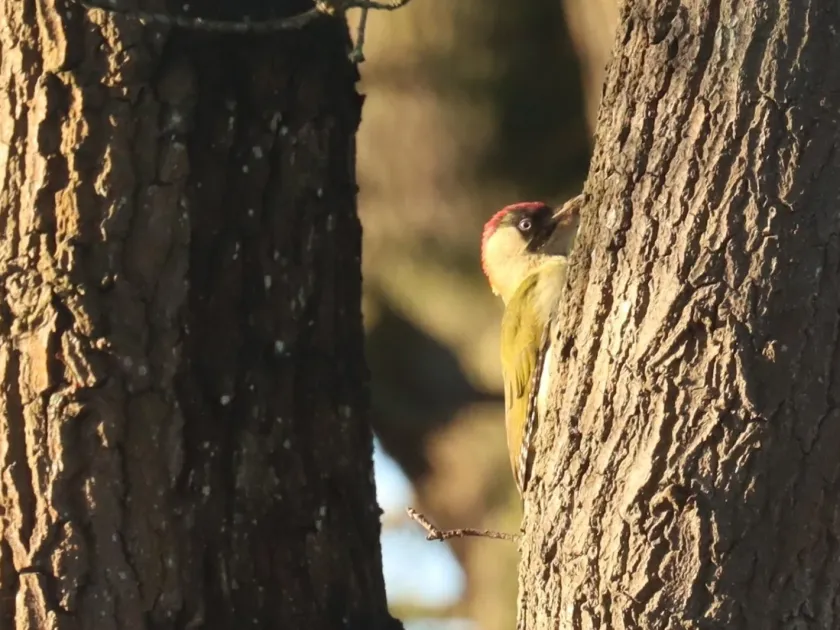
Description
How to identify
The European green woodpecker (Picus viridis) is a member of the Picidae family. It is characterized by its olive-green plumage, a distinctive red crown, and a black mask around the eyes.
Unlike other woodpeckers, this species often feeds on the ground in search of insects, but it frequently targets trees for nesting and during winter foraging.
The bird possesses a strong, sharp beak capable of boring into both soft and hardwood trees to establish nesting cavities or access wood-boring larvae.
Adult individuals can grow up to 36 centimeters in length, making them a significant presence in any garden or managed orchard environment.
Agronomists should note that these birds are typically sedentary, meaning they maintain fixed home ranges and can cause persistent damage to the same trees over time.
What it damages
Old or neglected fruit trees, including apple, pear, and cherry varieties, are the most common targets for the green woodpecker.
The woodpecker causes physical damage by drilling deep holes into the trunk, which can weaken the structural integrity of the tree over time.
In addition to fruit trees, ornamental species in landscaping are frequently damaged, leading to loss of aesthetic value and long-term health decline.
During the early spring, these birds may peck at the bark to drink tree sap, creating wounds that invite secondary fungal infections and bacterial diseases.
Repeated drilling disrupts the tree's vascular system, potentially causing branches to dry out and eventually leading to the death of the affected plant.
When it appears
Activity levels peak in late winter and early spring when the birds begin to renovate or excavate new nesting cavities for the upcoming breeding season.
The autumn months are also critical, as woodpeckers forage for insects preparing to hibernate within the bark of various trees in the garden.
During the nesting period (May to June), the need to feed their young increases the pressure on trees, as the birds actively hunt for insect larvae.
Winter foraging remains a major issue, as birds rely on drilling into wood to find hidden insects when ground-based food sources are scarce.
Understanding these seasonal patterns is essential for orchard management to ensure that preventative measures are in place at the right time.
Signs of infestation
Key signs of infestation include deep, rounded holes in the tree trunk, often found near the fork of major scaffold branches.
Large amounts of fresh wood chips and bark debris at the base of the tree indicate recent or ongoing drilling activity by the woodpecker.
Distinctive rows of smaller, shallow holes in the bark are clear indications that the bird has been feeding on insects or sap from the tree.
Audible signals, such as loud calls or rhythmic drumming against dry timber, help in identifying the presence of the bird in the vicinity.
Drying branches or leaking sap from wounds are diagnostic indicators that the tree has been compromised by woodpecker activity.
Control measures
Installing visual deterrents such as reflective tape, mirrors, or predator silhouettes can significantly reduce woodpecker visits to your orchard.
The use of acoustic devices that play predator calls can effectively discourage birds from staying in the immediate area of the orchard.
Wrapping tree trunks with wire mesh or hardware cloth is a highly effective way to prevent direct access to the bark and stop drilling damage.
Implementing proper tree wound care and pruning helps maintain tree health and reduces the attractiveness of the bark to wood-boring pests.
Focusing on overall orchard hygiene minimizes the insect populations that typically act as the primary attractant for green woodpeckers.
Taxonomy
- Latin name
- Picus viridis
- Family
- Picidae
- EPPO code
- PICUVI
Discussion
No discussions yet — be the first.