
Brown-fronted woodpecker
Dendrocopos auriceps
Description
How to identify
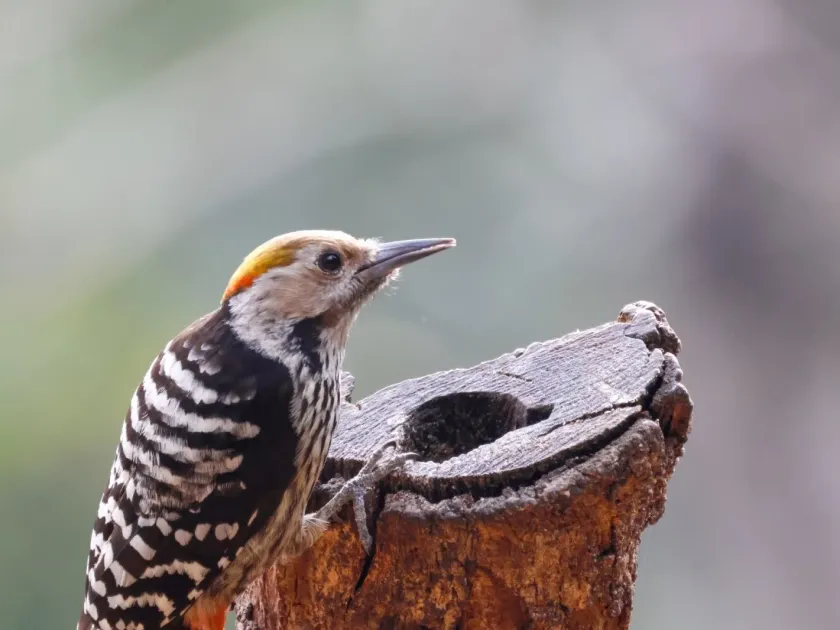
The Brown-fronted woodpecker (lat. Dendrocopos auriceps) is a small avian species belonging to the family Picidae. It is characterized by a distinctive plumage pattern consisting of brown, black, and white colors, with males featuring a unique yellow-gold patch on their foreheads.
Native to mountain forests of Asia, this species has increasingly been observed moving into suburban gardens and fruit orchards due to habitat changes and fluctuating food sources.
The bird possesses a strong, sharp beak specifically evolved for wood-boring activities, which allows it to access larvae hidden deep within the bark or the inner woody layer of trees.
Although it is primarily insectivorous, its habit of searching for prey within cultivated trees makes it a concern for arborists and gardeners focused on fruit production.
The size of this woodpecker allows it to maneuver easily around thin trunks and branches, making even young orchard trees susceptible to its feeding habits.
What it damages
The primary targets for the Brown-fronted woodpecker in agricultural settings include apple, pear, cherry, and plum trees, where the bird searches for wood-boring insects.
Damage occurs when the woodpecker drills into the bark, exposing the internal layers of the tree. These holes often serve as entry points for various bacterial and fungal pathogens that threaten the tree's health.
In winter and early spring, when insect prey is scarce, these birds may consume buds, leading to a significant reduction in fruit yield for the upcoming season.
Persistent drilling on a single trunk can lead to "ringing," where the structural integrity of the bark is destroyed, potentially causing the death of branches or the entire tree.
The cumulative effect of these activities reduces the timber quality and weakens the tree against environmental stressors such as strong winds or winter frost.
When it appears
The woodpecker is most active during the colder months, specifically in late autumn and winter, as food shortages force it to migrate into orchards closer to human activity.
Spring is another critical period, as the birds search for suitable sites for nesting and territory marking, leading to aggressive drilling on wood surfaces.
Throughout the growing season, the woodpecker continues to monitor orchards, targeting trees that are already weakened by other pests, thus worsening existing tree conditions.
Changes in temperature and moisture levels influence the availability of wood-boring larvae, directly correlating with the frequency of the woodpecker's visits to the garden.
While summer activity is lower due to the abundance of natural food in nearby forests, the threat persists if the orchard contains aged or diseased wood.
Signs of infestation
The most reliable sign of a Brown-fronted woodpecker presence is the appearance of small, conical holes in the bark, often arranged in rows or clusters along the trunks.
The base of the tree is often littered with fresh wood shavings and bark fragments, which indicate recent activity by the bird.
- Fresh wounds and holes on the tree trunk.
- Evidence of damaged buds scattered under the tree.
- Sticky sap exudation on stone fruit trees in damaged areas.
- Premature drying or yellowing of foliage on damaged branches.
- Audible drumming sounds coming from the orchard during early hours.
Over time, these wounds may develop into necrosis, which is visible as discolored and peeling bark, indicating that the tree is struggling to defend itself against infection.
If left unaddressed, the frequent drilling can cause long-term structural failure, turning a healthy fruit tree into a dying one within a few seasons.
Control measures
Visual deterrents such as reflective tapes, plastic predators (owls or hawks), and shiny objects are effective initial steps to protect orchard trees from these birds.
Physical protection, including the application of protective netting or wire mesh wraps around the main trunks, is highly recommended for younger or high-value trees.
Proper wound care is essential; damaged areas should be cleaned and sealed with specialized horticultural paints or tree wound sealants to prevent fungal entry.
Sanitary management of the garden, including the removal of dead or dying trees and limbs, helps minimize the presence of wood-boring insects, thereby reducing the woodpecker's interest.
In cases of high infestation, acoustic repelling systems that mimic the calls of raptors or stress calls can effectively discourage the birds from settling in the area.
Taxonomy
- Latin name
- Dendrocopos auriceps
- Family
- Picidae
- EPPO code
- DENPAC
Discussion
No discussions yet — be the first.