
Middle spotted woodpecker
Dendrocopos medius
Description
How to identify
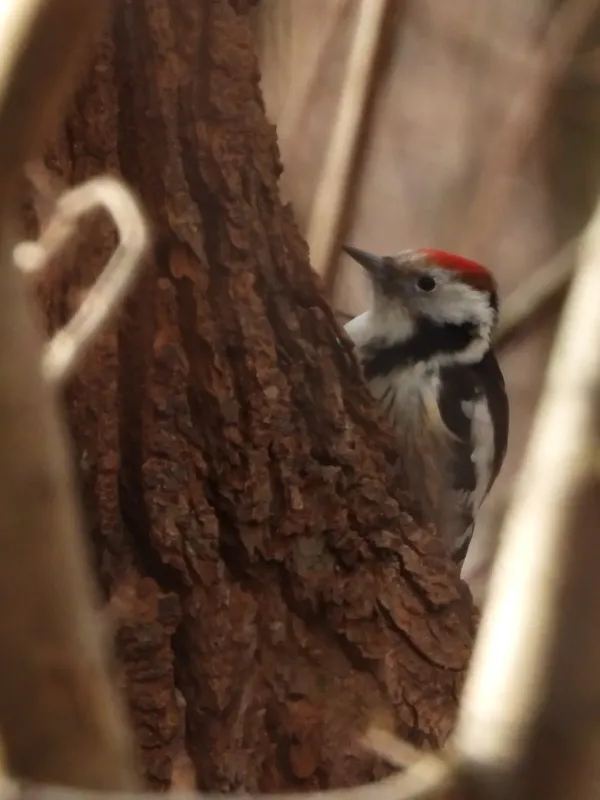
The Middle spotted woodpecker (Dendrocopos medius) belongs to the Picidae family. It is a medium-sized bird, distinguished by its red crown and the absence of the black cheek stripes found in its relatives.
Unlike other woodpeckers, it is less inclined to hammer into hard, healthy wood, preferring to probe into cracks and crevices of the bark to extract its food, which mainly consists of wood-boring insects.
Its plumage is a mix of black, white, and crimson, which provides effective camouflage in deciduous forests and orchards, making them difficult to spot without careful observation.
They typically construct nesting holes in decaying or soft trunks of deciduous trees, which are often found in older or poorly maintained orchard plots.
The activity of these birds is most prominent during the spring months, as they are actively searching for insect larvae to support their breeding season requirements.
What it damages
The primary concern for horticulturists is the damage inflicted upon the bark of fruit trees, such as apples, pears, and cherries, which acts as a barrier against environmental stressors.
When searching for xylophagous larvae, the woodpecker creates deep wounds in the trunk. These openings facilitate the entry of fungal spores, pathogens, and bacteria, leading to trunk rot or bacterial diseases.
Young trees are particularly vulnerable, as their bark is thin and susceptible to being easily pierced or stripped, which can result in stunted growth or the eventual death of the sapling.
While the woodpecker primarily feeds on insects, it may occasionally consume fruit, especially when natural food sources are limited, thereby ruining the harvest and commercial value of the orchard.
Over time, the cumulative impact of these injuries weakens the tree's immune system, making it more susceptible to further infestations by wood-boring pests.
Signs of infestation
The most visible sign is the presence of irregular, roughened patches of bark or vertical lines where the bird has been probing for insects without removing the entire bark layer.
A significant accumulation of wood shavings, bark chips, and dust at the base of the tree is a clear indicator that the woodpecker has been working on the trunk for some time.
Small, conical holes or punctures penetrating the bark are evidence of the bird's beak activity, indicating that it has successfully located and extracted larvae from beneath the surface.
The sound of rhythmic tapping or drumming on hollow or dry branches is a common auditory sign during the breeding season, confirming the bird's presence in the immediate vicinity.
Visible nesting cavities in older trees serve as a long-term indicator of a bird's established presence, which requires consistent monitoring of the surrounding orchard health.
Control measures
Utilizing visual deterrents such as reflective tapes, holographic disks, or predator silhouettes can be an effective way to discourage the woodpecker from landing in your fruit trees.
Physical protection is highly recommended for younger or high-value trees, where wrapping the trunk with protective mesh or burlap can prevent the bird from accessing the bark.
Maintaining orchard health through proper sanitation is crucial; removing dead wood and treating bark wounds immediately helps minimize the attraction of wood-boring insects.
Integrated pest management focusing on reducing the populations of beetles and wood-boring larvae will naturally decrease the woodpecker's motivation to forage in your orchard.
- Apply specialized tree wound sealants to heal bark injuries promptly.
- Use bio-acoustic devices to broadcast predator alarm calls.
- Regular inspection of orchard trees during the early spring period.
Taxonomy
- Latin name
- Dendrocopos medius
- Family
- Picidae
- EPPO code
- DENPME
Discussion
No discussions yet — be the first.