
Great spotted woodpecker
Dendrocopos major
Description
How to identify
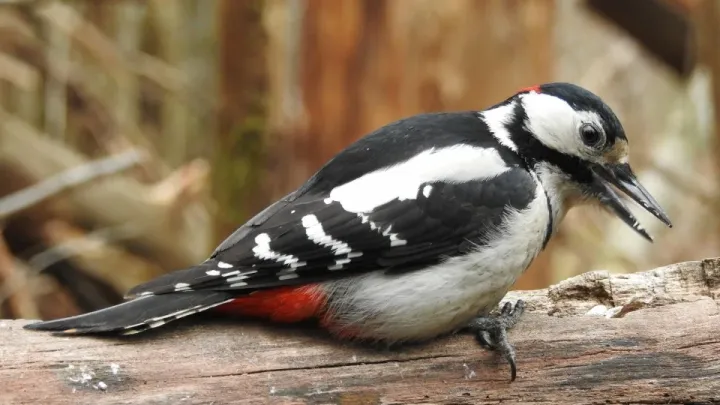
The great spotted woodpecker (Dendrocopos major) belongs to the Picidae family, characterized by its striking black-and-white plumage and distinctive red vent.
Typically measuring 22–27 cm in length, adult males are easily identified by a red patch on the nape, while juveniles feature a red crown covering their entire head.
Their beaks are powerful and chisel-like, evolved specifically for excavating wood to forage for insects or to create nesting cavities.
These birds are largely sedentary and commonly found in woodlands, parks, and orchards where they find stable food sources throughout the year.
During the spring breeding season, their activity increases as they hollow out tree trunks, which can occasionally lead to structural harm to mature trees.
What it damages
The primary agricultural impact of the great spotted woodpecker is the mechanical destruction of the bark and wood of fruit and ornamental trees.
By drilling deep holes to extract wood-boring larvae, they compromise the tree's vascular system, often leading to limb dieback or vulnerability to further pests.
In addition to boring, these birds are known to forage on ripened fruit and nuts, pecking through skins and shells, which leads to fruit rot and crop loss.
The damage caused to the cambium layer creates open wounds, which act as entry points for various fungal pathogens and wood-rotting bacteria.
Young, thin-barked trees are especially susceptible to extensive scarring, which can cause significant stress to the plant and inhibit its healthy development.
Signs of infestation
The most reliable sign of a woodpecker's presence is the accumulation of fresh wood chips and debris at the base of affected trees.
Distinctive deep, vertical rows of holes or large, singular excavated cavities on the trunk provide immediate evidence of woodpecker activity.
Damaged fruits or nuts showing precise, cone-shaped peck marks indicate that the woodpecker is utilizing the orchard as a feeding ground.
Audible drumming, a rapid and rhythmic tapping sound against the tree, confirms that a woodpecker is actively investigating or marking the territory.
Premature yellowing or localized drying of branches often marks areas where the bird has previously breached the bark to reach insects.
Control measures
Protecting orchards from the great spotted woodpecker requires a combination of visual deterrence and proactive orchard health management.
Hanging reflective items like holographic tape or old CDs can deter birds by creating unpredictable flashes of light that disturb their activity.
Maintaining the overall health of the trees and controlling populations of wood-boring insects reduces the attractiveness of the orchard as a feeding site.
Physical barriers, such as netting or fine wire mesh applied to the trunks of vulnerable young trees, effectively prevent damage during peak seasons.
- Regular pruning of dead and decaying wood to minimize nesting sites.
- Application of horticultural wound sealants to any exposed tree tissue.
- Use of ultrasonic bird repellers in areas with high activity.
Taxonomy
- Latin name
- Dendrocopos major
- Family
- Picidae
- EPPO code
- DENPMA
Discussion
No discussions yet — be the first.