
Great spotted woodpecker
Dendrocopos
Description
How to identify
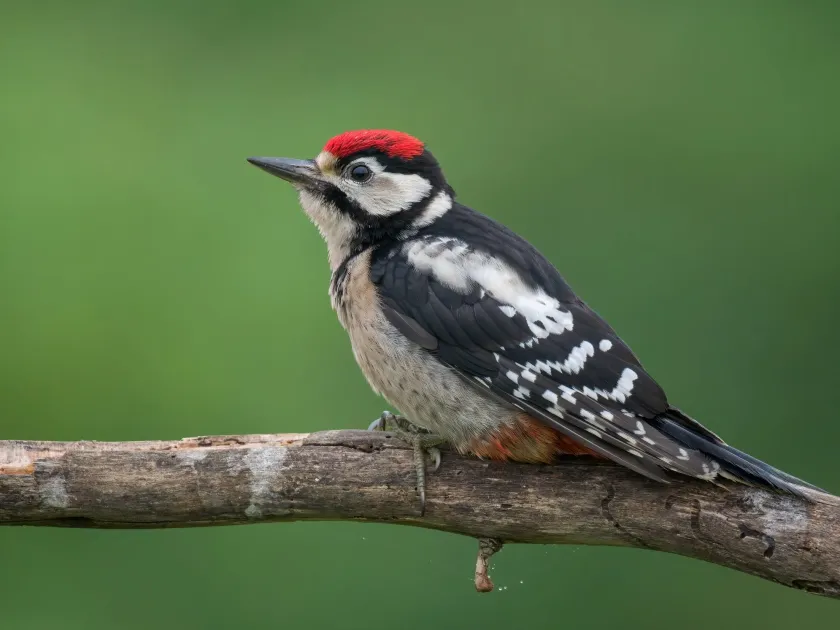
The great spotted woodpecker (latin: Dendrocopos major) is a member of the Picidae family, characterized by its distinctive pied plumage and red vent.
While often viewed as a forest inhabitant, in agricultural environments, these birds are considered pests due to their destructive feeding behavior.
They possess a specialized anatomical structure allowing them to hammer tree trunks with high force, which causes physical injury to orchard species.
These birds are highly territorial and adapt well to orchards, making them consistent visitors if the environment provides food sources.
Identification involves observing the physical damage left on the bark, as the birds themselves are shy but active during daylight hours.
What it damages
The woodpecker causes direct harm to fruit trees such as apple, pear, and cherry, by probing for insects or feeding on sap and fruit.
Deep excavations into the trunk disrupt the tree's phloem and cambium layers, which are essential for nutrient transportation.
These openings serve as primary infection sites for various pathogens, including fungal spores and bacteria that cause wood decay.
During the harvest season, woodpeckers may consume or damage fruit, leading to significant economic losses and reduced market value.
Long-term activity can weaken tree limbs significantly, increasing the risk of structural failure during heavy winds or fruit ripening.
When it appears
Early spring is a critical time when woodpeckers actively search for food sources, often causing sap leaks that attract other pests.
The summer ripening period is when damage occurs to the fruit itself, as the birds become attracted to the sugar-rich crop.
During the winter months, when insects are scarce, woodpeckers turn to bark probing, causing the most significant damage to tree trunks.
The intensity of the damage fluctuates based on the availability of alternative food sources in the surrounding landscape.
Monitoring the orchard before the budding phase is essential to prevent cumulative damage that accumulates over the winter season.
Signs of infestation
Circular or conical holes found in rows along the trunk or main branches are the most reliable indicator of a woodpecker's presence.
Accumulated wood chips and shredded bark at the base of the tree are clear evidence of recent foraging or hammering activity.
Characteristic drumming sounds, particularly on dry or dead wood, reveal the location and activity level of the birds within the orchard.
The presence of so-called "anvils" — crevices where birds wedge fruit or nuts for consumption — indicates a recurring usage of a specific spot.
Wilting leaves or localized tissue necrosis on branches can be a physiological response to the physical trauma caused by the bird's bill.
Control measures
Visual deterrents such as reflective tapes, old CDs, or holographic decoys can disrupt the birds' confidence in the area.
Physical barriers, including wire mesh or protective tree wraps, provide the most effective defense against direct trunk damage.
Acoustic devices mimicking the sounds of predatory birds can create a hostile environment and discourage long-term residency.
Improving general orchard hygiene by removing deadwood and controlling wood-boring insects reduces the primary attractiveness to woodpeckers.
- Install motion-activated scare devices.
- Wrap vulnerable trunks with hardware cloth.
- Prune and sanitize heavily damaged limbs immediately.
- Encourage natural predators in the orchard ecosystem.
Taxonomy
- Latin name
- Dendrocopos
- Family
- Picidae
- EPPO code
- DENPSP
Discussion
No discussions yet — be the first.