
Grey-capped pygmy woodpecker
Dendrocopos canicapillus
Description
How to identify
The Grey-capped pygmy woodpecker (scientific name: Dendrocopos canicapillus) is a small woodpecker species known for its inconspicuous grey-capped plumage. While primarily a forest dweller, it occasionally ventures into orchards.
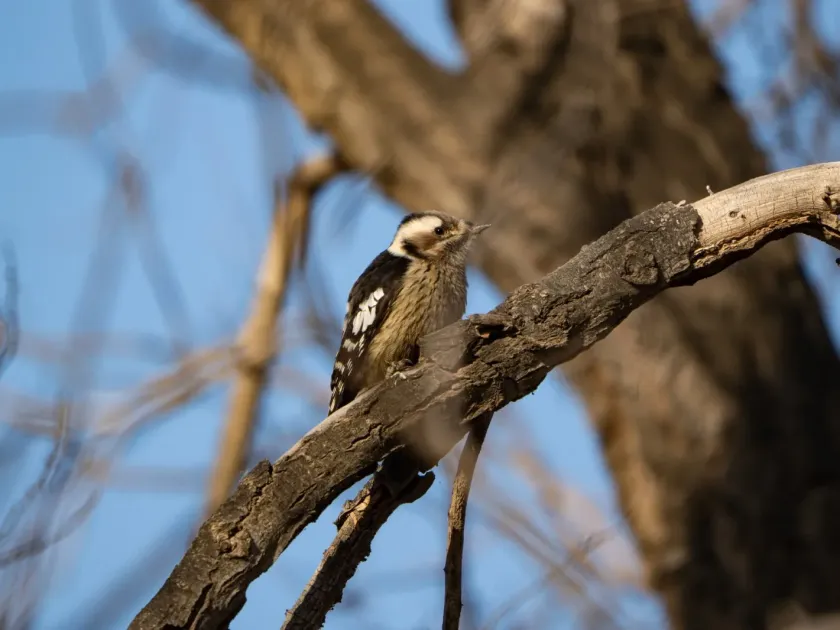
The bird has a dark body with distinctive white barred wings and speckled underparts. Measuring only about 15–17 centimeters, it is often difficult to spot as it moves skillfully along the smaller branches of trees.
Belonging to the order Piciformes, this species has evolved to hunt for larvae hidden deep within wood. Its feeding habits involve precise tapping that can unfortunately affect the structural integrity of thin-barked trees.
The species lives a relatively solitary and quiet life, relying on its agility to navigate the canopy. In agricultural settings, its tendency to forage on cultivated trees makes it a potential nuisance for fruit growers.
Understanding its biology is crucial for identifying its presence early. Unlike larger woodpeckers, this species often leaves smaller, more frequent marks that can accumulate into significant damage over time.
What it damages
The primary damage caused by the Grey-capped pygmy woodpecker involves mechanical injury to the bark and cambium layer. By drilling into the wood, the bird disrupts the plant’s essential nutrient transportation system.
Fruit trees like apple, pear, and cherry are particularly susceptible. Young saplings with thin, delicate bark are at the greatest risk, as they cannot heal these wounds quickly, leading to stunted growth.
The small holes made by the woodpecker serve as entry points for pathogens. Bacteria and fungal spores easily colonize these spots, leading to rot, trunk canker, and eventual death of branches.
Tree weakening is a long-term consequence of repeated woodpecker attacks. An orchard heavily impacted by these birds experiences lower yields, poor fruit quality, and an overall shorter lifespan of the affected trees.
- Mechanical trauma to the bark layer.
- Disruption of sap flow and nutrient uptake.
- Increased susceptibility to wood-decaying fungi.
- Reduced vigor and stunted tree development.
When it appears
Activity peaks in early spring when natural insect populations are low. Driven by hunger, the birds aggressively forage in gardens and orchards, targeting overwintering larvae in tree bark.
Autumn is another period of increased activity. As the birds prepare for winter, they methodically check trunks for hidden food sources, making the orchard an attractive hunting ground.
Winter months often force these birds to move closer to human settlements. Harsh weather conditions increase the intensity of their foraging, leading to more frequent damage to woody tissues.
During the summer, the abundance of natural food in forests generally keeps these woodpeckers away from cultivated areas. However, fledglings may sometimes be seen learning to forage in garden trees.
The overall seasonal risk is highly dependent on regional climate. Cold, long winters typically correlate with higher rates of woodpecker-related damage in orchard environments.
Signs of infestation
The most telltale sign is the presence of small, neatly drilled holes arranged in horizontal or vertical lines on trunks and main branches. This indicates focused foraging activity.
Wood chips and bark debris at the base of the tree are clear indicators of recent activity. Finding these remnants suggests the woodpecker is actively visiting the tree, necessitating immediate protection.
Wilting leaves or dieback in specific branches during the growing season often points to circular damage where the tree's vascular system has been severed by the bird's drilling.
Frequent tapping or drumming sounds heard in the morning are direct indicators. Recognizing these sounds allows property owners to intervene before the tree becomes severely compromised.
Sap weeping from fresh holes is another warning sign. If ignored, these open wounds attract pests and diseases, compounding the initial mechanical damage caused by the woodpecker.
Control measures
Visual deterrents such as reflective tapes, holographic strips, or moving predator decoys are effective short-term solutions. Rotating these devices is essential to prevent birds from getting used to them.
Physical barriers like fine-mesh netting or specialized tree wraps are the most reliable way to protect young or vulnerable saplings from woodpecker damage.
Proper wound care is vital. Any holes caused by birds should be cleaned and treated with professional-grade pruning paint or sealant to block moisture and pathogen entry.
Integrated pest management to reduce the population of wood-boring insects in the orchard makes the trees significantly less attractive to woodpeckers, addressing the root cause of the problem.
A combination of habitat management and direct tree protection provides the best results for maintaining a healthy orchard throughout the year without harming the birds themselves.
Taxonomy
- Latin name
- Dendrocopos canicapillus
- Family
- Picidae
- EPPO code
- DENPAT
Discussion
No discussions yet — be the first.