
Himalayan woodpecker
Dendrocopos himalayensis
Description
How to identify
The Himalayan woodpecker (Dendrocopos himalayensis) is a member of the Picidae family, within the Piciformes order. It is a medium-sized bird adapted to life in forested and orchard environments.
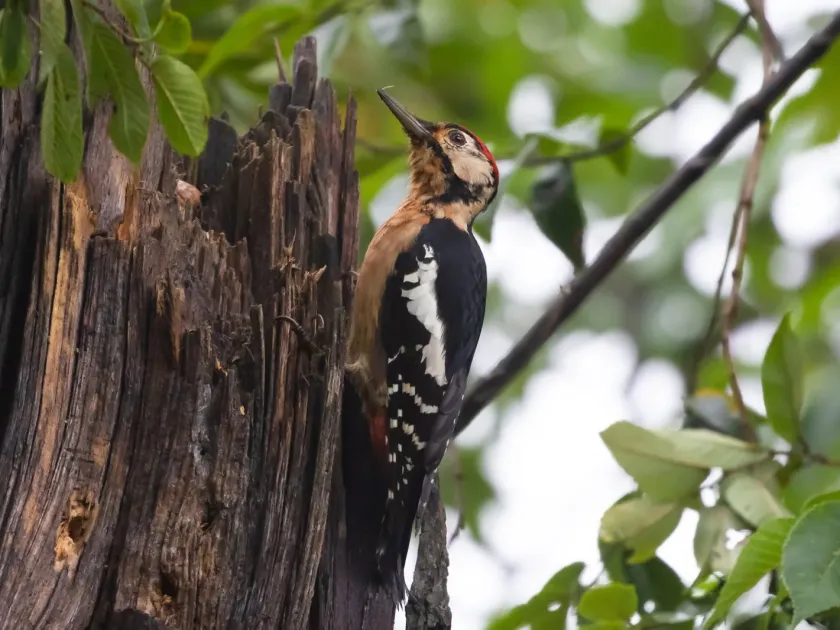
Typically measuring between 23 and 25 cm, this woodpecker displays a classic black-and-white plumage pattern, which provides excellent camouflage against tree trunks.
Males are easily distinguished by a vivid red patch on the nape of their neck, whereas females lack this feature, having a solid black cap instead.
The bird is equipped with a sharp, chisel-like beak capable of penetrating deep into wood, and strong, zygodactyl feet that ensure a firm grip on vertical surfaces.
Its behavior is characterized by persistent foraging, often focusing on specific trees for extended periods to exploit food sources found under the bark.
What it damages
This species causes economic damage in orchards by targeting fruit trees like apple, pear, and plum, often damaging the living bark layers while searching for prey.
By excavating deep into the trunk and branches, the woodpecker disrupts the vascular system of the tree, which can significantly weaken or eventually kill the tree.
The holes made by the woodpecker serve as entry points for various pathogens, including fungi and bacteria, leading to rot and long-term tree diseases.
Beyond wood damage, these birds can consume fruit directly, causing substantial losses in orchards and reducing the overall quality of the harvest.
Aggressive foraging can lead to limb breakage or twig dieback, particularly in younger trees that are less resistant to the physical stress caused by the bird's pecking.
Signs of infestation
The most prominent sign is the presence of fresh, funnel-shaped holes or deep grooves on the tree bark, which often appear in organized rows or clusters.
Piles of fresh wood chips and bark debris at the base of the tree are clear indicators that a woodpecker has been active on the trunk recently.
Dieback or wilting of individual branches, indicating that the vascular tissues have been damaged by constant pecking activity.
Visible scarring or weeping of sap from the holes, as the tree attempts to heal the wounds caused by the woodpecker’s exploration.
Audible drumming or rhythmic tapping on dead or live wood during the early morning hours, signaling the bird's territorial or foraging presence.
Control measures
Deploying visual deterrents such as holographic tapes, reflective surfaces, or plastic predator models can discourage woodpeckers from frequenting the area.
Using ultrasonic bird repellers that emit frequencies specifically tuned to interfere with the comfort of birds, providing a humane way to secure the orchard.
Installing protective hardware cloth or metal mesh around the lower and middle trunk of valuable trees to prevent the bird from reaching the bark.
Practicing good orchard sanitation to manage and reduce the populations of wood-boring insects, which are the primary attractant for the woodpecker.
Applying tree wound dressings or grafting waxes to any existing holes to seal them against moisture and fungal spores, promoting faster healing.
Taxonomy
- Latin name
- Dendrocopos himalayensis
- Family
- Picidae
- EPPO code
- DENPHI
Discussion
No discussions yet — be the first.