
Red-cockaded woodpecker
Picoides borealis
Description
How to identify
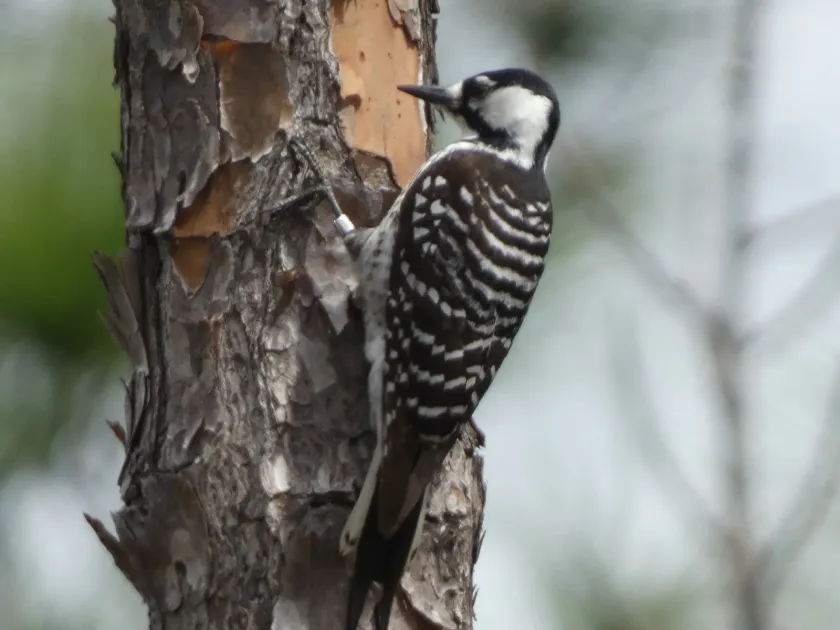
The Red-cockaded woodpecker (Picoides borealis) is a small-sized woodpecker species within the family Picidae, distinguished by its unique black-and-white plumage and specific habits of nesting in living pine trees.
This bird is ecologically significant as it occupies a specific niche in mature pine forests, often requiring long-term habitat stability to maintain its population density.
Identification is aided by observing the white cheek patches on the head, which contrast sharply with the black cap. Males may exhibit a tiny streak of red feathers, which gives the species its common name.
In forest management, the presence of these birds is often treated as an indicator of an old-growth ecosystem, necessitating a balanced approach between resource extraction and habitat conservation.
The species is territorial and tends to forage in stable forest stands, exhibiting predictable behavior patterns that allow foresters to conduct monitoring and conservation assessments.
What it damages
Damage to trees occurs primarily through the creation of small cavities, known as resin wells, which the bird drills into the bark of living pine trees to induce resin flow.
This activity can lead to the weakening of the tree's defensive systems, making the bark more susceptible to secondary infestations by bark beetles and other wood-boring insects.
While the birds do not kill the trees directly, the combined impact of mechanical damage and the attraction of secondary pests can result in significant growth reduction for the stand.
Continuous drilling creates entry points for fungal pathogens and moisture, which can eventually lead to heartwood rot if the tree is not capable of effective wound compartmentalization.
In intensive forestry areas, the economic impact is measured by the potential loss of timber grade and quality resulting from numerous scars and drill holes on the main stem of the tree.
Signs of infestation
The most reliable sign of activity is the presence of vertical rows of small holes on the bark, often accompanied by extensive resin trails that turn dark with age.
Accumulation of bark flakes and wood chips around the base of the trunk provides evidence of recent foraging activity by the woodpecker population.
A distinctive drumming sound made by the birds against the bark or hollow parts of the trunk is a strong indicator of their presence during the nesting or foraging season.
Visual observation of the birds or their abandoned nesting cavities, which are often characterized by a smooth, sap-covered entrance, confirms the species' utilization of the area.
Discoloration or weeping wounds on the pine trunk that appear clustered together are typical markers of the specific resin-well drilling behavior associated with this woodpecker.
Control measures
Management strategies for this species must be highly selective, as it is a federally protected, endangered species in many parts of its range, strictly limiting active control options.
Forest health management, such as thinning stands to promote vigor and reducing the competition for resources among pines, is the most recommended preventative measure.
Where bird activity conflicts with high-value plantation goals, mechanical deterrents or non-lethal repelling techniques, such as visual scare devices, can be deployed temporarily.
Proper silvicultural practices, including the removal of diseased or heavily rotted trees that attract woodpeckers, are essential to preventing long-term infestations.
Consultation with wildlife biologists is mandatory before implementing any management plan to ensure compliance with conservation laws and to mitigate negative impacts on local biodiversity.
Taxonomy
- Latin name
- Picoides borealis
- Family
- Picidae
- EPPO code
- DENPBO
Discussion
No discussions yet — be the first.