
Woodpecker
Picoides
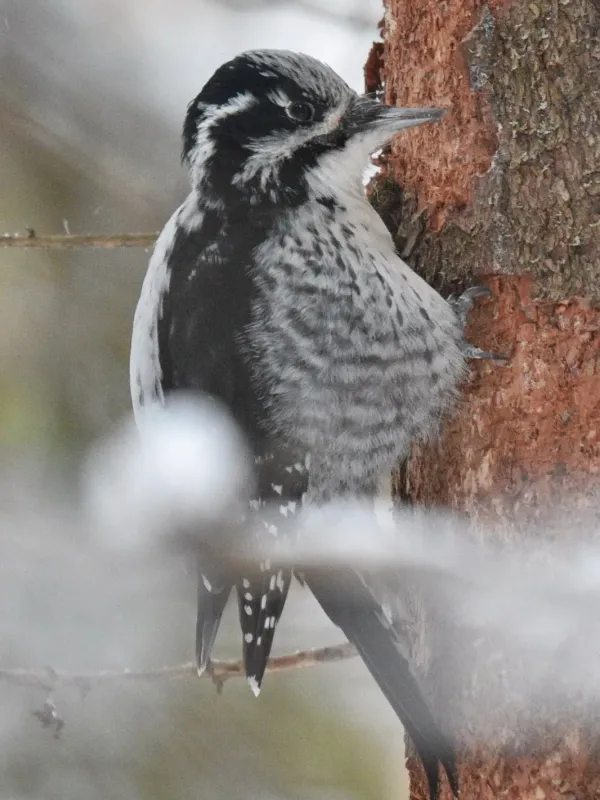
Description
How to identify
Woodpeckers belong to the order Piciformes and the family Picidae. The genus Picoides is specifically recognized for its specialized feeding behavior.
These birds possess a rigid, chisel-like beak and a highly adapted skull structure designed to absorb the shock of repeated impacts against wood.
Their zygodactyl feet and stiff tail feathers provide the necessary support for maintaining vertical stability on tree trunks while foraging.
Woodpeckers are highly specialized insectivores, but in agricultural settings, they may inadvertently become serious structural pests for horticultural trees.
Their ability to locate hidden prey through acoustic vibrations makes them remarkably efficient, though this efficiency can be detrimental to ornamental and fruit trees.
What it damages
Fruit-bearing trees such as apples, pears, and stone fruits are frequently targeted by woodpeckers seeking larvae of wood-boring insects.
Damage is most severe during late winter and early spring when insect availability is low, forcing birds to aggressively investigate trunk bark.
Mechanical damage caused by persistent pecking creates deep cavities, which can compromise the structural integrity of the branches or the main trunk.
Once the protective bark layer is punctured, the tree becomes highly vulnerable to secondary infections, including wood rot fungi and bacterial pathogens.
In some cases, the repetitive drilling patterns known as 'sap wells' can lead to significant sap loss, weakening the tree's overall vigor.
Signs of infestation
Small, neat holes arranged in horizontal or vertical lines are a diagnostic sign of sap-sucking behavior, often seen on various tree species.
Large, irregular cavities or gashes in the bark accompanied by significant wood chips on the ground indicate aggressive foraging for deeper-dwelling larvae.
The presence of sap leaking from fresh wounds often attracts other insects, which further exacerbates the damage caused by the woodpecker.
Long-term signs include localized necrosis, bark peeling, and signs of decay around the area of the initial injury, which may spread inwards.
Visible stress symptoms, such as canopy thinning, premature leaf drop, or dying branches, are common indicators of advanced damage to the tree's vascular system.
Control measures
Physical barriers such as hardware cloth or plastic mesh can be wrapped around the trunk to effectively prevent the birds from reaching the bark.
Visual deterrents, including reflective tape, holographic devices, or plastic owl decoys, can discourage woodpeckers from lingering in the orchard.
Managing the primary insect population through proper orchard hygiene is essential to remove the underlying incentive for the woodpeckers to feed.
Wound dressing products should be applied immediately to any fresh pecking holes to seal the area against opportunistic pathogens and pests.
Professional sonic deterrents that emit distress calls can be employed in larger orchards to provide a broader protective perimeter against bird intrusion.
Taxonomy
- Latin name
- Picoides
- Family
- Picidae
- EPPO code
- PICDSP
Discussion
No discussions yet — be the first.