
California oak moth
Phryganidia californica
Description
How to identify
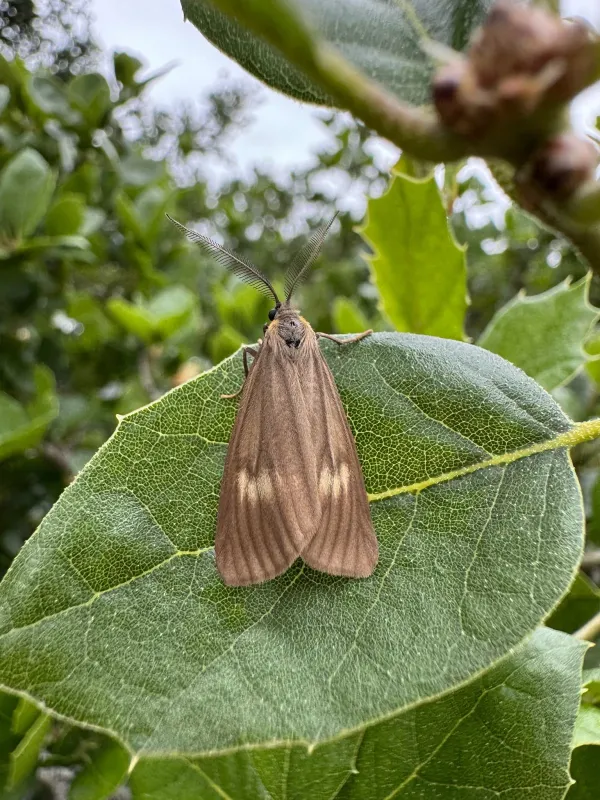
The California oak moth (Phryganidia californica) is a member of the Notodontidae family. The adult moth is characterized by a wingspan of approximately 35–40 mm and tan or pale brown wings with distinctive dark veins.
Larvae are easily recognized by their striking color pattern, which consists of longitudinal stripes of yellow, black, and white. They possess a black head and a sparsely haired body that grows as they mature through several instars.
Eggs are typically laid in clusters on the undersides of leaves. They have a barrel-like shape and a yellowish hue, often appearing in large numbers on the foliage of host trees.
The lifecycle consists of two generations annually in most parts of its range. Favorable weather conditions allow populations to explode rapidly, leading to major outbreaks.
Overwintering usually occurs in the larval stage. These caterpillars remain active and continue to feed periodically during warmer winter months, which is unique for this specific lepidopteran species.
What it damages
This pest feeds exclusively on various species of oak trees (Quercus). It prefers both deciduous and evergreen varieties, often targeting them in urban and forest settings.
The caterpillars are responsible for all physical damage to the trees. They feed on the leaf blades, starting with the softer tissue and eventually leaving behind only the tough leaf veins.
Heavy infestations can lead to total defoliation of the tree. When this happens, the tree loses its ability to perform photosynthesis, putting it under extreme physiological stress.
Chronic defoliation weakens the overall health of the oak tree. This stress makes the tree significantly more susceptible to secondary pests, such as wood-boring beetles, and various pathogens.
In residential areas, the aesthetic damage is highly visible. Complete stripping of leaves during the peak of summer makes healthy trees appear bare and unsightly.
Signs of infestation
The presence of large amounts of frass (caterpillar droppings) falling from the canopy is a primary indicator of an active infestation in the upper branches.
Leaves showing a "lace-like" or skeletonized appearance are a diagnostic sign of larval feeding activity on the tree foliage.
Larvae themselves may be observed in clusters on branches or crawling along the trunk. Their distinct striped markings make them relatively easy to spot upon inspection.
The rapid disappearance of green foliage during the spring and summer months often points to a massive outbreak of the oak moth caterpillars.
An increased number of adult moths fluttering around outdoor lights during the evening signals that egg-laying cycles are underway and that a new generation of larvae may emerge soon.
Control measures
Biological control using sprays containing Bacillus thuringiensis (Bt) is the most environmentally responsible way to manage young larvae without harming beneficial insects.
Mechanical control, such as pruning branches where large clusters of eggs or young caterpillars are identified, can be effective for smaller, manageable ornamental trees.
Chemical intervention should be reserved for severe cases. When using broad-spectrum insecticides, it is crucial to ensure they are applied away from blossoms to protect pollinators.
Encouraging natural predators, including parasitic wasps and tachinid flies, helps keep population numbers in check naturally without the need for toxic substances.
Maintaining tree vigor through consistent irrigation and proper fertilization helps trees withstand the stress of defoliation and recover more efficiently after the infestation ends.
Taxonomy
- Latin name
- Phryganidia californica
- Order
- Lepidoptera (butterflies)
- Family
- Notodontidae
- EPPO code
- PHRYCA
Discussion
No discussions yet — be the first.