
Ebony rove beetle
Philonthus ebeninus
Description
How to identify
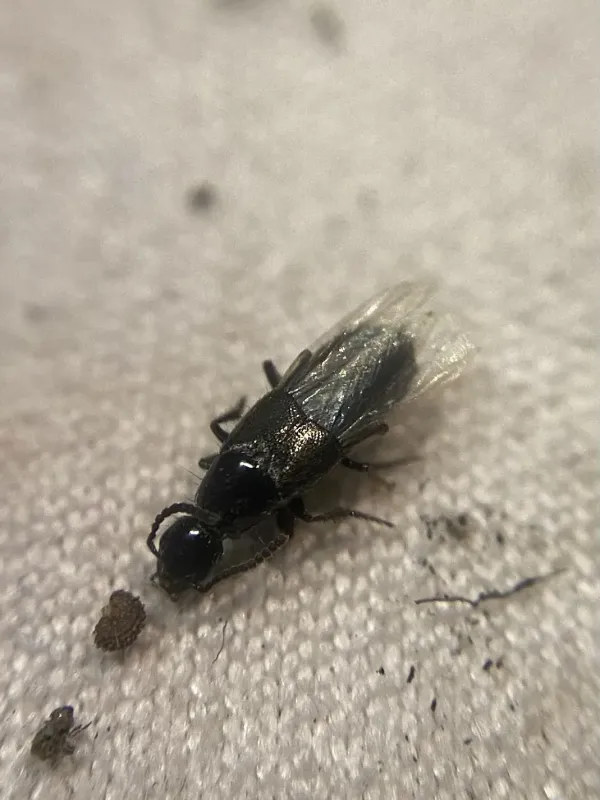
The ebony rove beetle (Philonthus ebeninus) is a member of the Staphylinidae family within the Coleoptera order. These beetles are easily identified by their elongated bodies and shortened elytra that expose several segments of the abdomen.
As the name suggests, the adult beetle displays a glossy, ebony-black coloration. They are equipped with robust, sharp mandibles used for hunting small prey and are known for their incredibly fast movement through soil or leaf litter.
The larvae of this species are campodeiform, meaning they are active and predatory, with well-developed legs designed for crawling through the soil profile. They are usually whitish or yellowish in their early stages.
These beetles are primarily nocturnal or crepuscular, spending the daylight hours hidden in cool, moist crevices within the soil or under organic debris, which makes them difficult to observe.
Accurate identification of Philonthus ebeninus often requires expert examination of the pronotum sculpture and genitalia, as there are many visually similar species within the Philonthus genus.
What it damages
While the vast majority of rove beetles are beneficial predators that help control other pests, Philonthus ebeninus can sometimes exhibit omnivorous behavior if its primary food source is scarce in the agroecosystem.
The primary concern for farmers is the potential damage to young seedlings. During the vulnerable germination phase, both adults and larvae can feed on delicate stem tissues and roots, leading to thinning of crops.
This damage is particularly problematic in greenhouse environments or seedbeds where high humidity allows the population density to increase significantly, causing economic losses.
By chewing on the base of the plant stem, the beetles create entry points for secondary pathogens like fungi and bacteria, which often cause more significant damage than the physical feeding itself.
The severity of the damage is often exacerbated by slow growing conditions, which prolong the time period that the crop remains susceptible to the beetle's feeding habits.
Signs of infestation
The most reliable sign of a rove beetle infestation is the appearance of stunted or wilted seedlings. Close inspection of the base of the stem often reveals small, irregular gnawing or pits caused by the beetles.
If you suspect an infestation, searching the soil surface near the affected plants during the night or early morning using a flashlight can help you spot the beetles before they retreat underground.
Reduced germination rates and uneven plant stands can be early indicators that larvae are feeding on the germinating seeds or the emerging radicle below the soil surface.
In greenhouses, the presence of these beetles is often signaled by small tunnels or disturbances in the potting medium, especially after the soil has been freshly watered.
Finally, yellowing or chlorosis of leaves without any apparent foliar pest activity suggests the root system is being compromised by soil-dwelling insects.
Control measures
Managing the ebony rove beetle requires a multifaceted strategy focusing on habitat disruption and the maintenance of healthy plant growth to minimize the duration of the vulnerable seedling stage.
Thorough soil preparation and cultivation practices are highly effective at destroying larval habitats and exposing both adults and larvae to predators or adverse environmental conditions.
Chemical control, if necessary, should be applied with precision, targeting the soil zone during the early stages of crop development, strictly following all local agricultural regulations.
For greenhouse operations, rigorous sanitation and monitoring programs are essential to prevent the buildup of beetle populations, including the disinfection of any introduced growing media.
- Utilizing high-vigor seeds to promote rapid seedling establishment.
- Removing organic debris and weeds that harbor beetle populations.
- Implementing biological controls, such as entomopathogenic nematodes, to manage larvae.
Taxonomy
- Latin name
- Philonthus ebeninus
- Order
- Coleoptera (beetles)
- Family
- Staphylinidae
- EPPO code
- PHINEB
Discussion
No discussions yet — be the first.