
Bee wolf
Philanthus triangulum
Description
How to identify
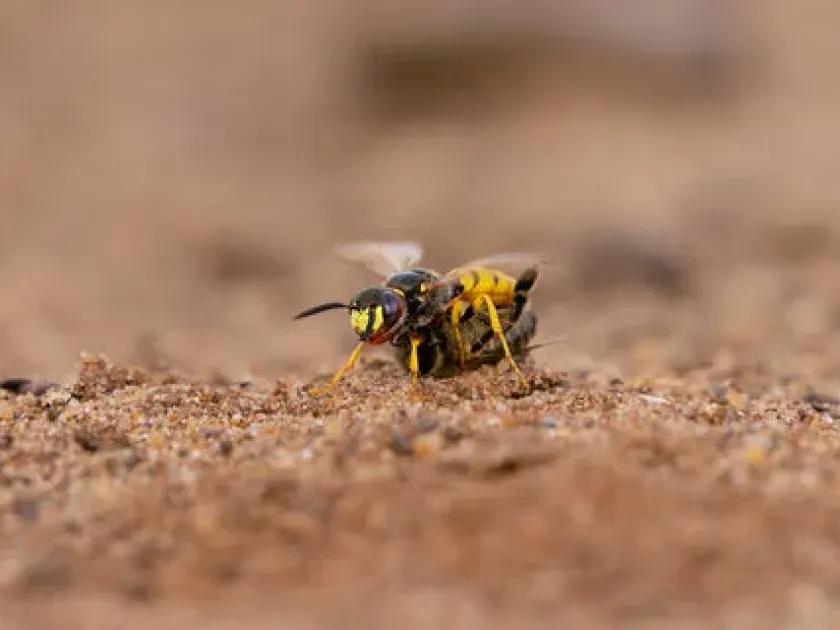
The bee wolf is a large solitary digger wasp belonging to the Crabronidae family. Adults typically measure between 8 and 17 mm in length.
They are characterized by a distinct black and yellow pattern on their body, including specific triangular markings on their abdomen.
Bee wolves lead a solitary lifestyle and are known for building their nests in dry, sandy, or loamy soil exposed to direct sunlight.
Females are significantly larger and more robust than males, possessing powerful mandibles adapted for carrying heavy prey.
The species is widespread across the Palearctic region and is particularly well-adapted to warm, arid environments.
What it damages
The bee wolf is a specialized predator that targets honey bees exclusively during their foraging flights for nectar and pollen.
A female wasp captures and paralyzes a bee with a venomous sting, then carries the prey back to her underground burrow to serve as food for her larvae.
This predatory behavior can lead to high bee mortality rates, weakening individual colonies and causing a decline in overall honey production.
The loss of honey bees, especially during peak foraging seasons, places significant stress on the colony and can lead to its collapse.
In cases of heavy infestation, the presence of these wasps disrupts normal hive operations and forces bees to limit their flight activities.
When it appears
The adult activity period for the bee wolf typically spans from June through August, correlating with the warm summer months.
The wasps are most active on hot, sunny days when honey bee activity is at its highest, providing ample hunting opportunities.
Larval development occurs within the burrow, where they feed on paralyzed bees before spinning a cocoon to overwinter in the soil.
The life cycle is univoltine, meaning there is one generation per year, with adults emerging in the following spring.
The intensity of the wasp population is highly dependent on favorable soil temperatures and weather conditions during the summer season.
Signs of infestation
The primary sign of infestation is the appearance of multiple neat, small holes in the ground, often surrounded by tiny sand mounds.
Observing a wasp-like insect rapidly attacking bees in mid-air and dragging them to the ground is a clear indication of bee wolf presence.
Finding paralyzed bees scattered near burrow entrances or on hive landing boards is a reliable indicator of active predatory activity.
A noticeable decrease in colony foraging activity and general restlessness among bees at the hive entrance are secondary behavioral signs.
Direct sightings of the wasps themselves, especially as they hover low over open, sandy areas or land on nearby vegetation.
Control measures
Mechanical destruction of nesting sites by disturbing or tilling the soil during the early morning or evening hours is highly effective.
Modifying the habitat by planting dense vegetation or covering sandy ground near the apiary makes the area unattractive for burrowing.
Installing specialized wasp traps around the apiary perimeter can significantly reduce the number of hunting adults during the summer.
- Regular monitoring of the apiary perimeter for new nesting activity.
- Moving hives away from areas with loose, sandy soil.
- Using physical barriers to obstruct wasp flight paths near hives.
Proactive management and timely intervention are crucial to minimizing the impact of bee wolves on honey bee population health.
Taxonomy
- Latin name
- Philanthus triangulum
- Order
- Hymenoptera
- Family
- Crabronidae
- EPPO code
- PHIHTR
Discussion
No discussions yet — be the first.