
Philanthus diadema
Philanthus diadema
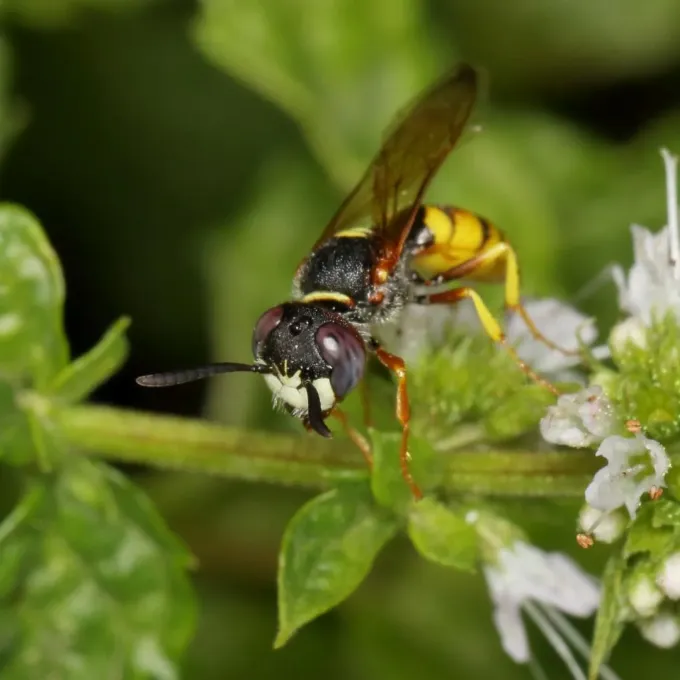
Description
How to identify
Philanthus diadema is a species of digger wasp belonging to the Crabronidae family, order Hymenoptera. It is a robust insect that shares structural similarities with other solitary wasps, often recognized by its distinct facial morphology.
Adult females are typically larger than males and possess specialized anatomy for digging nesting burrows in various types of soils, often preferring sandy or well-drained loamy ground.
The biology of this wasp involves a complex lifecycle, transitioning through egg, larval, pupal, and adult stages, with overwintering occurring deep within the soil in a protected cell.
They are primarily diurnal, showing peak activity during hot, sunny days when they engage in flight, foraging for floral nectar, or hunting prey to provision their subterranean nests.
Recognizing the nests is a key identification step; they appear as small, neat circular holes in the ground surrounded by piles of excavated soil, often grouped together in colonies.
What it damages
The primary agricultural concern regarding Philanthus diadema is its predatory behavior towards honey bees (Apis mellifera), which are essential for crop pollination.
By preying on adult bees, these wasps can significantly reduce the number of active foragers in an area, leading to decreased pollination efficiency for various horticultural and field crops.
While direct damage to crop plants is minimal, the cumulative impact of reduced pollination success represents an indirect economic loss for agricultural producers.
In regions with intense beekeeping activity, the pressure exerted by these wasps on bee populations can be severe, necessitating intervention to protect hives.
The presence of large nesting aggregations in agricultural fields may also disrupt soil surface integrity, although this is usually secondary to the ecological impact on pollinator populations.
When it appears
The activity of Philanthus diadema is strictly seasonal, primarily occurring during the warmest months of the year when conditions are optimal for larval development.
Adult emergence typically begins in early summer (June) and continues through mid-summer, coinciding with the flowering periods of many nectar-producing plants.
As the season progresses toward autumn, adult wasps decline in number, and the larvae complete their growth, eventually entering a dormant stage within the soil for the winter months.
Warmth is a critical requirement for their development; excessive rainfall or prolonged cool spells during the summer can significantly suppress their population growth and activity.
Monitoring for the start of the nesting season should begin as soon as temperatures consistently exceed the species' thermal threshold in late spring or early summer.
Control measures
Management strategies focus on habitat modification and protective measures to shield beneficial insects rather than direct eradication of the wasps.
Mechanical disturbance of the soil, such as deep tilling or plowing of known nesting aggregation sites, can disrupt the pupal stages and significantly reduce local populations.
For apiaries, the installation of physical barriers like netting over hive entrances during peak wasp activity can prevent the wasps from capturing returning foragers.
Chemical control is generally discouraged because of the high risk to non-target pollinators and the low selectivity of current broad-spectrum insecticides.
- Promoting dense vegetation cover on ground to discourage digging.
- Removing floral resources near apiaries to decrease local wasp attractiveness.
- Coordinated monitoring of nesting sites by farmers and beekeepers.
Taxonomy
- Latin name
- Philanthus diadema
- Order
- Hymenoptera
- Family
- Crabronidae
- EPPO code
- PHIHDI
Discussion
No discussions yet — be the first.