
Philaeus chrysops
Philaeus chrysops
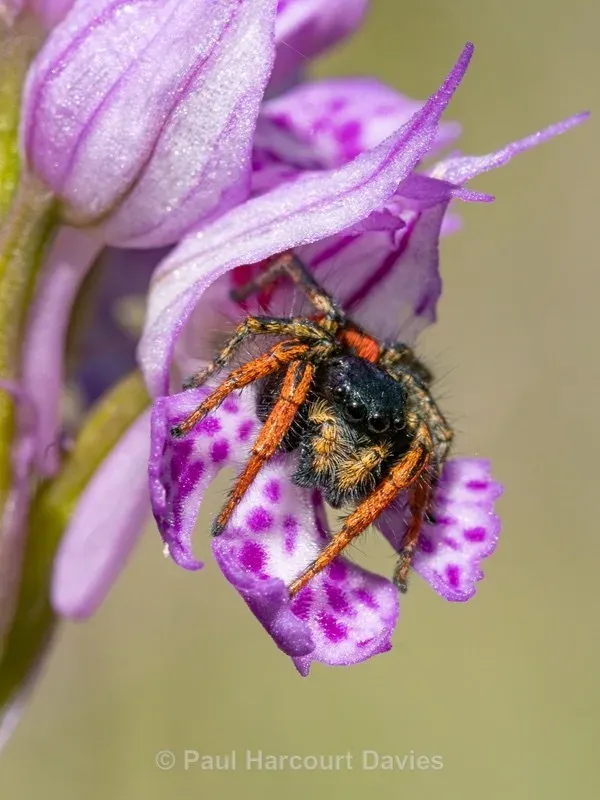
Description
How to identify
Philaeus chrysops is a species of jumping spider belonging to the Salticidae family, widely distributed across various temperate climates.
The males are easily recognized by their striking appearance, featuring a bright red abdomen with a black stripe and contrasting cephalothorax.
Females exhibit a more cryptic, brownish-grey coloration, which serves as effective camouflage on bark and soil surfaces.
These spiders possess excellent vision and rely on their powerful jumping legs to ambush prey rather than building traditional orb webs.
They are diurnal hunters, actively foraging during the brightest parts of the day, which makes them highly visible in agricultural settings.
What it damages
In agronomic terms, Philaeus chrysops is generally considered a beneficial predator rather than a direct pest of agricultural crops.
They consume a variety of small insects, assisting in the natural regulation of pest populations within the field or orchard.
However, their role can become complex if they prey on other beneficial insects, such as parasitic wasps or ladybird beetles.
They do not cause any mechanical damage to plant tissues, fruits, or foliage, as their diet consists exclusively of animal protein.
Management is rarely required unless they interfere with biological control programs that rely on introduced beneficial species.
When it appears
The active season for Philaeus chrysops extends from late spring through the end of the summer, peaking during the warmest months.
They favor sunny, exposed habitats, frequently colonizing orchards, vineyards, and vegetable fields with well-lit foliage.
Mating occurs during the summer, with females creating small, silken retreats under leaves or within tree bark to protect their eggs.
Overwintering occurs as adults or late-stage nymphs, taking shelter in crevices, dense vegetation, or protected areas near the base of plants.
As temperatures rise in the spring, the spiders emerge from dormancy to resume their predatory activities and continue their development cycle.
Signs of infestation
Presence is usually detected by observing the characteristic erratic, jumping movements of the spiders on plant surfaces on sunny days.
Small, inconspicuous silken retreats hidden in folded leaves or bark crevices are the primary indicators of their nesting activity.
One may notice the remains of small insects near these retreat sites, indicating the spider's hunting success in the area.
Unlike leaf-eating pests, there is a total absence of holes, bite marks, or yellowing on leaves associated with their presence.
The lack of large, sticky webs also serves as a key identification sign for this particular group of spiders.
Control measures
No specific chemical control measures are recommended, as they are not primary pests and their ecological impact is generally neutral or positive.
Maintaining a balanced ecosystem through reduced pesticide use is the most effective way to manage their population naturally.
Standard horticultural practices, such as pruning dead wood and managing debris, naturally limit available overwintering sites.
When implementing integrated pest management, ensure that predatory insects are protected alongside these native spiders.
Focus management efforts on actual crop threats, allowing predators like Philaeus chrysops to contribute to natural pest suppression.
Taxonomy
- Latin name
- Philaeus chrysops
- Family
- Salticidae
- EPPO code
- PILSCH
Discussion
No discussions yet — be the first.