
Jumping spider
Phidippus
Description
How to identify
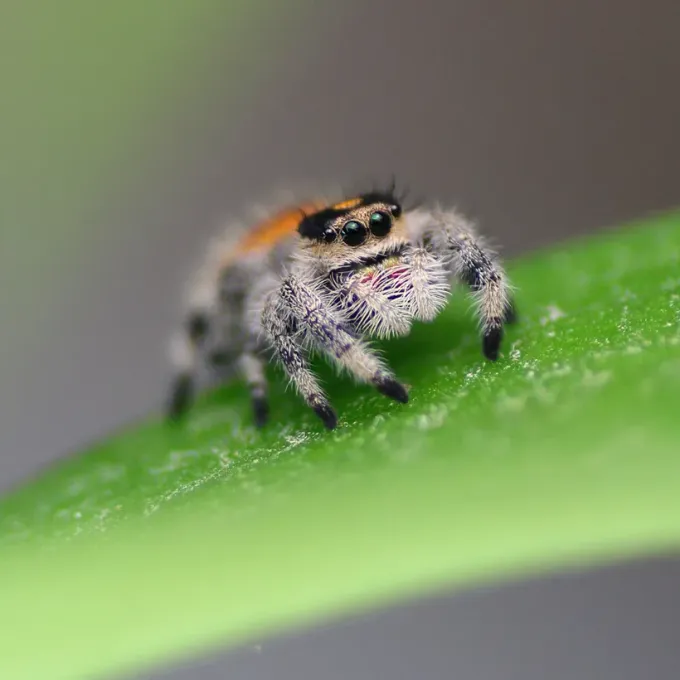
The jumping spider of the genus Phidippus belongs to the Salticidae family. These arthropods are characterized by their remarkable jumping ability, which is achieved through a hydraulic leg system, allowing them to leap distances significantly greater than their own body length.
They are easily recognizable by their large, well-developed anterior eyes that provide excellent binocular vision. This specialized vision is essential for their hunting behavior, as they actively track and stalk their prey rather than relying on stationary webs.
Their bodies are often covered in dense setae, and many species exhibit vibrant colors that may act as a warning to potential predators. They are active during the day, which makes them highly visible inhabitants of agricultural environments and gardens.
Taxonomically, they are classified within the Araneae order. Unlike herbivores, Phidippus species are strictly carnivorous, feeding on various small insects and arthropods found within the plant canopy.
The life cycle involves several developmental stages, starting from eggs deposited in silk retreats. Adults prefer sheltered areas, such as under tree bark or in leaf litter, to overwinter or lay eggs, ensuring their offspring have protection during early stages of growth.
What it damages
In agronomic practice, Phidippus are not considered pests. They do not consume plant tissues, sap, or roots. Any claim that they damage crops directly is scientifically inaccurate, as their digestive systems are adapted solely for processing insect protein.
The only potential nuisance occurs in greenhouse or floral production, where spiders may create small silk retreats on blooms or foliage. This can temporarily affect the aesthetic marketability of the plants, but it does not represent physiological harm to the plant itself.
In fact, jumping spiders are highly beneficial to agriculture. They serve as efficient predators of major pests, including aphids, whiteflies, and various small caterpillars, contributing to the natural suppression of pest populations in fields.
Growers often misidentify them as threats because they observe them crawling on damaged plant parts. However, the spiders are present only because they are hunting the actual pests that caused the initial damage to the foliage or fruit.
The economic impact of the jumping spider is therefore positive. By integrating themselves into the crop ecosystem, they act as an essential part of the biological control infrastructure, reducing the reliance on chemical interventions.
Control measures
Chemical control against Phidippus is generally not recommended and is considered counter-productive in integrated pest management. The use of broad-spectrum insecticides to eliminate them also destroys other beneficial arthropods, potentially leading to pest outbreaks.
If population reduction is necessary in greenhouses, the best approach is to manage the available prey. By effectively controlling the primary pest populations, such as aphids or gnats, the spiders will naturally move elsewhere due to the lack of food resources.
For ornamental crops, simple mechanical removal of silk retreats is sufficient to maintain cosmetic standards. Using gentle air blasts or water sprays allows growers to clean the plants without harming the spiders or damaging the delicate vegetation.
Cultural practices, such as removing excessive plant debris or pruning dense foliage, can reduce the number of potential hiding spots for these spiders. This limits the habitat capacity and helps keep their numbers at a comfortable, low level.
Management should focus on monitoring for actual crop threats. The presence of jumping spiders serves as a positive indicator of a healthy, functioning ecosystem where natural predators are working to keep harmful insect populations in check.
Taxonomy
- Latin name
- Phidippus
- Family
- Salticidae
- EPPO code
- PHIDSP
Discussion
No discussions yet — be the first.