
Pelegrina flavipes
Pelegrina flavipes
Description
How to identify
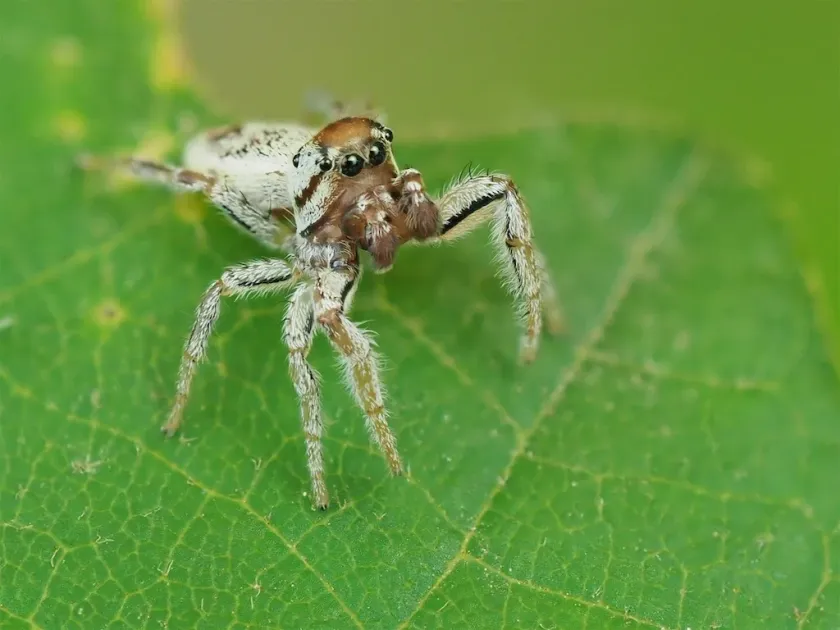
Pelegrina flavipes is a species of jumping spider belonging to the family Salticidae. These spiders are well-known for their unique hunting behavior, which relies on high-speed movement and precise jumping rather than web building.
Adult spiders typically measure between 5 to 7 millimeters in body length. They are characterized by their yellowish or ochre-colored legs, which serves as a primary diagnostic feature and origin of their common name.
They possess an impressive visual system consisting of eight eyes. The two large, forward-facing eyes provide excellent depth perception, which is crucial for identifying and capturing prey with remarkable accuracy.
The body coloration is a mix of gray, brown, and black patterns, providing effective camouflage against bark, leaves, and various plant stems. Sexual dimorphism is present, with males often showing more striking patterns during courtship displays.
This species is native to North America and is frequently found in diverse habitats, including agricultural fields and gardens, where it actively patrols the foliage throughout the daylight hours.
What it damages
It is important to clarify that Pelegrina flavipes is not a plant pest. These spiders are strictly carnivorous and do not cause damage to plant tissues, flowers, or fruits through feeding activities.
Their presence in agricultural settings is generally beneficial. By preying on aphids, thrips, and other small herbivorous insects, they act as natural controllers of pest populations within the ecosystem.
Because they do not feed on sap or foliage, they do not spread plant viruses or cause physiological stress to the crops they inhabit. Any concerns regarding their presence are usually purely aesthetic or related to strict post-harvest quarantine inspections.
In modern integrated pest management (IPM) programs, the presence of these spiders is encouraged as they contribute to reducing the need for chemical insecticides, thus promoting a healthier growing environment.
Therefore, farmers should view Pelegrina flavipes as an ally. They represent a natural biological control agent that works continuously to protect the health and productivity of various crops.
When it appears
The seasonal activity of Pelegrina flavipes corresponds with the warmer months of the year, starting from late spring when temperatures are sufficiently high to support their metabolic needs.
Summer months represent the peak of their activity, as these spiders are exothermic and thrive in warmer conditions. During this time, they actively mate, forage, and go through their development stages.
The life cycle is continuous throughout the growing season, with multiple generations possible depending on the climate. They spend most of their time patrolling plant surfaces to secure enough nutrition for growth and reproduction.
As autumn approaches and temperatures drop, the spiders seek out overwintering sites. These locations include crevices in bark, leaf litter, and dry plant hollows where they can enter a state of dormancy to survive the winter cold.
Unlike many crop-specific pests that rely on plant phenology, the activity of these spiders is primarily driven by temperature and the availability of their insect prey across the field environment.
Control measures
There are no recommended control measures for Pelegrina flavipes because they are considered beneficial arthropods. Using insecticides to target them is counterproductive and harmful to the environment.
The indiscriminate use of broad-spectrum pesticides often leads to the death of these predators, which can subsequently cause a rapid resurgence of actual plant-eating pests, creating a negative feedback loop for the grower.
To foster a healthy balance in the garden, it is advised to avoid unnecessary spraying. Supporting a biodiverse environment with a mix of plant species helps maintain a stable population of these beneficial spiders.
If they must be discouraged from specific sensitive areas like packing houses or greenhouses, manual relocation or the use of physical barriers like fine mesh screens is far more effective than chemical intervention.
By protecting these natural predators, agricultural producers can minimize costs associated with synthetic chemicals and contribute to more sustainable and ecological crop management practices.
Taxonomy
- Latin name
- Pelegrina flavipes
- Family
- Salticidae
- EPPO code
- METDFL
Discussion
No discussions yet — be the first.