
Evarcha
Evarcha
Description
How to identify
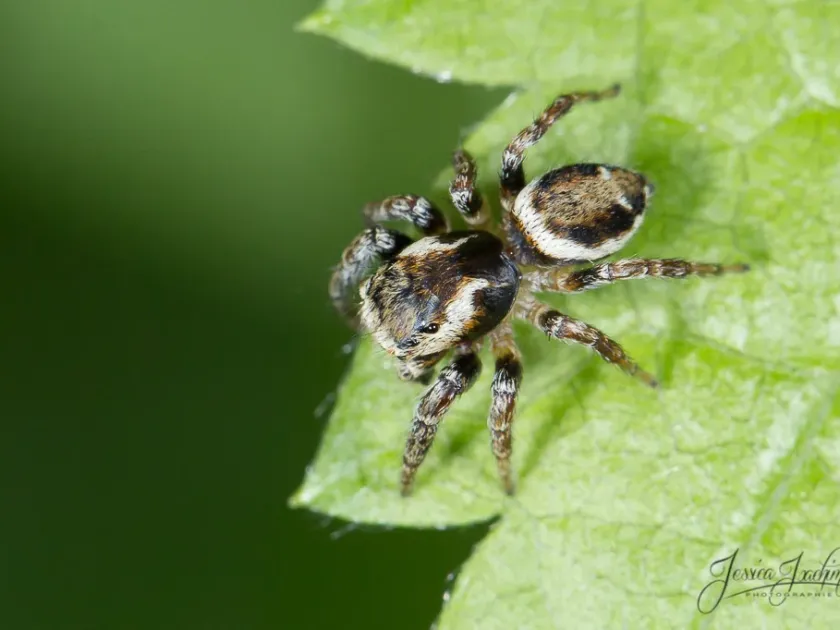
The genus Evarcha belongs to the family Salticidae, commonly known as jumping spiders. These spiders are easily recognized by their compact body shape and large, highly developed front eyes.
Unlike web-building spiders, Evarcha species are active hunters. They use their excellent vision to scan the environment and rely on powerful jumping legs to capture prey.
Their coloration is typically cryptic, often resembling the textures of bark, leaves, or soil, which serves as a highly effective camouflage against potential predators.
Males often display vibrant patterns or tufts of hair on their heads, which are used in complex courtship dances to attract females during the breeding season.
Despite their small size, they are formidable hunters in the micro-world of plants and are found in various habitats worldwide, including agricultural fields.
What it damages
It is crucial to clarify that Evarcha spiders are not plant pests. They are strictly predatory and do not cause any physical damage to agricultural crops.
They do not feed on plant sap, tissues, or fruits. Instead, they play a vital role in natural pest control by preying on various small insects that could otherwise harm your plants.
Their diet includes aphids, small leafhoppers, mites, and young insect larvae, making them valuable allies for any gardener or farmer.
By consuming harmful insects, Evarcha helps maintain the ecological balance within a garden or field, reducing the need for chemical intervention.
In a healthy agricultural environment, the presence of these spiders should be encouraged rather than managed as a problem.
When it appears
The activity period for Evarcha spiders typically begins in early spring as temperatures rise, allowing them to emerge from their overwintering sites.
Throughout the summer months, they are most active during the day when sunlight is plentiful, as they rely on their vision to detect and track prey across the vegetation.
As autumn approaches and temperatures drop, these spiders seek shelter in crevices, under bark, or within dense vegetation to enter diapause for the winter.
Their life cycle spans several growth stages, meaning that both juvenile and adult spiders can be observed on plants during the active growing season.
They prefer sunlit, exposed surfaces of plants, which makes them easy to spot on sunny days in orchards and gardens.
Control measures
There is no need for control measures against Evarcha, as they are beneficial organisms that do not threaten agricultural production.
The primary concern for these spiders is the indiscriminate use of insecticides. Wide-spectrum chemicals often eliminate these beneficial predators along with pests.
To support populations of Evarcha, gardeners should minimize the use of harmful pesticides and opt for integrated pest management (IPM) strategies.
Preserving natural habitats, such as hedgerows and diverse planting zones, provides the necessary shelter for these spiders to thrive.
Ultimately, by protecting these small jumping spiders, you enhance the natural defense system of your plants against herbivorous insects.
Taxonomy
- Latin name
- Evarcha
- Family
- Salticidae
- EPPO code
- EVARSP
Discussion
No discussions yet — be the first.