
Mandibulatus jumping spider
Metaphidippus mandibulatus
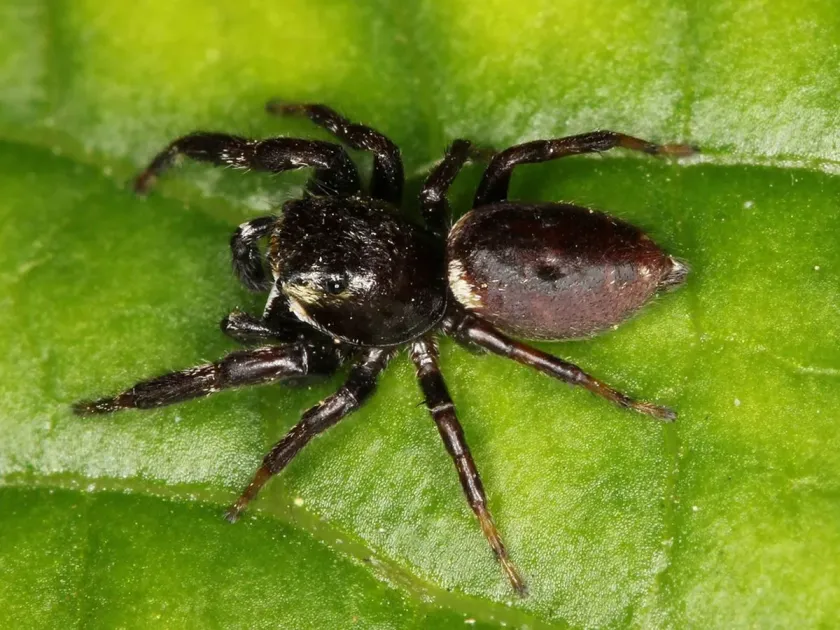
Description
How to identify
The Mandibulatus jumping spider (lat. Metaphidippus mandibulatus) is a member of the Salticidae family. It is a small predator known for its exceptional visual acuity.
The most distinctive feature of this species is the hypertrophied chelicerae in males, which give them a unique and somewhat aggressive appearance.
The body is covered with dense hair, allowing it to camouflage perfectly on tree bark and leaves while stalking prey in its natural habitat.
Unlike web-building spiders, these creatures actively hunt by making quick, precise jumps onto their prey, which is characteristic of the jumping spider group.
Adult individuals typically reach 5–8 millimeters in length, with females being more robust, while males appear more elongated due to their large mouthparts.
What it damages
While often considered beneficial, this species can become a nuisance in industrial greenhouses or orchards where it disrupts the delicate balance of beneficial insects.
They can affect fruit crops like apples and grapes by damaging tender buds and young leaves while establishing their temporary hunting hideouts.
The main issue lies in their aggressive competition with other beneficial predators, which may reduce the overall efficacy of natural biological pest control.
In high populations, the mechanical damage caused by their movement and nesting habits can stress young seedlings and delay their optimal growth rate.
Though they do not consume plant sap directly, their presence is often associated with localized tissue damage on the tips of emerging shoots.
When it appears
Activity begins in early spring when air temperatures rise consistently above 15 degrees Celsius, signaling the end of their winter dormancy period.
Peak population levels are observed during mid-summer, when an abundance of small insect prey provides the necessary resources for rapid development.
As autumn approaches, adults and nymphs seek refuge in deep tree bark cracks, fallen leaf litter, or small gaps in greenhouse structures to survive the winter.
In climate-controlled greenhouses, the spider can maintain an active lifecycle throughout the year, provided there is a constant supply of food.
The breeding period typically coincides with early summer, when females construct small, silk-lined cocoons on the underside of leaves for protection.
Signs of infestation
The most common indicator of presence is the appearance of small, thin silk retreats tucked away in leaf axils or on the underside of branches.
The sight of small spiders moving in quick, jerking motions across leaf surfaces is a clear sign that a local population is established in the area.
Discovering exuviae, the shed skins left behind after molting, on leaves or stems is a strong piece of evidence that the spiders are actively growing.
A sudden decline in the local population of other beneficial predatory insects, such as lacewings, often hints at the presence of competitive jumping spiders.
Micro-punctures on the surface of young buds indicate areas where spiders have frequently rested, causing minor mechanical stress to the plant tissue.
Control measures
Effective management starts with keeping the garden or greenhouse free of debris, which eliminates potential overwintering sites for the spiders.
Using biological control agents to manage small pest insect populations will make the area less attractive to jumping spiders due to lower prey availability.
Physical barriers like fine-mesh screens in greenhouses can significantly limit the migration of spiders into protected crop areas during the summer months.
- Sanitize gardening tools and areas.
- Manual removal of spider nests.
- Monitoring via yellow sticky traps.
- Application of selective oils if necessary.
If population densities reach critical levels, apply insecticidal soaps or neem oil, which target soft-bodied arthropods while minimizing harm to the environment.
Taxonomy
- Latin name
- Metaphidippus mandibulatus
- Family
- Salticidae
- EPPO code
- METDMA
Discussion
No discussions yet — be the first.