
Metaphidippus
Metaphidippus
Description
How to identify
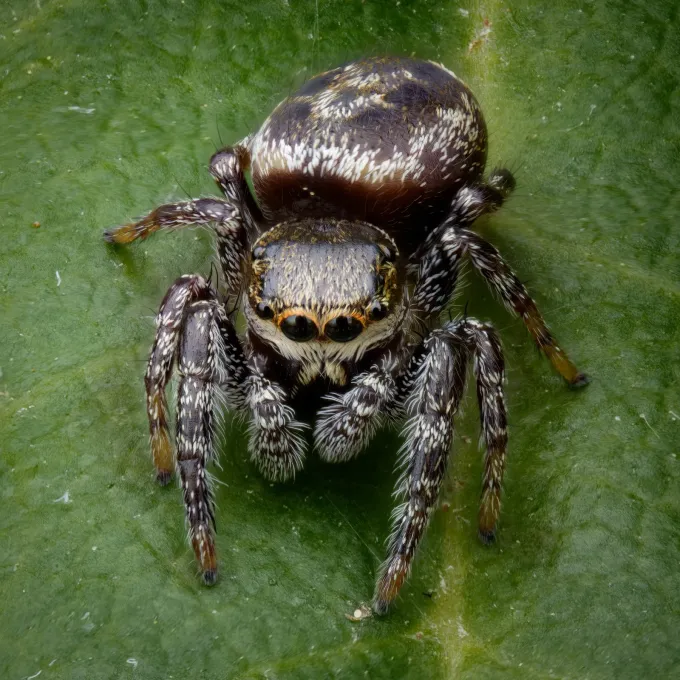
Metaphidippus is a genus of spiders within the Salticidae family, commonly known as jumping spiders, characterized by their unique hunting behavior.
They possess eight eyes, with the large front pair providing exceptional vision, which is essential for calculating distances during their signature pounce on prey.
These spiders are generally small, typically ranging from a few millimeters to about a centimeter in length, with intricate coloration for camouflage.
Unlike web-building spiders, they are cursorial hunters, actively roaming on vegetation, branches, and tree trunks to locate their next meal.
The genus is widespread and includes numerous species adapted to various terrestrial environments, where they act as essential predatory components of the food web.
What it damages
Metaphidippus does not damage plants, as they are strictly carnivorous and have no mechanism for feeding on plant tissues or sap.
They play a positive role in agriculture by preying on various crop pests, including aphids, mites, and other small insects that inhabit foliage.
Their presence in an orchard or vegetable garden should be viewed as a sign of natural pest control rather than an infestation of pests.
Since they do not consume plant materials, they do not cause mechanical damage, necrotic spots, or any form of physiological stress to the plants.
Farmers and gardeners benefit from their predatory activities, as they contribute to maintaining a balance between pests and their natural enemies.
When it appears
The life cycle of Metaphidippus is synchronized with the seasons, with peak activity occurring during the warmer months when prey is most abundant.
Adults remain active throughout the spring and summer, actively patrolling plants to hunt smaller insects and arthropods.
As temperatures drop in late autumn, they seek shelter in protected areas such as tree bark crevices, leaf litter, or man-made structures to survive the winter.
Reproduction typically takes place early in the season, and eggs are laid in silk-lined retreats to protect them from environmental fluctuations.
The duration of their life cycle and their ability to thrive depend largely on the regional climate and the consistent availability of prey items.
Signs of infestation
Observing the spider itself, often seen standing still and then leaping onto prey, is the most common sign of its presence.
They may construct small, silken retreats on the underside of leaves, which are used as temporary shelters or for molting and protection.
There are no diagnostic signs of crop damage associated with Metaphidippus, as they simply do not interact with plant tissues for nutrition.
Any plant damage observed in their vicinity is strictly linked to other phytophagous pests that are likely being targeted by the spider.
Their presence suggests a healthy garden ecosystem where natural biological processes are actively regulating insect populations.
Control measures
No control measures are needed for Metaphidippus, as they are beneficial organisms that do not threaten plant health or agricultural productivity.
The use of broad-spectrum insecticides can unintentionally reduce populations of these helpful predators, potentially leading to outbreaks of other pests.
Integrated Pest Management (IPM) practices encourage the conservation of such predatory species to minimize the reliance on chemical pesticides.
Maintaining habitats like hedge rows or wildflower strips provides refuge for these spiders, enhancing their role in biological pest suppression.
If they are found indoors, they can be gently relocated outside, as they pose no risk to humans, structures, or indoor ornamental plants.
Taxonomy
- Latin name
- Metaphidippus
- Family
- Salticidae
- EPPO code
- METDSP
Discussion
No discussions yet — be the first.