
Philaeus
Philaeus
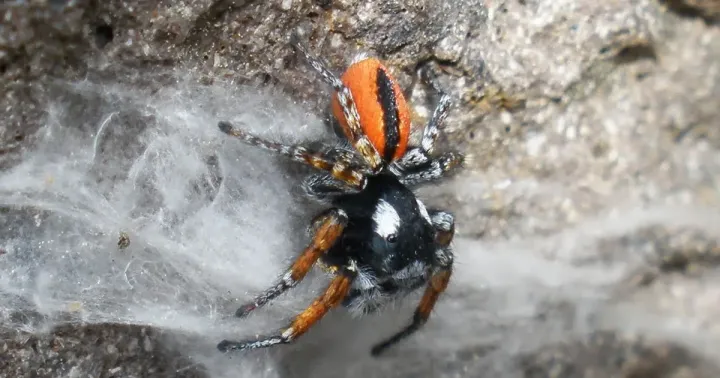
Description
How to identify
Philaeus chrysops is a prominent member of the Salticidae (jumping spider) family, widely recognized for its agile movement and unique predatory habits.
The males exhibit striking sexual dimorphism, featuring a vibrant red abdomen contrasted with a black cephalothorax adorned with distinct white patterns.
Females possess more muted, earthy tones, which serve as excellent camouflage against tree bark, stems, and soil, protecting them from avian predators.
Unlike web-building spiders, Philaeus does not rely on silk traps; instead, it utilizes a sophisticated visual system and hydraulic leg muscles to hunt prey by pouncing.
With eight eyes arranged in three rows, these spiders possess acute spatial perception, allowing them to track and calculate jumping distances with extreme precision.
What it damages
Philaeus is strictly a predatory arachnid and does not feed on plant tissues, meaning it causes no direct damage to crops through feeding or foliage consumption.
In many agricultural settings, they are considered beneficial because they prey on various harmful insects, such as aphids, mites, and small larvae.
However, the silk retreats they construct for molting or egg-laying can occasionally detract from the aesthetic quality of ornamental plants or fresh produce.
In rare instances, dense populations of these spiders may interfere with flower pollination if they colonize blooms and deter pollinators from landing.
Since they do not possess mouthparts capable of piercing plant vascular systems, they cannot transmit plant viruses or cause physiological wilting like sap-sucking insects.
When it appears
Their active lifecycle begins in early spring, as temperatures rise and the availability of prey insects increases across garden environments.
The peak activity period is typically throughout summer months, when juvenile and adult spiders are most visible, actively hunting across foliage and stems.
During the autumn season, Philaeus individuals seek out crevices in wood, dry plant hollows, or leaf litter to prepare for the overwintering phase.
The reproductive cycle is closely tied to seasonal food availability, with mating often occurring during late spring or early summer to ensure offspring survival.
In greenhouse settings, where climate control provides consistent warmth, these spiders can remain active throughout the year, potentially forming stable local populations.
Signs of infestation
The most reliable sign of their presence is the appearance of small, tightly woven white silken chambers tucked into leaf folds or stem junctions.
Gardeners may observe sudden, jerky jumping movements on leaves, which is a classic behavior of these spiders while patrolling their territory.
Unlike infestation signs from spider mites, which result in large-scale webbing and leaf chlorosis, Philaeus leaves no symptomatic damage on the host plant.
Visual spotting of the adult spider, especially during bright sunny days when they hunt, confirms their presence in the immediate vicinity.
Discarded exoskeletons (exuviae) near their nest sites indicate recent molting, showing that the population is healthy and actively growing within the area.
Control measures
Direct control measures are generally unnecessary and discouraged, as Philaeus spiders contribute to the natural biological control of genuine plant pests.
If their presence is unwanted on decorative plants, simply brushing off their small silk shelters is sufficient to discourage them from remaining on that specific plant.
Avoid using broad-spectrum insecticides, which often kill beneficial predators like jumping spiders, potentially leading to secondary outbreaks of harmful insects.
Maintaining a balanced ecosystem through organic gardening practices supports natural predators, keeping spider populations at a naturally stable level.
If their silk structures are perceived as a nuisance on floral products, manual removal remains the most effective, eco-friendly method for crop protection.
Taxonomy
- Latin name
- Philaeus
- Family
- Salticidae
- EPPO code
- PILSSP
Discussion
No discussions yet — be the first.