
Meadow spittlebug
Philaenus tesselatus
Description
How to identify
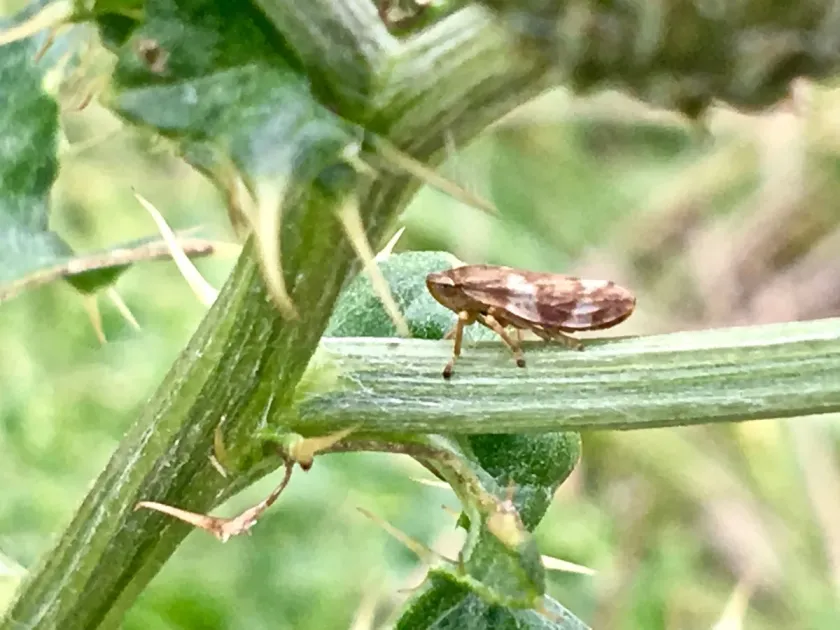
The meadow spittlebug (Philaenus tesselatus) is a member of the Aphrophoridae family. These insects are typically 5–7 mm long, exhibiting a stout body shape and varied coloration, often featuring mottled patterns that provide excellent camouflage in grassy habitats.
The most distinctive stage of this insect is the nymph, which surrounds itself with a protective layer of froth, commonly referred to as "cuckoo spit." This foam is produced from the insect's own excreta and fluid secretions, protecting the soft-bodied nymph from predators and desiccation.
Adult spittlebugs possess strong hind legs adapted for jumping, allowing them to escape quickly when disturbed. Their wings are often hardened, and the overall morphology is well-suited for life within dense vegetation.
The taxonomic classification places them in the order Hemiptera, which means they possess specialized piercing-sucking mouthparts. This anatomical feature is central to their survival and their role as significant agricultural pests.
Identification often relies on the presence of the foam nests rather than the insects themselves, as the adults are mobile and tend to hide within the foliage, making them difficult to spot without careful inspection.
What it damages
The meadow spittlebug attacks a wide variety of plants, including legumes, cereals, and various horticultural crops. By feeding on xylem and phloem sap, they deplete the plant of essential nutrients and moisture.
Feeding damage is characterized by stunted growth, yellowing of the leaves, and overall physiological stress. In severe cases, the tips of the plants may curl and wither, significantly reducing the vigor and potential yield of the affected crop.
The accumulation of foam on stems and leaves can also interfere with the plant's normal transpiration and photosynthesis processes. Furthermore, the constant piercing of the plant tissues creates entry points for various bacterial and fungal pathogens.
In forage crops like alfalfa or clover, high populations of spittlebugs can cause substantial losses in biomass, reducing both the quantity and the nutritional quality of the hay harvested from infested fields.
Horticultural crops, including strawberries and various ornamental plants, may show reduced fruit set or deformed development when subjected to significant feeding pressure from this pest.
When it appears
These insects overwinter in the egg stage, typically found in plant debris or at the base of perennial plants. As temperatures rise in spring, the eggs hatch, and the nymphs begin their development.
The nymphal stage lasts for several weeks during the late spring and early summer, coinciding with the period of rapid vegetative growth of many host plants. During this time, they are stationary and focused on feeding.
Adults emerge as the weather gets warmer, typically from mid-summer onwards. They are much more mobile and active, often spreading across fields to feed on various succulent plant parts before mating and laying eggs for the next cycle.
Depending on the climatic conditions of the region, the life cycle may be univoltine or bivoltine. Warmer climates may allow for a second generation, which can significantly increase the total population density by late summer.
As autumn approaches, adult activity slows down, and females seek appropriate sites on vegetation to deposit their eggs, ensuring the survival of the next generation through the winter months.
Signs of infestation
The most definitive sign of an infestation is the appearance of white, soapy-looking foam on the stems or leaf axils. This "spittle" is impossible to overlook once you know what to look for in the field.
Plants under attack may appear chlorotic or display twisted, distorted foliage. These symptoms are typical responses to the loss of sap and the injection of insect saliva into the plant tissues.
One can also observe the movement of adults when disturbing the canopy. A distinct rustling sound and the sight of small insects jumping away from the plants confirm their presence in large numbers.
Field inspectors often note irregular patterns of plant growth or patches of wilted vegetation, which are often the first signs that indicate a localized infestation that requires closer examination.
Secondary signs include the presence of black sooty mold on the foliage near the foam, which can occur if the insects produce honeydew or if the plant's health is sufficiently compromised to attract opportunistic fungi.
Control measures
Management of the meadow spittlebug starts with good field hygiene. Eliminating weeds that serve as alternate hosts is essential for reducing the overall pest pressure in the cropping system.
Mechanical operations, such as plowing and harrowing, can disrupt the eggs located in plant debris, significantly reducing the emergence of nymphs in the following spring.
Chemical control should be applied only when the economic threshold is exceeded. Insecticides should be chosen based on local regulations and applied in a manner that minimizes impact on beneficial pollinators.
Biological control methods focus on encouraging natural predators such as lady beetles, lacewings, and parasitic wasps, which can help keep spittlebug populations at manageable levels.
- Implement a strict crop rotation schedule.
- Maintain weed-free field borders to limit migration.
- Use certified seeds to ensure vigorous crop development.
- Regularly monitor fields using sticky traps and visual counts.
- Perform autumn soil cultivation to bury egg-laden residues.
Taxonomy
- Latin name
- Philaenus tesselatus
- Order
- Hemiptera (bugs, aphids, leafhoppers)
- Family
- Aphrophoridae
- EPPO code
- PHILTE
Discussion
No discussions yet — be the first.