
Pine spittlebug
Aphrophora corticea
Description
How to identify
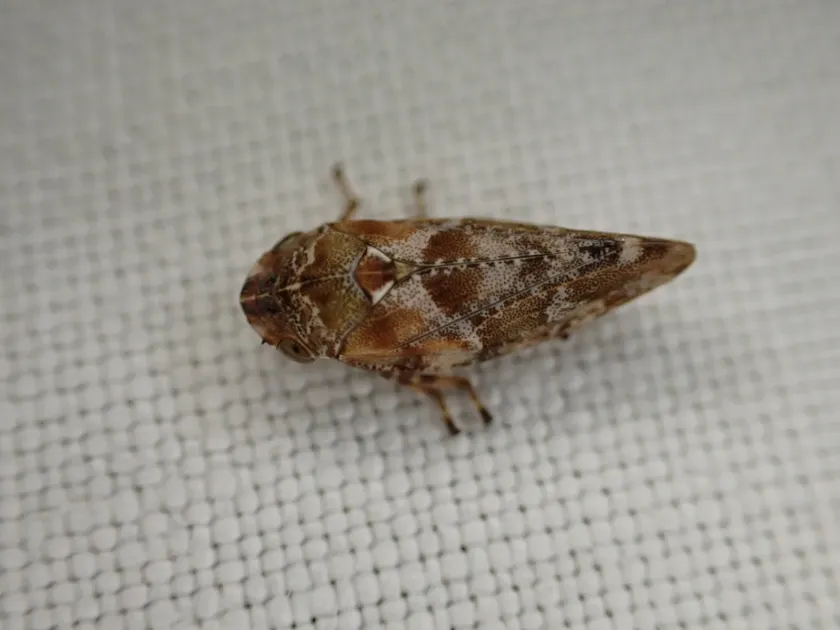
The pine spittlebug (latin name Aphrophora corticea) belongs to the order Hemiptera and the family Aphrophoridae. These insects are characterized by their brown, bark-like coloration, which provides excellent camouflage while they rest on pine branches.
The larvae are particularly well-known for producing a protective mass of froth or "spittle" that covers their bodies. This foam serves as a shelter against predators, parasites, and desiccation by the sun.
Adult spittlebugs are robust insects with powerful hind legs, enabling them to jump great distances when threatened. They are common residents of pine forests and plantations across the region.
This species follows a univoltine life cycle, meaning it produces only one generation per year. The eggs are the overwintering stage, carefully laid into the crevices of the tree bark to survive the cold winter months.
Identification is straightforward during late spring and early summer when the characteristic white foam masses become visible on the host trees. The species is closely linked to coniferous hosts, specifically members of the Pinus genus.
What it damages
The primary hosts for Aphrophora corticea are various species of pine, particularly the Scots pine. Occasionally, they may infest spruce or fir trees if they are growing in mixed stands where the pest is already established.
The damage is caused by the piercing-sucking mouthparts of both larvae and adults. By feeding on the phloem sap of the tree, the insects divert essential nutrients and water away from the developing needles and buds.
Heavy infestations result in stunted growth, yellowing (chlorosis) of the needles, and premature needle drop. Over time, the affected tree becomes stressed and loses its natural vitality and aesthetic value.
Furthermore, the physical damage from feeding wounds can facilitate the entry of pathogenic fungi and bacteria. This often leads to the development of cankers or localized necrosis on the branches.
In mature forests, these insects are usually considered secondary pests, but in nurseries and ornamental landscapes, their presence is often viewed as a significant issue that requires active management.
When it appears
Development begins in early spring, triggered by the rise in ambient temperature. As the trees break dormancy, the eggs hatch and the first instar larvae begin to feed.
The larval stage, which is the most active and visible phase, spans from late spring through June. During this time, the production of foam is at its peak, and the insects remain stationary in their feeding spots.
Transformation into the adult stage typically occurs in July. Adults are much more mobile than their immature counterparts and will spread throughout the canopy to feed and mate.
As summer draws to a close, adult females lay their eggs under the bark of branches. These eggs remain in diapause through the autumn and winter until conditions are right for the next season.
The entire lifecycle is synchronized with the tree's physiological status, ensuring that the offspring have access to nutrient-rich sap during the period of maximum vegetative growth.
Signs of infestation
The most distinctive sign of a pine spittlebug infestation is the accumulation of white, bubbly foam on branches. These "spittle nests" look like drops of saliva and are easily spotted by the naked eye.
Other symptoms include thinning foliage and a generally sickly appearance of the branches affected. You may notice small resin drips on the bark where the insects have pierced the surface.
On hot days, the foliage might show signs of wilting. Additionally, the presence of sooty mold on the branches can sometimes be an indirect sign of infestation, as it grows on the sugary excreta (honeydew) produced by the insects.
In mid-summer, the sudden jumping of adults from the foliage when a branch is disturbed is a clear indicator that the population has transitioned to the mature stage.
- Visible white froth on needles and twigs.
- Premature yellowing and browning of pine needles.
- Stunted shoot elongation in the spring.
- Resin weeping from feeding points.
- Sudden jumps of adults during canopy inspection.
Control measures
For ornamental trees, washing off the foam and larvae with a strong jet of water is often enough to keep the population at manageable levels without harming the tree.
In cases of severe infestation or in nurseries, systemic insecticides containing ingredients such as imidacloprid can be applied to the soil or as a foliage spray. The tree absorbs the chemical, effectively killing the sap-sucking pests.
Promoting tree vigor through regular watering and appropriate fertilization helps the pine resist pest attacks. A healthy tree can often compensate for the damage caused by a small number of spittlebugs.
Sanitation practices, such as pruning and destroying heavily infested branches, can significantly reduce the pest population and prevent the spread to adjacent healthy trees.
Encouraging natural predators, such as lady beetles or parasitic wasps, is a sustainable long-term strategy for biological control in gardens and wooded areas.
Taxonomy
- Latin name
- Aphrophora corticea
- Order
- Hemiptera (bugs, aphids, leafhoppers)
- Family
- Aphrophoridae
- EPPO code
- APHRCO
Discussion
No discussions yet — be the first.