
Spittlebug
Aphrophora
Description
How to identify
Spittlebugs, belonging to the family Aphrophoridae, are small insects characterized by their ability to produce a frothy, saliva-like mass to protect their nymphs during development.
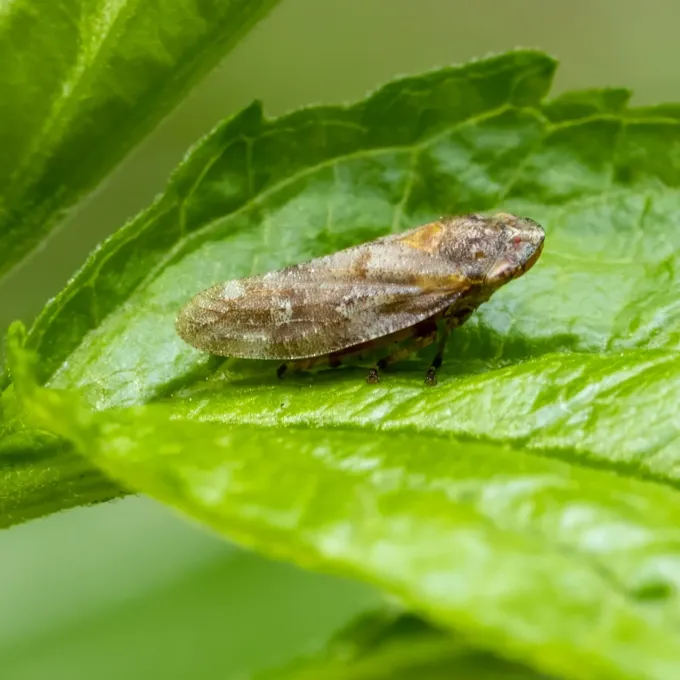
Adult insects are about 10 millimeters long, with robust, jumping hind legs and hardened wings, often displaying camouflaging brown or mottled coloration that blends with the plant stems.
The life cycle begins with eggs overwintering in plant debris or bark, followed by nymphs emerging in spring, which begin the characteristic process of creating "spittle" by excreting a fluid mixed with air.
While nymphs are stationary within their protective bubbles, adults are mobile and can move across plants, making it easier for them to spread across a garden or agricultural field.
The biological success of this pest is driven by its ability to utilize a wide range of host plants, ensuring food availability throughout the entire growing season.
What it damages
Spittlebugs feed on a vast array of crops, including orchard trees, berry bushes, garden vegetables, and ornamental plants, by using their piercing-sucking mouthparts to drain sap.
The removal of plant fluids causes severe stress to the host, resulting in stunted growth, yellowing of the leaves (chlorosis), and significant deformation of young, tender shoots.
Heavy infestations can lead to the weakening of the entire plant, making it more susceptible to environmental stress and secondary infections that further compromise the plant's yield.
Beyond direct feeding, these insects are known vectors for certain plant diseases, including phytoplasmas and viruses that can lead to permanent damage or systemic decline of the plant.
The frothy mass itself, while protecting the nymph, also provides a moist environment that can foster fungal development, negatively impacting the aesthetics and health of ornamental vegetation.
When it appears
Nymphs typically emerge in late spring when temperatures are consistently warm and plants are in a phase of rapid development, providing an abundance of nutrient-rich sap.
The peak activity period for the nymphs creating their protective bubbles occurs between late May and June, which is the critical time for monitoring and intervention.
As summer progresses, the nymphs mature into adults that move freely among plants, continuing to feed and potentially mate until the first autumn frost slows their activity.
By late autumn, the lifecycle closes as the females deposit eggs in protected sites, such as bark crevices, ensuring that the next generation is ready for the following spring.
Signs of infestation
The most distinctive indicator of a spittlebug infestation is the presence of white, frothy blobs on stems, leaf axils, or flower buds, often called "cuckoo spit."
Affected plants often display signs of physiological distress, such as curled or yellowed leaves, withered growth tips, and a noticeable reduction in overall plant vigor.
- White foamy masses on stems
- Distorted and stunted shoot growth
- Leaf discoloration and premature wilting
- Reduced flowering and fruit set
Control measures
Cultural control is a primary defense, involving the removal of weeds and dense vegetation that serve as hiding spots or alternative hosts for the nymphs in early spring.
A simple yet effective mechanical approach is to use a sharp stream of water from a garden hose to wash the foam off the plants, which exposes the nymphs and leads to their desiccation.
For more severe infestations, the application of systemic insecticides is often necessary to ensure that the chemical enters the plant tissues and reaches the pest during feeding.
Strategic timing is essential for chemical treatments, with early morning or late evening applications being most effective to avoid high temperatures and ensure better product coverage.
Consistent garden monitoring and the removal of heavily infested plant parts can significantly reduce the pest population and prevent widespread damage across the landscape.
Taxonomy
- Latin name
- Aphrophora
- Order
- Hemiptera (bugs, aphids, leafhoppers)
- Family
- Aphrophoridae
- EPPO code
- APHRSP
Discussion
No discussions yet — be the first.