
Golden spittlebug
Aphrophora auropilosa
Description
How to identify
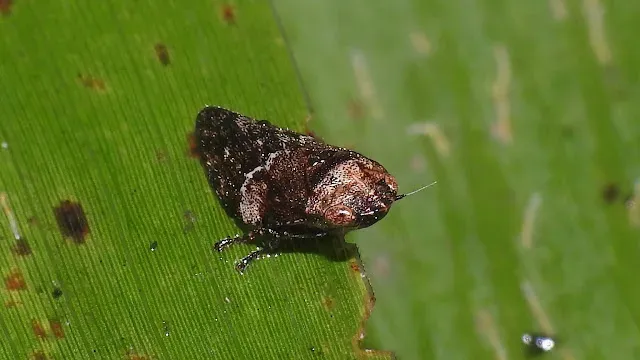
The golden spittlebug (Aphrophora auropilosa) is a member of the Aphrophoridae family within the order Hemiptera. Adult insects reach lengths of 10–12 mm and are characterized by a dense, golden-colored hair covering.
The body is elongated and ranges in color from light brown to dark brown, providing excellent camouflage against tree bark and foliage. They possess a broad head with well-developed compound eyes.
The nymphs lead a hidden existence, surrounding themselves with a protective foam mass often referred to as "cuckoo spit." This foam shields the nymphs from desiccation and predators.
This species is distinguished from other spittlebugs by the metallic golden sheen of its hairs and the specific morphology of the pronotum.
The life cycle encompasses the egg stage, five nymphal instars, and the adult stage. Hibernation typically occurs in the egg stage, deposited under bark or within bud scales.
What it damages
This pest is a polyphage that affects a wide range of woody plants and shrubs. Coniferous seedlings, deciduous trees, and fruit-bearing crops are frequently targeted.
Nymphs cause the most significant damage by extracting sap from young shoots and buds, which stunts plant growth. Affected tissues often become deformed and necrotic.
Adults also feed on plant sap, though their impact is usually more dispersed than that of the nymphs. Heavy infestations can lead to a significant decline in plant vigor.
The insect acts as a vector for various phytoplasmal and viral diseases transmitted through salivary secretions during feeding.
Heavily infested shoots lose turgor, curl, and may eventually wither, which compromises both the aesthetic value and the productivity of the plant.
When it appears
The golden spittlebug's activity begins in early spring, when nymphs emerge from overwintered eggs as temperatures consistently rise.
The period of intensive nymphal feeding occurs throughout May and June, at which time characteristic white foam masses become visible in leaf axils and on shoots.
Transformation into the adult form occurs by mid-summer. Adults remain active throughout the warm season until the onset of autumn frosts.
The peak population of adults typically occurs in July and August, as they disperse across the site to feed and seek suitable locations for egg-laying.
In autumn, adults deposit eggs into bark crevices, plant debris, or near the base of perennial plants, preparing for the next generation.
Signs of infestation
The most prominent sign of infestation is the presence of "spittle nests" on branches, leaves, or the base of the plant, which are easiest to spot in the morning.
Upon inspection of the shoots, one can find localized feeding marks, often accompanied by yellowing or browning of the epidermis surrounding the puncture site.
Infested plants often display symptoms of chlorosis and reduced annual shoot growth compared to healthy specimens.
A secondary indicator is a sticky residue left on leaves and branches, resulting from evaporated foam or insect excrement.
In areas of high nymph density, terminal leaves may curl and distort, indicating structural damage and impaired water transport within the plant.
Control measures
Cultural control methods include regular sanitary pruning of infested branches and the removal of plant debris to eliminate overwintering sites for eggs.
In smaller gardens, manual removal of nymphs or washing them off with a high-pressure water spray is effective at disrupting the protective foam.
Yellow sticky traps can be used to monitor adult activity and reduce the overall population size by capturing flying individuals.
In cases of severe infestation, systemic insecticides are recommended, as they penetrate plant tissues to control sap-sucking pests effectively.
Timing is critical; applications should be carried out during the early nymphal stage, before the insects have established their robust protective foam nests.
Taxonomy
- Latin name
- Aphrophora auropilosa
- Order
- Hemiptera (bugs, aphids, leafhoppers)
- Family
- Aphrophoridae
- EPPO code
- APHRAU
Discussion
No discussions yet — be the first.