
Alder spittlebug
Aphrophora alni
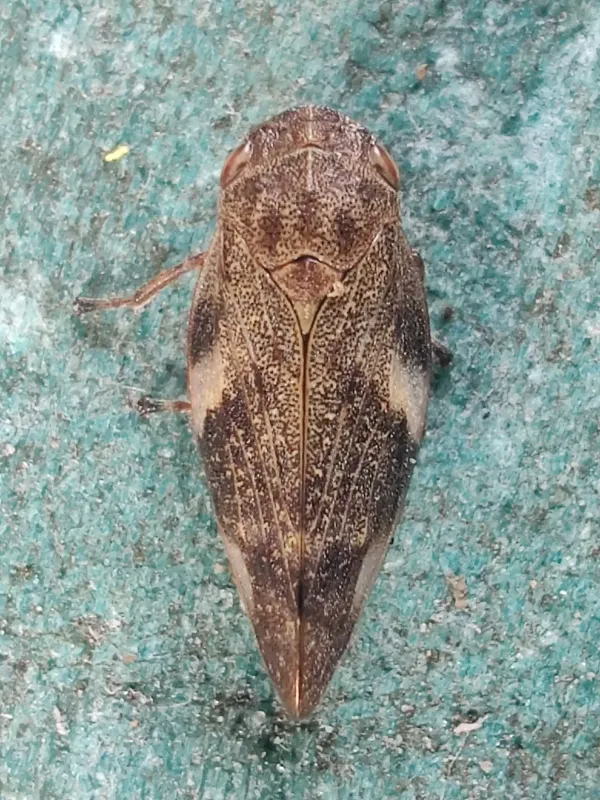
Description
How to identify
The Alder spittlebug (Aphrophora alni) is a member of the insect family Aphrophoridae within the order Hemiptera. These insects are well-known for the distinctive froth they produce during their juvenile stages.
Adult specimens measure approximately 10 mm in length and exhibit a brownish to yellowish-brown coloration. Their body shape and coloration provide camouflage against the bark and stems of their host plants.
The life cycle begins with overwintering eggs deposited under the bark. These hatch into nymphs in the spring, which then initiate the formation of their characteristic "spittle" or foam.
This foam serves as a vital protective layer, shielding the nymph from desiccation, extreme temperatures, and various predators throughout its development.
After undergoing several molts, the insects transition into the adult stage. Unlike the sedentary nymphs, adults are agile, capable of both jumping and flying to colonize new host plants.
What it damages
As a polyphagous insect, the Alder spittlebug feeds on a wide variety of plant hosts, including deciduous trees, shrubs, and many ornamental herbaceous species.
Damage occurs primarily through the extraction of plant sap. The nymphs insert their mouthparts into the phloem, diverting essential nutrients meant for the development of new leaves and stems.
Infested plants often show signs of stunted growth, leaf curling, and chlorosis (yellowing). In severe cases, the vitality of the plant is significantly reduced, leading to poor overall health.
Beyond direct sap depletion, the feeding activity can introduce pathogens into the plant tissues. The species is known to potentially act as a vector for various viral and phytoplasmal diseases.
Increased vulnerability to secondary fungal infections is common in plants weakened by heavy spittlebug infestations, which can lead to tip dieback and distorted canopy development.
When it appears
The biological activity of the spittlebug is closely tied to spring temperatures. Nymphs typically emerge in late April or May, coinciding with the rapid growth of host plant foliage.
June and July mark the period of maximum nymphal presence, as they are most active during these months. The foam masses are most visible on stems and leaf axils during this time.
Adult emergence typically begins in mid-summer, specifically from late June through August. This phase is characterized by broader dispersal as adults seek mates and host plants for egg-laying.
Egg-laying for the next generation occurs towards the end of summer. These eggs remain dormant through the winter, protected by plant tissue or bark crevices.
Environmental variables, particularly spring precipitation and temperature, significantly influence population dynamics, with warmer springs often resulting in higher infestation rates.
Signs of infestation
The presence of white, frothy foam on stems, buds, or leaf axils is the definitive sign of an Alder spittlebug infestation. These "spittle" masses are difficult to overlook.
Curled, deformed, or discolored leaves are common symptoms. These deformations usually occur on young, actively growing shoots where nymphs have concentrated their feeding efforts.
Closer observation of the foam mass will reveal the developing nymph, which is usually pale green or yellowish and lacks wings, unlike the more robust adult form.
The presence of adults is easily confirmed by shaking branches. These insects are quick to react and will jump or fly away instantly when disturbed, confirming their active status.
A sticky residue or sooty mold on the foliage below the feeding site can also indicate the presence of sap-sucking activity, as the insects process large amounts of plant fluids.
Control measures
Cultural management is the first line of defense. Keeping surrounding areas free of weeds removes early-season host sites, which can significantly lower initial population levels.
For small-scale infestations, a strong stream of water can be used to physically blast away the foam and dislodge the nymphs. This often leads to their death due to exposure.
When populations reach an economic threshold, systemic insecticides may be necessary. These products are taken up by the plant, effectively targeting the sap-feeding nymphs.
Always prioritize integrated pest management practices by using selective products that minimize impact on beneficial insects, such as pollinators and natural predators.
- Regular inspection of young shoots from late spring through summer.
- Pruning and removal of heavily infested or damaged branches.
- Encouraging natural predators like spiders, lacewings, and predatory bugs.
- Application of horticultural soaps or neem oil for mild to moderate nymphal infestations.
Taxonomy
- Latin name
- Aphrophora alni
- Order
- Hemiptera (bugs, aphids, leafhoppers)
- Family
- Aphrophoridae
- EPPO code
- APHRAL
Discussion
No discussions yet — be the first.