
Tarifa froghopper
Philaenus tarifa
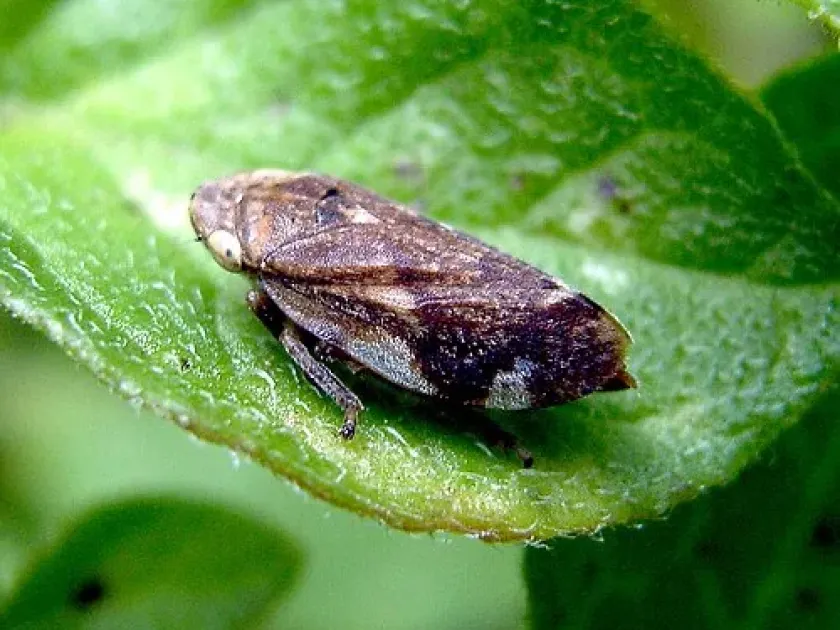
Description
How to identify
The Tarifa froghopper (Philaenus tarifa) is a species of insect belonging to the order Hemiptera and the family Aphrophoridae. It is closely related to the common meadow spittlebug, sharing similar physical traits and behavior.
Adults are small, typically exhibiting brown or grayish coloration, which provides excellent camouflage against stems and leaves. Their body shape is stout, typical of the froghopper group.
The nymphs are famous for living inside protective froth masses, often called "cuckoo spit," which they produce to maintain moisture and deter predators.
Identification often requires careful examination. Unlike some larger insects, the subtle differences between this species and its relatives often necessitate microscopic analysis of male genitalia.
They thrive in environments where vegetation remains lush and humid, allowing their nymphal stages to develop safely within their secreted protective bubbles.
What it damages
As a polyphagous insect, the Tarifa froghopper feeds on a wide range of herbaceous plants, including various agricultural crops, cereals, and grasses.
The insects use their piercing-sucking mouthparts to feed on plant sap, which deprives the host plant of essential nutrients and minerals required for growth.
Feeding damage leads to stunted plant growth, twisted or curled leaves, and a general loss of vigor, which can significantly reduce the overall yield of the affected crop.
A more insidious form of damage involves the transmission of plant diseases, including various viruses and phytoplasmas that the insect may pick up from infected plants.
Crops in their early developmental stages are most susceptible, as the loss of sap can severely impact their ability to establish strong root and foliage systems.
When it appears
The life cycle of Philaenus tarifa is strictly governed by seasonal changes and environmental temperatures, typically beginning in early spring.
The species overwinters in the egg stage, with eggs usually deposited on the lower parts of plant stems or within plant debris on the soil surface.
As spring temperatures rise, the eggs hatch into nymphs, which immediately start feeding and producing their signature spittle.
Nymphs undergo several molts through different instars before reaching the adult stage, usually by late spring or early summer.
Adults are active during the warmer months, focusing on mating and finding suitable host plants to lay eggs for the following year.
Signs of infestation
The most recognizable sign of infestation is the presence of frothy, white "spittle" masses attached to stems, leaves, and leaf axils of the host plants.
Affected plants often show chlorosis (yellowing of foliage) and necrosis as the tissues damaged by feeding begin to decline.
Severe infestations cause noticeable wilting and deformation, making the plant look significantly different from healthy individuals in the same field.
The presence of adult froghoppers, which are highly mobile and jump quickly when disturbed, serves as another clear indicator of their presence.
Sticky residue on leaves may also be present, attracting secondary pests or promoting the growth of sooty mold, further stressing the plant.
Control measures
Effective control requires an integrated pest management (IPM) approach that focuses on habitat modification and cultural practices.
Weed control is paramount, as many weeds act as primary hosts for the nymphs, providing a bridge between seasons and increasing overall pest pressure.
Tillage practices that incorporate crop residues into the soil can help disrupt the overwintering sites of eggs, reducing the population for the next season.
In cases of high pest density, the application of targeted insecticides during the nymphal stage is effective before the insects mature and disperse.
- Implement crop rotation to break the pest's reproductive cycle.
- Maintain clean field borders to reduce refugia for the population.
- Use systemic insecticides early in the season if economic thresholds are exceeded.
Taxonomy
- Latin name
- Philaenus tarifa
- Order
- Hemiptera (bugs, aphids, leafhoppers)
- Family
- Aphrophoridae
- EPPO code
- PHILTA
Discussion
No discussions yet — be the first.