
Meadow spittlebug
Philaenus spumarius
Description
How to identify
The meadow spittlebug (scientific name Philaenus spumarius) is a common insect belonging to the family Aphrophoridae. Adults are small, usually measuring 5 to 7 mm, with highly variable coloration ranging from pale brown to black.
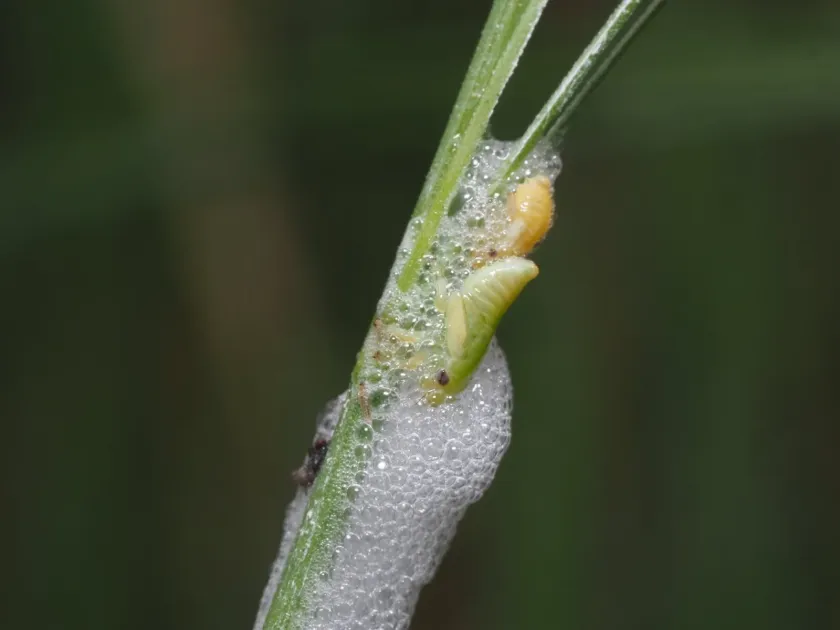
These insects are well-known for their unique larval stage, during which they produce a frothy, soap-like substance often referred to as "cuckoo spit." This foam is secreted by the nymphs to stay moist and hidden.
The life cycle begins with eggs overwintering in plant tissues or leaf litter. In the spring, nymphs emerge and start feeding on sap almost immediately after finding a suitable host plant.
Once the nymphs reach the final instar stage, they transform into adult froghoppers. Adults are highly mobile and have powerful hind legs, allowing them to jump large distances to escape threats.
The species is univoltine, meaning it completes only one generation per year, though its population density can reach high levels in suitable environments.
What it damages
This pest is highly polyphagous, meaning it feeds on a vast range of plants including vegetables, strawberries, ornamental flowers, and even young deciduous trees.
Both nymphs and adults pierce plant tissues to feed on phloem sap. This feeding process disrupts nutrient transport and weakens the overall vigor of the host plant.
Plants frequently targeted by the meadow spittlebug:
- Strawberries and berries
- Roses and ornamental shrubs
- Lettuce and other leafy greens
- Lavender and herbs
- Various weed species that act as hosts
Signs of damage include stunted growth, twisted stems, and distorted foliage. In severe infestations, flowering can be delayed or aborted entirely, reducing yield.
Most importantly, Philaenus spumarius is a known vector for various plant pathogens, most notably the bacterium Xylella fastidiosa, which causes devastating diseases in grapes and fruit trees.
When it appears
The seasonal activity of the meadow spittlebug is closely tied to spring temperatures. Nymphs typically appear in late April or May as the weather warms up.
During the late spring and early summer, the nymphs are most active as they feed and grow. During this time, the "spittle" masses are most visible in gardens and fields.
Adults start emerging in June and continue to be active throughout the summer months. They prefer warm, dry conditions for flight and migration between different host plants.
As summer draws to a close and autumn approaches, the adults mate and search for suitable egg-laying sites to ensure the survival of the next generation through winter.
The total duration of the active season usually lasts from mid-spring until the first major frosts, which eventually terminate the life cycle of the current year's adults.
Signs of infestation
The most diagnostic sign of an infestation is the presence of frothy, white masses on the stems or at the base of leaves. These foam bubbles are easy to spot on sunny days.
When the foam is wiped away, the pale, soft-bodied nymph can be found feeding on the stem. The area around the feeding site may show signs of chlorosis or slight tissue necrosis.
Plants heavily infested by this pest will often look wilted or deformed. The leaves may appear curled or mottled due to the constant loss of sap to the insects.
During the adult stage, insects can be seen jumping off the foliage when the plant is disturbed. They are easily startled and quickly disappear into the surrounding vegetation.
In addition to physical deformation, the presence of these insects can lead to secondary fungal infections in the plant tissue, which further damages the host.
Control measures
Effective management begins with good sanitation practices, such as removing weeds and old plant debris where eggs may have been deposited during the previous season.
In small gardens, a strong blast of water from a garden hose can be used to wash the foam and nymphs off the plants, significantly reducing their ability to feed.
For larger infestations, insecticidal soaps or horticultural oils can be applied, provided they are sprayed directly onto the nymphs to penetrate their protective foam layer.
If chemical intervention is necessary, systemic insecticides are the most effective because they move through the plant sap, directly targeting the insects as they feed.
Always prioritize integrated pest management (IPM) by encouraging natural predators, such as spiders, wasps, and birds, which can help keep spittlebug populations in check.
Taxonomy
- Latin name
- Philaenus spumarius
- Order
- Hemiptera (bugs, aphids, leafhoppers)
- Family
- Aphrophoridae
- EPPO code
- PHILSU
Discussion
No discussions yet — be the first.