
Philaenus loukasi
Philaenus loukasi
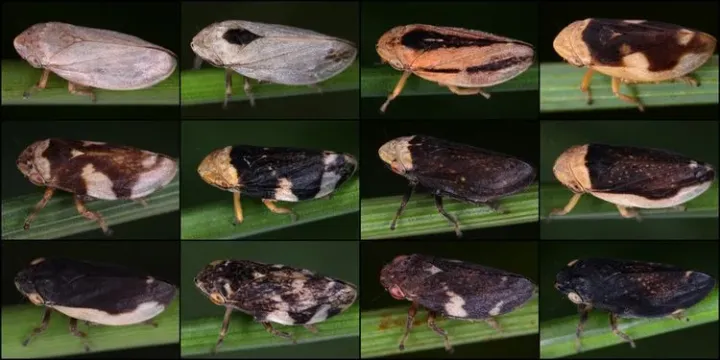
Description
How to identify
Philaenus loukasi is a species of spittlebug belonging to the family Aphrophoridae, known for its distinct biology and impact on vegetation.
The adult insects are characterized by a stout body shape, specialized jumping hind legs, and cryptic coloration that allows them to blend in with their host plants.
The larvae are most recognizable by the characteristic frothy, white spittle masses they produce, which provide a stable microenvironment for their development.
Distinguishing Philaenus loukasi from its relative, Philaenus spumarius, often requires a careful examination of morphological features, particularly the male genitalia.
These insects are well-adapted to Mediterranean and surrounding environments, where they thrive in various grasslands and managed agricultural landscapes.
What it damages
As a polyphagous insect, Philaenus loukasi feeds on a wide range of host plants, including various grasses, forage crops, vines, and vegetable species.
Both adults and nymphs feed by piercing the plant tissue with their specialized mouthparts to extract sap, which depletes the plant of vital nutrients and water.
Feeding damage can cause visible wilting, stunted growth, and physical deformation of the plant, especially when infestations are concentrated on young, tender shoots.
A major concern is their potential to act as vectors for various plant pathogens, facilitating the spread of diseases that can be more destructive than the feeding itself.
The cumulative effect of pest pressure leads to reduced photosynthetic capacity, lower overall vigor, and significant losses in harvest yield and commercial quality.
When it appears
The life cycle of Philaenus loukasi is highly seasonal and synchronized with the vegetation periods of the plants they occupy throughout the year.
The species typically overwinters in the egg stage, with eggs deposited in protected sites such as dead plant stems, bark, or leaf litter to survive winter conditions.
Hatching occurs in the spring, coinciding with the warming trend and the commencement of the main vegetative growth phase of host plants.
Nymphal development involves multiple instars, during which they remain stationary and encased in their protective spittle, gradually maturing toward adulthood.
Adult emergence typically happens in early summer, marking the period when they become mobile and begin to disperse across fields to mate and lay eggs.
Signs of infestation
The most reliable sign of an infestation is the presence of white, foam-like spittle masses on the stems and leaf axils of susceptible plants.
Observing stunted or twisted new growth is a common indicator that the plant is suffering from the feeding activity of these sap-sucking insects.
Leaves may show signs of yellowing, chlorosis, or necrotic spots, reflecting the toxic saliva injected by the insect during the feeding process.
Active adults are often spotted when plants are disturbed, as they exhibit rapid jumping behavior to escape potential threats or observation.
In cases of severe infestation, a sticky substance known as honeydew may accumulate on the foliage, eventually leading to the growth of unsightly sooty mold.
Control measures
Effective management of Philaenus loukasi requires an integrated approach that focuses on reducing populations before they cause significant economic damage.
Cultural practices, such as maintaining weed-free fields and removing plant debris, are fundamental in disrupting the life cycle and limiting available overwintering sites.
Monitoring population levels through visual inspections and sweep-net sampling helps determine the appropriate timing for any necessary interventions.
Chemical control with systemic insecticides can be utilized when populations exceed established thresholds, ensuring the product reaches the target tissues.
Promoting a healthy ecosystem that supports natural predators and parasitoids is also a valuable strategy for long-term population suppression in the field.
Taxonomy
- Latin name
- Philaenus loukasi
- Order
- Hemiptera (bugs, aphids, leafhoppers)
- Family
- Aphrophoridae
- EPPO code
- PHILLO
Discussion
No discussions yet — be the first.