
Meadow spittlebug
Philaenus
Description
How to identify
The meadow spittlebug (Philaenus spumarius) is a member of the Aphrophoridae family within the order Hemiptera. Adults are small insects, typically 5–7 mm long, with a variable color pattern ranging from light brown to black.
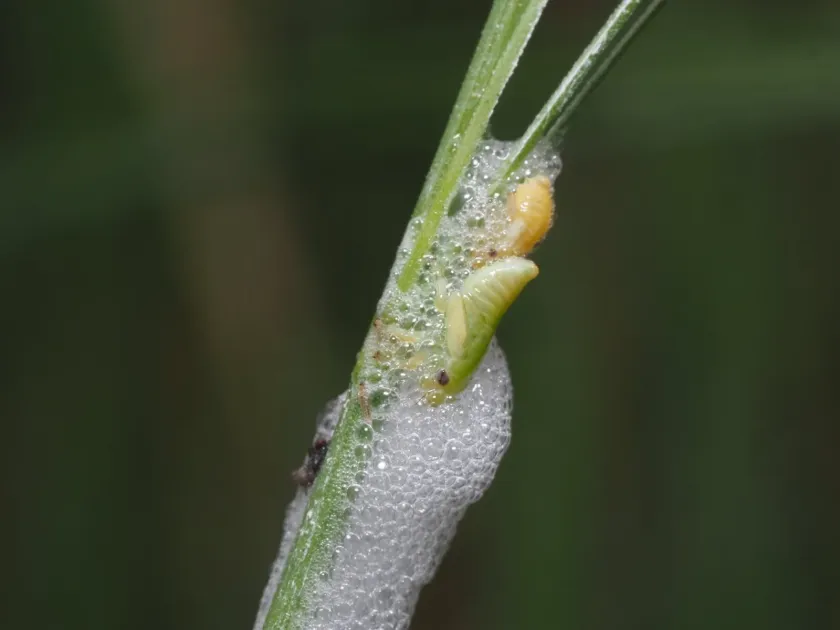
The nymphs are best known for producing a frothy, white, soap-like substance known as "spittle." This mass acts as a protective barrier against dehydration, predators, and intense sunlight throughout their development.
The life cycle undergoes incomplete metamorphosis, consisting of egg, nymph (five instars), and adult stages. They typically overwinter as eggs, which are deposited in plant stems or bark crevices.
Adults possess strong hind legs and are highly mobile, jumping away quickly when disturbed. Identification of adults can be challenging due to their wide variation in color and pattern.
This insect is widely distributed and thrives in humid, shaded environments. Its population density is highly dependent on seasonal weather patterns, particularly temperature and humidity.
What it damages
As a significant polyphagous pest, the meadow spittlebug feeds on a vast array of agricultural and ornamental plants. It uses piercing-sucking mouthparts to extract vital sap from the host's stems and leaves.
Commonly affected crops include strawberries, legumes, beets, grapes, and various flowering plants. The loss of sap leads to reduced plant vigor, stunted growth, and a decline in overall crop quality.
Beyond direct feeding damage, the spittlebug is a known vector for phytoplasma diseases. It can transmit pathogens that cause severe conditions such as "stubble" disease in potatoes and tomatoes.
Infested plants often show physical symptoms such as leaf curling, chlorosis, and stunted development of terminal shoots. In sensitive crops, this can lead to significant yield reductions.
In high-density infestations, the cumulative damage can weaken young transplants and seedlings to the point of permanent damage or death, threatening the success of the growing season.
When it appears
Nymphs emerge in early spring, usually April or May, synchronized with the start of the host plants' vegetative growth. They immediately begin producing spittle masses upon reaching the host plant.
The nymphal stage persists through the late spring and early summer. During this time, they remain sedentary within their foam, focusing entirely on feeding and rapid development.
Transformation into adults typically occurs by June or July. The adults are more active than the nymphs and do not produce spittle, making them harder to track on the plants.
Egg-laying takes place in late summer and autumn as the adults prepare for the dormant season. The eggs remain dormant throughout the winter until the next spring.
While there is generally one generation per year, extended warm seasons in temperate climates can occasionally lead to a partial second generation, increasing pest pressure.
Signs of infestation
The most distinctive sign of an infestation is the presence of white, frothy foam on the tips of shoots, stems, or in leaf axils. This "spittle" is clearly visible during routine field inspections.
Plants under attack may exhibit wilting or general poor health. Close examination of the affected stems will reveal the pale-colored nymphs hiding inside the frothy protective cover.
Leaves may show curling or yellowing at the feeding sites. The physical impact of the feeding combined with the moisture loss can lead to localized drying of plant tissues.
Adult presence can be detected by quick movement or jumping when plants are touched. They may also leave behind honeydew, which can attract secondary pests and lead to fungal issues.
Sooty mold growth on leaves is a common secondary symptom, as the honeydew secreted by the insects provides an ideal substrate for fungal pathogens to thrive.
Control measures
Cultural control is the first line of defense. Keeping fields free of weeds and maintaining proper plant spacing can significantly reduce the habitat suitable for spittlebug nymphs.
For home gardens, simply washing the plants with a strong stream of water is an effective method. This destroys the spittle and exposes the nymphs, causing them to die from desiccation or predation.
Insecticidal intervention should be reserved for cases where economic thresholds are exceeded. Systemic insecticides are most effective when applied early in the season during the nymphal phase.
Biological control agents, such as certain beneficial insects or entomopathogenic fungi, can help suppress populations without harming the wider ecosystem.
- Regular removal of plant debris during autumn.
- Using row covers for sensitive young vegetable crops.
- Monitoring with yellow sticky cards to detect adult arrival.
- Rotating crops to break the cycle of egg survival.
Taxonomy
- Latin name
- Philaenus
- Order
- Hemiptera (bugs, aphids, leafhoppers)
- Family
- Aphrophoridae
- EPPO code
- PHILSP
Discussion
No discussions yet — be the first.