
Pheosia rimosa
Pheosia rimosa
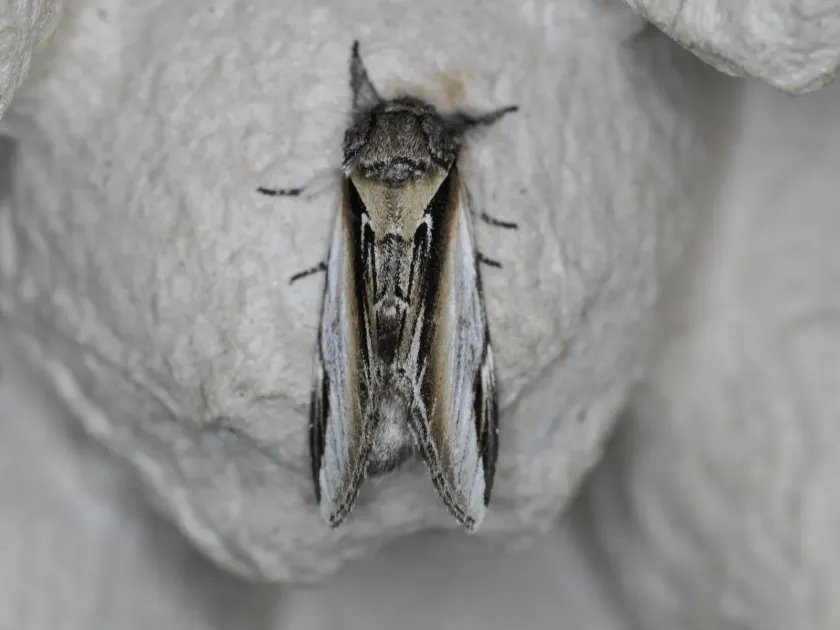
Description
How to identify
Pheosia rimosa is a moth species belonging to the Notodontidae family, order Lepidoptera. Adult moths typically feature complex wing patterns with dark, streaked markings that resemble tree bark, providing excellent camouflage against their natural habitat.
The larvae, or caterpillars, are notable for their distinct abdominal hump on the 11th segment. They are generally smooth-bodied and display various color phases, often blending in with the foliage they consume, ranging from pale green to brownish patterns.
What it damages
This pest primarily attacks host plants within the Salicaceae family. The most common victims are species of poplar (Populus), aspen, and willow (Salix), often found in forestry plantations, windbreaks, and urban landscaping.
The damage is caused by the larval stage, which feeds voraciously on the foliage. Large infestations can lead to significant defoliation, leaving the trees susceptible to further stress, secondary pest attacks, and pathogen infections during the growing season.
When it appears
The life cycle typically includes one or two generations per year, depending on the latitude. Adult moths emerge in late spring to early summer to mate and lay eggs on the leaves of host trees.
Caterpillars are active throughout the summer months, undergoing several instars. By late summer, they descend to the soil or leaf litter to pupate inside silken cocoons, where they will spend the winter months until the cycle repeats in the following spring.
Signs of infestation
Symptoms of infestation include localized or extensive leaf consumption. Initially, the caterpillars eat small holes in the leaf blades, eventually consuming entire leaves down to the midribs if populations are dense.
- Visible leaf defoliation in the upper canopy.
- Presence of distinctive, humped-back larvae.
- Large quantities of caterpillar droppings (frass) under infested trees.
- Reduced vigor and delayed growth of the host plant.
Control measures
Effective management includes regular monitoring of forest stands and urban trees to detect early-season larvae. Biological control agents, such as Bacillus thuringiensis sprays, are highly effective against young larvae while minimizing ecological impact.
Chemical intervention should be considered only when economic thresholds are reached. Applying selective insecticides during the early larval stage ensures better results and reduces the necessity for multiple treatments during the peak summer period.
Taxonomy
- Latin name
- Pheosia rimosa
- Order
- Lepidoptera (butterflies)
- Family
- Notodontidae
- EPPO code
- PHEORI
Discussion
No discussions yet — be the first.