
Dandelion gall wasp
Phanacis taraxaci
Description
How to identify
The dandelion gall wasp (Phanacis taraxaci) belongs to the family Cynipidae within the order Hymenoptera. This small insect is known for inducing the formation of characteristic galls — abnormal growths — on various parts of the host plant as part of its developmental process.
Adults are tiny, dark-colored insects that lead a secluded life. Because they are rarely seen, identification of this species is usually based on the unique morphological changes observed in the plant tissues where eggs have been deposited.
The larvae of this pest are legless and have a whitish or cream-colored body. They develop exclusively within plant tissues, where their metabolic activity forces the plant to undergo abnormal cell growth, creating a protective environment for the insect.
The life cycle of the wasp is closely linked to the phenology of the common dandelion (Taraxacum officinale). Optimal conditions for the insect's development coincide with the plant's active growing season, which provides the necessary nutrients for the larvae to complete their metamorphosis.
This species is found primarily in temperate regions where the host plant is widely distributed. Its impact is characterized by the insect's ability to inhibit the growth and vigor of the dandelion by redirecting the plant's resources into gall formation.
What it damages
The primary host is the common dandelion (Taraxacum officinale) and closely related species within the Taraxacum genus. The pest is highly host-specific, maintaining a specialized ecological relationship with these plants.
The insect attacks petioles and flower stalks, leading to significant deformation of these organs. The intense feeding and metabolic activity of the larvae within the tissues drain essential nutrients that the plant would otherwise use for vegetative and reproductive growth.
Characteristic swellings known as galls form at the site of infestation. These structures can grow several millimeters in diameter, severely disrupting the plant's vascular system and blocking the normal transport of water and nutrients throughout the plant.
In cases of heavy infestation, the plant exhibits reduced overall vigor: growth slows down, photosynthetic efficiency drops, and the plant often loses its ability to bloom or produce viable seeds.
Economic losses are most significant when dandelion is cultivated for medicinal or commercial purposes. Infestation reduces the quality of the raw material, rendering a significant portion of the crop unsuitable for pharmaceutical processing.
Signs of infestation
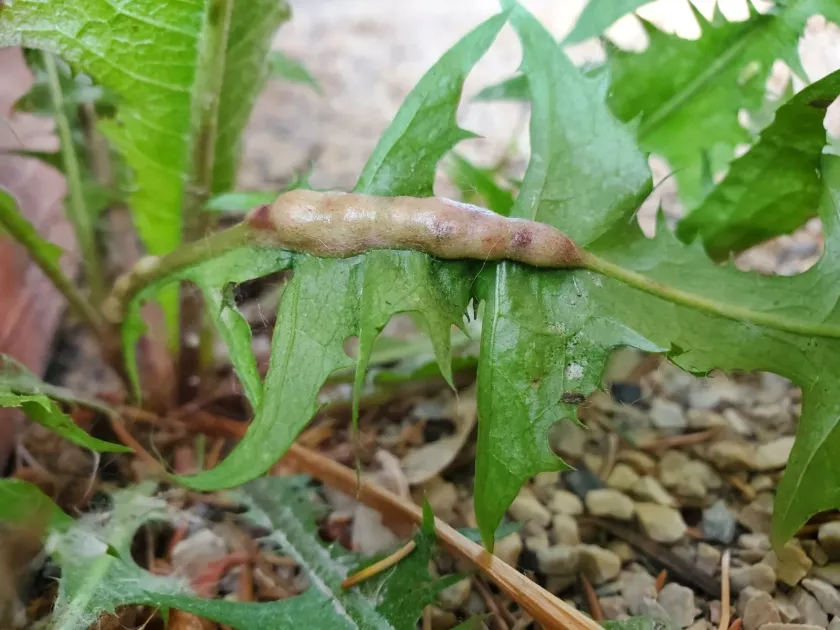
The primary sign of infestation is the emergence of specific thickenings on the dandelion's petioles or stems. These galls typically have a spindle shape or appear as irregular swellings, ranging in color from green to slightly reddish.
As the larvae develop, the galls become denser and firmer to the touch. Eventually, internal cavities form within the gall, where the larvae undergo pupation and prepare for adult emergence.
Affected leaves often become twisted or deformed, losing their natural symmetry. In severe cases, the leaf blade situated above the gall may exhibit premature wilting or yellowing due to interrupted nutrient flow.
The overall appearance of the plant becomes stunted, and flower stalks may bend or fail to develop properly. Experienced agronomists can distinguish Phanacis taraxaci galls from fungal infections by the absence of spores or fungal mycelium on the surface of the growths.
Under laboratory examination, cutting open a gall reveals one or more larvae housed in individual chambers. The presence of small exit holes on the surface of older galls indicates that the adults have already emerged.
Control measures
The primary control method is cultural management, aimed at destroying infested plants before the adult wasps emerge. Regular weeding and the prompt removal of infected specimens significantly reduce the pest population in the area.
Collecting and burning plants displaying galls is a highly effective way to limit the population. It is critical not to leave plant debris in the field, as this prevents the spread of emerging adults to neighboring dandelion patches.
Implementing crop rotation and maintaining spatial isolation between dandelion crops and natural wild habitats can help minimize the risk of primary infestation during the spring season.
Chemical control is rarely utilized because the larvae's protected existence inside galls renders most contact insecticides ineffective. If a heavy infestation occurs, systemic insecticides may be used, though strict adherence to pesticide application regulations is mandatory.
Biological control involves the use of natural enemies, such as parasitic wasps that predate upon the dandelion gall wasp. Maintaining high biodiversity in and around fields can support these natural predators, providing a sustainable way to suppress the pest population.
Taxonomy
- Latin name
- Phanacis taraxaci
- Order
- Hymenoptera
- Family
- Cynipidae
- EPPO code
- PHNATH
Discussion
No discussions yet — be the first.