
Phalera muku
Phalera muku
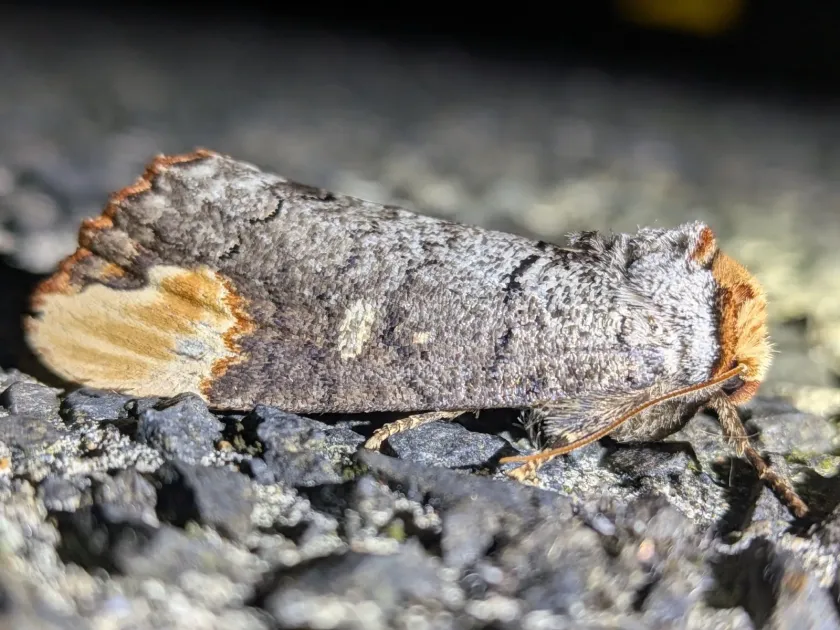
Description
How to identify
Phalera muku is a moth species belonging to the Notodontidae family within the order Lepidoptera. These moths are characterized by their cryptic coloration, which provides excellent camouflage against tree bark.
The larvae, or caterpillars, are known for their gregarious behavior, often feeding in large groups on their host plants throughout their development cycle.
Adult moths typically have a moderate wingspan and a body covered in dense hairs, which helps protect them from environmental factors during their activity periods.
The life cycle encompasses the stages of egg, larva, pupa, and adult. They generally overwinter in the pupal stage, buried in the soil or protected under leaf litter.
Adult moths emerge during the warmer months, after which females lay eggs in clusters on host leaves, ensuring the offspring have immediate access to food upon hatching.
What it damages
This pest primarily attacks various deciduous trees, including fruit-bearing species, and can cause severe defoliation during mass outbreaks.
Caterpillars consume leaf tissue, often skeletalizing the foliage and leaving only the main veins, which significantly hampers the tree's photosynthetic capability.
Extensive feeding leads to the depletion of tree reserves, negatively impacting both fruit yield and the long-term health and vitality of the infested plants.
Weakened trees are significantly more susceptible to secondary infestations and pathogenic infections, potentially leading to branch dieback.
Rapid leaf loss can lead to premature senescence, causing the tree to enter dormancy earlier than normal, which negatively affects its future development.
Signs of infestation
The most prominent sign of an infestation is the presence of caterpillar clusters feeding on the leaves, often visible in the upper and middle canopy layers.
Affected trees display significant foliage loss, with branches appearing thin and eaten, which is a clear indicator of a pest population's activity.
Accumulations of frass (caterpillar droppings) on leaves or on the ground beneath the tree are common indicators that a population is actively feeding.
During daylight hours, caterpillars often rest on twigs in groups, making them relatively easy to spot if the canopy is inspected carefully.
The underside of leaves may contain egg masses, which are typically small, uniform in size, and arranged in neat clusters by the female moth.
Control measures
Effective management requires regular scouting of the canopy, especially during the active feeding stages of the larvae, to identify hotspots before they spread.
Manual removal of egg masses and young caterpillar colonies is a highly effective control method for home gardens and small-scale planting areas.
Chemical intervention should be used cautiously, focusing on target-specific insecticides that minimize harm to beneficial insects and pollinators.
- Use of bio-insecticides containing Bacillus thuringiensis, which target the caterpillars without disrupting the broader ecosystem.
- Encouraging natural predators such as birds and beneficial parasitic wasps to help regulate the pest population density.
Cultivating the soil around the base of trees in the autumn helps disturb overwintering pupae, significantly reducing the pest pressure for the following season.
Taxonomy
- Latin name
- Phalera muku
- Order
- Lepidoptera (butterflies)
- Family
- Notodontidae
- EPPO code
- PHALMU
Discussion
No discussions yet — be the first.