
Yellow prominent
Phalera flavescens
Description
How to identify
The Yellow prominent (Phalera flavescens) is a moth belonging to the family Notodontidae. These moths are characterized by a brownish-grey coloration with distinct yellowish patches at the apex of the forewings, which is their most recognizable feature.
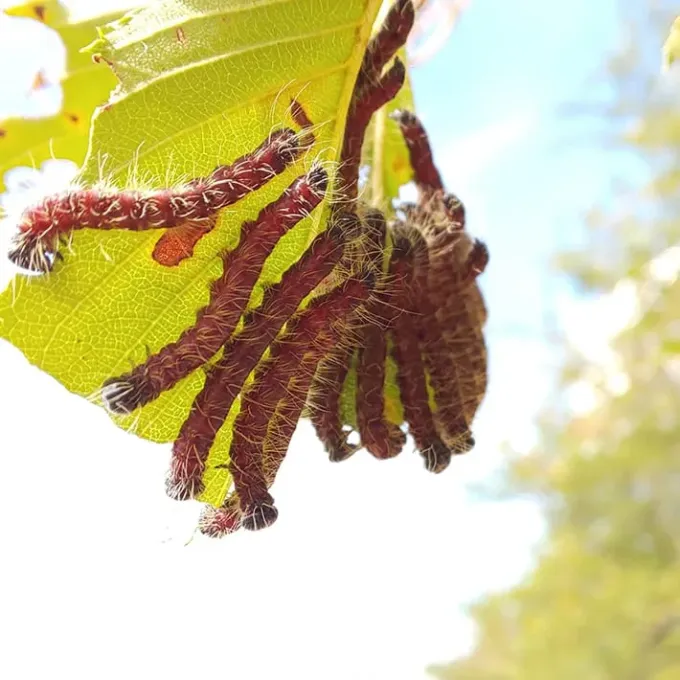
The larvae, or caterpillars, are notable for their vibrant warning colors, consisting of longitudinal black and yellow stripes. They are sparsely covered in hairs and are known to feed gregariously during their early developmental stages.
The life cycle involves four distinct stages: egg, larva, pupa, and adult. The insect typically overwinters in the pupal stage, buried in the soil beneath its host plant, emerging as an adult in the spring or early summer.
Adult moths are nocturnal and are attracted to artificial light sources. Their resting posture is quite cryptic, as they fold their wings along the body, mimicking a piece of bark or a dry leaf to avoid detection by predators.
Understanding their developmental biology is crucial for timing pest control efforts, as the susceptibility of the larvae to various control methods changes significantly as they mature.
What it damages
This pest primarily infests a variety of deciduous trees, with a strong preference for members of the Rosaceae family. Common hosts include apple, pear, plum, cherry, and occasionally ornamental species like oak and birch.
The larvae cause significant damage by consuming the leaf foliage. Starting from the leaf margins, they proceed to skeletonize the entire leaf, often leaving only the main veins or consuming the entire leaf tissue if populations are high.
Severe infestations can lead to massive defoliation of the canopy. This loss of photosynthetic surface area stresses the tree, preventing it from producing sufficient energy reserves for future growth and winter survival.
Repeated or intense feeding can result in reduced fruit set and poor quality yields in subsequent growing seasons. The overall vigor of the host plant decreases, making it susceptible to secondary infections and environmental stress.
Economic impact is most pronounced in orchards where high densities of larvae can lead to rapid degradation of tree health, necessitating costly interventions and potentially impacting the marketability of the fruit.
Signs of infestation
Initial signs of infestation are ragged or consumed leaf edges on the branches. Because the caterpillars are gregarious, these signs are usually localized, appearing as clusters of damaged leaves in specific parts of the tree canopy.
The presence of egg clusters on the undersides of leaves is a definitive early indicator. These clusters are often orderly and can be spotted with careful inspection during the spring scouting period.
Frass (caterpillar droppings) accumulating on the leaves or the ground beneath the tree is a clear symptom of larvae activity above. The volume of frass increases proportionally as the caterpillars reach their final instar stages.
Visual observation of the canopy will often reveal the larvae themselves, which, due to their size and coloration, are quite easy to spot once they have finished their first molts and have grown larger.
Deteriorating tree appearance, characterized by thinned foliage or a scorched look, indicates an advanced stage of infestation that requires immediate attention to prevent further spread.
Control measures
Manual removal of egg clusters and colonies of young caterpillars is the most efficient and environmentally friendly method, especially in small orchards or gardens where mechanical access is easy.
Biological control agents, particularly formulations containing Bacillus thuringiensis, are highly effective against larvae while remaining safe for non-target species like pollinators and beneficial predators.
Chemical control should be employed only when populations reach economic threshold levels. Selective insecticides should be applied with precision to minimize the impact on the local ecosystem.
- Cultivating the soil around the base of the trees in late autumn to expose and destroy overwintering pupae.
- Encouraging natural predators such as birds, lacewings, and predatory beetles.
- Installing light traps to monitor flight activity and reduce the number of breeding adults.
An integrated approach involving regular monitoring, proper orchard hygiene, and timely intervention ensures long-term protection against the Yellow prominent without over-reliance on chemical pesticides.
Taxonomy
- Latin name
- Phalera flavescens
- Order
- Lepidoptera (butterflies)
- Family
- Notodontidae
- EPPO code
- PHALFL
Discussion
No discussions yet — be the first.