
Fiji leafhopper
Perkinsiella vitiensis
Description
How to identify
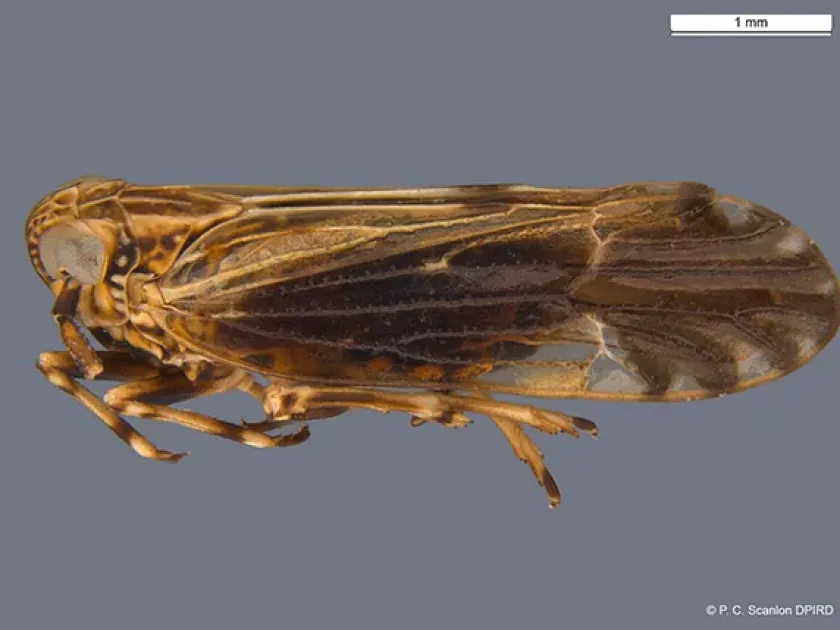
The Fiji leafhopper (scientific name: Perkinsiella vitiensis) is a member of the family Delphacidae, order Hemiptera. These small insects possess functional wings, which allow them to migrate between sugarcane fields efficiently.
Adults and nymphs are identifiable by a characteristic spur located on the hind tibia, a diagnostic feature of the Delphacidae family. Their body color ranges from pale yellow to light brown, providing effective camouflage against the stalks.
Their biological life cycle progresses through the egg stage, five nymphal instars, and the adult stage. Females insert their eggs into the plant tissue, such as leaf sheaths or stems, using a specialized ovipositor.
The rate of development is highly dependent on environmental conditions, specifically temperature and humidity. In tropical sugarcane-growing regions, the pest can produce multiple overlapping generations throughout the year.
This species is of significant quarantine concern, as it serves as the primary vector for the Fiji disease virus, which is responsible for substantial economic losses in sugarcane production worldwide.
What it damages
Sugarcane is the primary host plant for this insect. Adults and nymphs feed by piercing the plant tissues and extracting sap, which causes direct physiological stress to the crop.
The feeding process involves the injection of toxic salivary enzymes into the plant. This causes tissue malformation, stunted growth, and a reduction in the sucrose content of the harvested canes.
The most severe impact is the transmission of the Fiji disease virus during feeding. Infected plants exhibit distorted foliage, reduced tillering, and an inability to mature properly, often leading to crop failure.
Heavy infestations can cause localized death of young sugarcane shoots. Furthermore, the excretion of honeydew by the leafhoppers creates a substrate for sooty mold, which inhibits photosynthesis.
The pest is most prevalent in tropical climates where the year-round availability of host plants allows for continuous breeding and high-density population outbreaks.
Signs of infestation
Initial signs of infestation include the appearance of chlorotic streaks or spots on the leaves. These symptoms occur as a result of direct feeding and toxic reactions within the plant tissue.
The presence of honeydew on the leaves and stalks is a major indicator of leafhopper activity. Over time, this sticky substance becomes coated with black sooty mold, which can cover large areas of the foliage.
Small colonies of nymphs are typically found hiding in the leaf whorls or at the base of the stalks. When the foliage is disturbed, the adults are highly agile and will immediately jump or fly away.
Viral infection symptoms, linked to leafhopper activity, manifest as elongated galls along the leaf veins and a characteristic jagged, uneven leaf margin. Infected plants appear stunted and weak compared to healthy ones.
In mature sugarcane, infestation results in patches of declining plant vigor. If left unmanaged, these patches expand, showing characteristic yellowing and browning of the older leaves.
Control measures
The most effective management strategy is the use of resistant sugarcane cultivars that have been bred specifically for tolerance to the Fiji disease virus. Only healthy, disease-free planting material should be used.
Cultural control practices include the rogueing and destruction of infected sugarcane plants to prevent the spread of the virus to neighboring areas. Maintaining clean fallows and field hygiene is essential.
Biological control involves conserving and promoting the population of natural enemies, such as egg parasitoids and predatory insects. In some regions, the introduction of beneficial species has helped suppress leafhopper numbers.
Chemical control is applied via systemic insecticides during peak nymph activity. Applications must be timed accurately and should be integrated with other management practices to minimize environmental impact.
Routine monitoring using yellow sticky traps is recommended for early detection. Tracking population trends helps agronomists determine the threshold levels for control interventions before widespread damage occurs.
Taxonomy
- Latin name
- Perkinsiella vitiensis
- Order
- Hemiptera (bugs, aphids, leafhoppers)
- Family
- Delphacidae
- EPPO code
- PERKVI
Discussion
No discussions yet — be the first.