
Perkinsiella
Perkinsiella
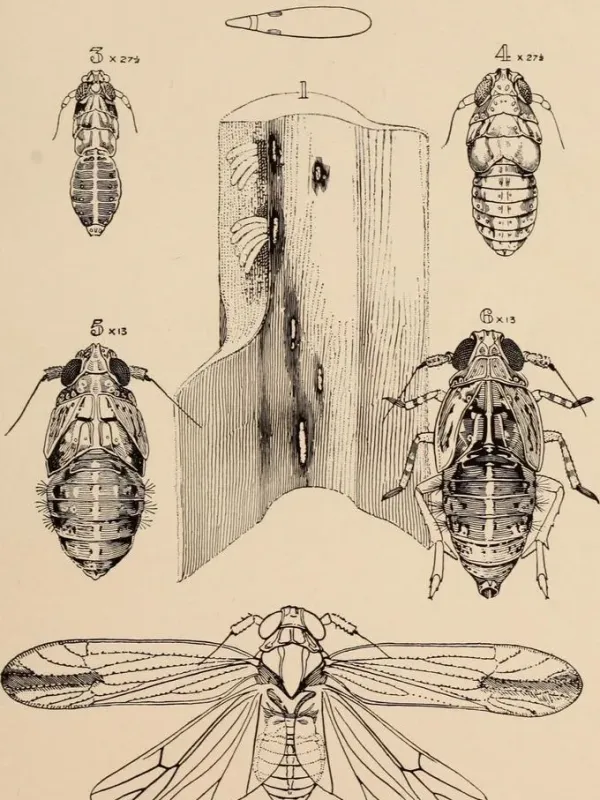
Description
How to identify
Perkinsiella is a genus of planthoppers belonging to the family Delphacidae in the order Hemiptera. These insects are small, agile, and well-adapted to life on various grass species.
Adult specimens typically possess fully functional wings, facilitating their dispersal across large areas, especially during warm and humid weather conditions.
The coloration of these insects ranges from pale yellow to light brown, providing an effective camouflage against the stalks and leaves of their host plants.
The life cycle consists of three distinct stages: eggs, nymphs, and adults. Females deposit their eggs directly into the plant tissues, often creating small slits in the epidermis.
Nymphs undergo several molting stages, gradually developing in size and wing structure until they reach the reproductive maturity of the adult stage.
What it damages
The primary host for most species in this genus, particularly Perkinsiella saccharicida, is sugarcane. The insect relies on the sap of the plant for nutrition.
While sugarcane is the main target, these planthoppers can occasionally feed on other members of the Poaceae family when the primary host is unavailable.
The economic impact is significant, as large infestations can severely stunt plant growth and reduce the quality of the sugar yield at harvest time.
Furthermore, their feeding activity causes direct physical damage, leading to physiological stress that makes the plants weaker against environmental changes.
In many agricultural regions, this insect is monitored strictly due to its role as a vector for various viral and phytoplasmal plant diseases.
Signs of infestation
A hallmark sign of infestation is the presence of honeydew on the leaves, which appears as a sticky substance excreted by the feeding insects.
This honeydew often encourages the growth of sooty mold, a black fungus that covers the leaf surface and blocks the sunlight necessary for photosynthesis.
Affected plants often show symptoms of viral infections, including leaf chlorosis, mosaic patterns, and severe deformation of the growing tips.
The physical injuries caused by egg-laying can be seen as tiny, linear scars or punctures on the leaves and stems, which often turn brown or necrotic over time.
In severe cases, the entire plant may appear wilted, stunted, or exhibit "bunchy top" symptoms, where the upper leaves become compressed and twisted.
Control measures
Managing Perkinsiella requires an integrated pest management (IPM) approach to minimize crop losses and reduce reliance on heavy chemical applications.
- Planting resistant or tolerant sugarcane cultivars to reduce pest appeal.
- Maintaining rigorous weed control to eliminate alternative habitats for the insects.
- Applying systemic insecticides during periods of peak adult migration and nymphal activity.
- Utilizing biological control agents, such as egg parasitoids and predatory insects.
- Implementing regular scouting using yellow sticky traps to detect early outbreaks.
Taxonomy
- Latin name
- Perkinsiella
- Order
- Hemiptera (bugs, aphids, leafhoppers)
- Family
- Delphacidae
- EPPO code
- PERKSP
Discussion
No discussions yet — be the first.