
Perichares
Perichares
Description
How to identify
Perichares is a genus of butterflies belonging to the Hesperiidae family, commonly known as skippers due to their rapid, darting flight pattern.
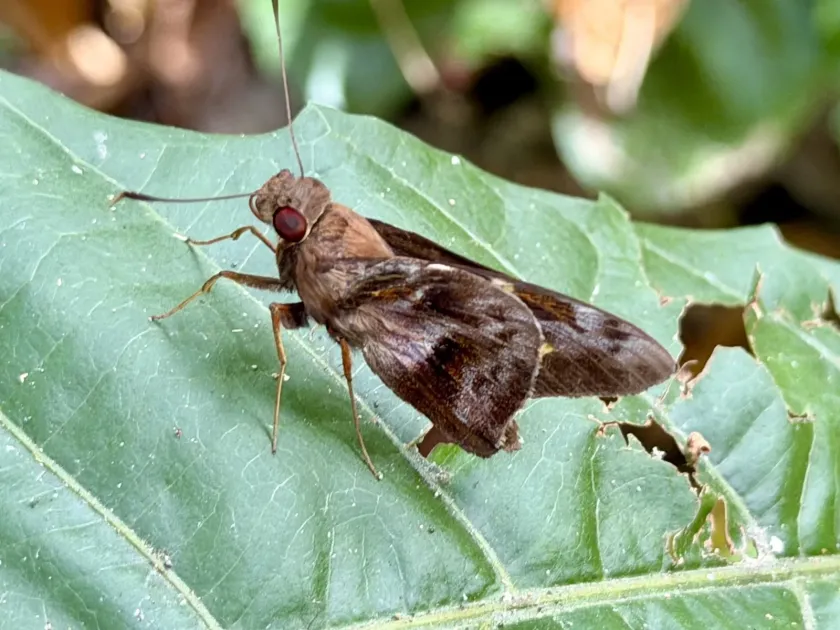
The adults are characterized by sturdy bodies and relatively short, triangular wings, often marked with dark brown and yellow or translucent spots.
Larvae of this genus are typically smooth-skinned with a distinct head capsule, and their coloration is adapted to blend in with the foliage of host plants.
The life cycle encompasses four distinct stages: egg, larva (caterpillar), pupa, and adult, with the duration of each stage heavily influenced by ambient temperature.
Pupation occurs within a shelter created by the larva, which stitches palm leaves together using silk threads to provide a safe micro-environment.
What it damages
The primary hosts for Perichares larvae are various species within the Arecaceae (palm) family, ranging from ornamental to commercial varieties.
In nursery settings, these larvae can cause significant economic damage by skeletonizing the leaves of young palm seedlings and saplings.
By consuming large portions of the leaf blade, the caterpillars drastically reduce the photosynthetic capacity of the plant, hindering overall development.
Severe infestations often result in total defoliation, leaving the palm tree weakened and susceptible to secondary stressors such as pests and pathogens.
The physical damage caused by the larvae also creates entry points for various fungal spores and bacteria, leading to tissue decay and potential plant death.
Signs of infestation
A classic sign of infestation is the presence of rolled or folded leaves, which serve as protective enclosures for the feeding larvae.
Visible feeding damage, such as scalloped leaf edges or irregular holes, indicates the presence of caterpillars in the upper canopy.
Fine silk webbing found between leaf segments is a key indicator that larvae are actively constructing their shelters or pupating on the plant.
Accumulation of larval frass (excrement) on the leaves or the ground beneath the plant is a clear sign of an active, growing caterpillar population.
Increased butterfly activity around the palm canopy, particularly during dusk or dawn, suggests the timing of egg-laying and potential outbreaks.
Control measures
Effective management begins with regular scouting and the manual removal of leaf shelters, which can be sufficient for small-scale operations.
Biological control agents, such as formulations of Bacillus thuringiensis (Bt), are highly recommended as they specifically target lepidopteran larvae.
When populations exceed economic thresholds, the application of systemic insecticides may be necessary to protect both mature and developing leaves.
Promoting a healthy growth environment through proper fertilization and irrigation helps trees recover faster from minor defoliation events.
Monitoring the adult population using specific pheromone traps can help predict peak emergence times and optimize the scheduling of control interventions.
Taxonomy
- Latin name
- Perichares
- Order
- Lepidoptera (butterflies)
- Family
- Hesperiidae
- EPPO code
- PRCHSP
Discussion
No discussions yet — be the first.