
Pentastiridius apicalis
Pentastiridius apicalis
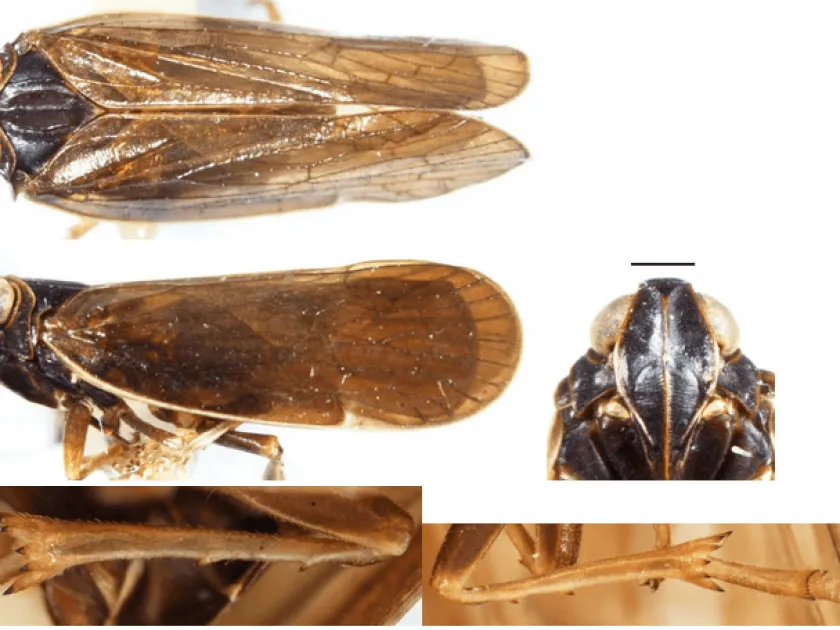
Description
How to identify
Pentastiridius apicalis is a species of planthopper belonging to the family Cixiidae within the order Hemiptera. The adult insect is small, typically measuring between 5 and 6 millimeters in length.
The adult body is dark brown or blackish, which provides effective camouflage against the soil and crop residue background. A distinctive feature is its translucent wings with clear venation and a noticeable dark spot at the apex, which is a key identifier for this species.
The nymphs of this pest have a pale, whitish appearance and live an entirely subterranean life. They reside in the root zone of host plants, feeding on sap, which makes them very difficult to spot during routine field inspections.
These insects prefer areas with high soil moisture, such as the edges of fields, irrigation ditches, and areas overgrown with weeds. These locations serve as primary breeding grounds before the adults migrate to crops.
Monitoring for the presence of Pentastiridius apicalis is typically conducted using yellow sticky traps. This method is crucial for tracking the timing of the adult flight to implement control measures effectively.
What it damages
This pest affects a wide range of agricultural crops, with sugar beet being particularly susceptible to its feeding and the diseases it transmits. It is a major economic concern in beet production regions.
In addition to sugar beets, the insect feeds on various cereals, including wheat, barley, and maize. It also thrives on various wild grasses, which act as reservoirs for the pest throughout the growing season.
The primary damage is caused by the transmission of phytoplasma pathogens. The planthopper acts as an obligate vector for the disease known as SBR (Sugar Beet Rhizomania-like disease) or low-growth syndrome.
Once the pathogen is introduced into the plant, it disrupts physiological processes, leading to stunted growth, leaf yellowing, and necrosis. This results in significant reductions in both root weight and sugar content.
Heavy infestations can lead to total yield loss in affected patches of the field. Because the insects are highly mobile, the spread of the disease within a field can be rapid if initial control is neglected.
When it appears
The life cycle of Pentastiridius apicalis is univoltine, meaning there is one generation per year. The insect overwinters as late-instar nymphs deep within the soil, specifically in the root systems of host plants.
In the spring, as soil temperatures rise, the nymphs resume feeding. The pupation phase occurs in late spring or early summer, preparing the insects for the emergence of adults during the peak of the crop season.
The mass emergence and flight of adults typically occur in June and July. This is the period when the pests migrate from overwintering sites onto young beet or cereal crops to feed and lay eggs.
Females lay eggs in the soil near the base of host plants, ensuring that the next generation of nymphs has immediate access to food. The oviposition period is extended, resulting in a continuous presence of the pest.
As autumn temperatures drop, the young nymphs move into the soil profile to begin their overwintering stage. Warm and humid summer conditions generally favor a population increase for the following year.
Signs of infestation
The most visible symptom of an infestation is the patchy yellowing of leaves in sugar beet fields. Infected plants often exhibit dwarfism and may show deformations in the petioles and leaf blades.
Upon closer examination of the root system, one might observe necrotic patches, although symptoms on the roots are often subtle. The most reliable signs are found in the foliage, which exhibits distinct chlorosis.
The phytoplasma disease spread by the insect causes the plant's vascular system to malfunction. This often leads to the yellowing of leaves that starts from the margins and eventually spreads inward, causing the leaf to dry out.
Field infestation patterns are typically clustered. Initially, only a few plants appear sick, but over time, the affected area expands as the planthoppers move between healthy and diseased plants.
Confirmation of the disease often requires molecular testing, such as PCR, because visual symptoms can be confused with other nutrient deficiencies or fungal root pathogens common in sugar beets.
Control measures
Management of Pentastiridius apicalis focuses on a multifaceted strategy. Crucially, the removal of weeds around field margins is essential, as these plants provide a sanctuary for the pest population.
Effective control requires monitoring with sticky traps to identify the arrival of adults. Once the pest threshold is reached, systemic insecticide applications are recommended to reduce the vector population.
Systemic insecticides are most effective when applied before the pest has a chance to transmit the pathogen to the crop. Targeted applications on field borders can prevent the initial movement into the field.
Agrotechnical methods such as crop rotation and deep autumn plowing are vital for disrupting the life cycle. Plowing helps to destroy the overwintering nymph population residing in the soil.
- Maintain weed-free borders around agricultural fields.
- Apply systemic insecticides based on sticky trap monitoring results.
- Implement proper crop rotation cycles.
- Conduct deep soil tillage to disrupt overwintering sites.
- Perform early seeding to ensure crop vigor before peak pest migration.
Taxonomy
- Latin name
- Pentastiridius apicalis
- Order
- Hemiptera (bugs, aphids, leafhoppers)
- Family
- Cixiidae
- EPPO code
- PNSTAP
Discussion
No discussions yet — be the first.