
Pentastiridius
Pentastiridius
Description
How to identify
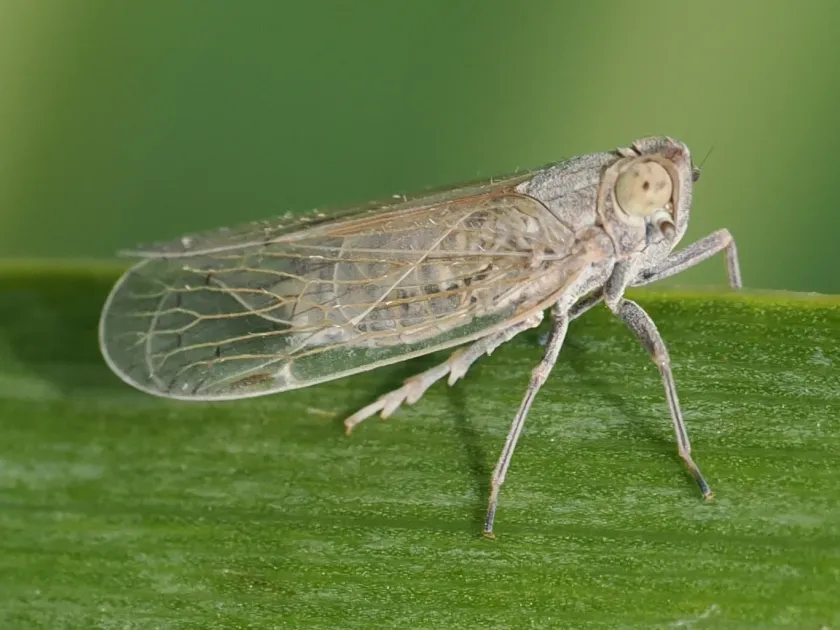
Pentastiridius (Pentastiridius leporinus) is an insect species belonging to the order Hemiptera and the family Cixiidae. Adult insects are relatively small, typically measuring between 5 to 7 millimeters in length.
The adults are characterized by a brownish body and transparent wings with distinct venation. When at rest, their wings are folded in a roof-like manner along the abdomen, which is a common trait for planthoppers.
The larvae of this species spend most of their life cycle in the soil, feeding on the roots of various host plants, which makes them difficult to observe during the early stages of development.
Identifying these insects in the field can be challenging due to their cryptic nature and their tendency to jump or fly away immediately upon sensing disturbance near the host plant.
For scientific identification, experts rely on the examination of genital morphology or molecular diagnostic techniques, as the species shares many physical characteristics with other related planthoppers.
What it damages
Pentastiridius is particularly notorious in agriculture for being the primary vector of phytoplasma diseases that cause significant yield loss in sugar beet, such as the low-sugar syndrome (SyrS).
Beyond sugar beets, the insect feeds on a wide range of grasses and weed species, which act as reservoirs for the pathogen, allowing the disease to persist in the ecosystem throughout the year.
The main damage is not caused by the direct feeding of larvae on roots, but rather by the inoculation of plants with phytoplasma pathogens during the adult feeding process.
Infected plants exhibit stunted growth, reduced photosynthetic efficiency, and a significant drop in sugar content, which directly impacts the commercial value of the crop yield.
The extent of the damage is highly correlated with the population density of the insects during the critical stages of crop development, necessitating effective monitoring programs.
When it appears
The life cycle of Pentastiridius is closely synchronized with the phenology of its host plants, with adult activity peaking during the late spring and early summer months.
Migration of the adults into sugar beet fields typically begins in May or June, coinciding with the seedling stage of the crop, which is the most vulnerable period for infection.
Overwintering occurs primarily in the soil, where larvae remain protected in the rhizosphere of perennial grasses and other suitable host vegetation until the following season.
Warm and dry weather conditions in the spring promote a faster life cycle and earlier adult emergence, which can significantly increase the risk of disease transmission across fields.
After the peak reproductive phase, adult populations gradually decline as they move away from agricultural crops in search of other hosts for egg-laying and survival.
Signs of infestation
One of the earliest signs of a Pentastiridius infestation is the appearance of phytoplasma symptoms, including leaf chlorosis, yellowing, and the curling of leaf margins.
Root symptoms in sugar beet often include the development of excessive lateral root growth, commonly referred to as "root bearding," which is a clear indicator of systemic infection.
Field scouting for the adults involves carefully examining the underside of leaves and petioles, where the insects tend to cluster during cooler periods of the day.
The presence of dense weed growth near the edges of fields is a strong indicator of potential pest pressure, as these weeds provide a nursery for the insect's initial development.
Areas of the field showing patchy, stunted growth that turns yellowish early in the season are typical indicators of the centers of insect-transmitted disease outbreaks.
Control measures
Effective control strategies focus on integrated pest management (IPM), starting with the rigorous removal of weeds from field margins to eliminate potential disease reservoirs.
Chemical control involving systemic insecticides is often necessary, applied during the peak migration period to effectively reduce the number of adult vectors entering the crop.
- Deployment of yellow sticky traps to monitor adult population levels.
- Strategic timing of planting to avoid the peak flight periods of the insects.
- Utilization of resistant or tolerant crop varieties where available.
- Targeted border spray applications to prevent mass entry into the main fields.
- Regular field inspections to detect early signs of phytoplasma infection.
Biological control options are currently being researched, but their practical application in large-scale agriculture remains limited compared to chemical and cultural practices.
Successful management requires a collaborative effort among neighboring farmers to treat infested areas simultaneously, thereby suppressing the overall insect population density in the region.
Taxonomy
- Latin name
- Pentastiridius
- Order
- Hemiptera (bugs, aphids, leafhoppers)
- Family
- Cixiidae
- EPPO code
- PNSTSP
Discussion
No discussions yet — be the first.