
Pemphredon lugubris
Pemphredon lugubris
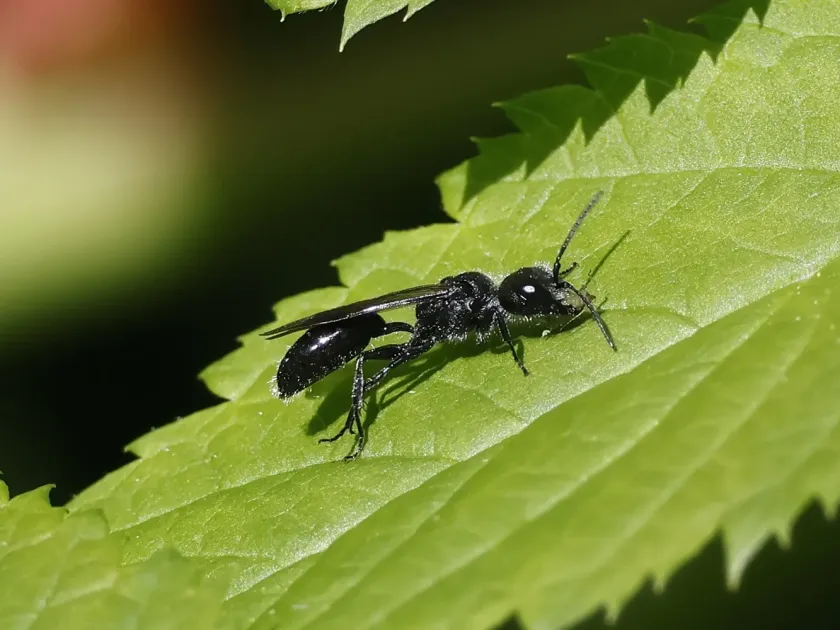
Description
How to identify
Pemphredon lugubris is a species of solitary wasp belonging to the Crabronidae family. It is a small, black, shiny insect, typically measuring between 8 and 12 mm in length, known for its narrow waist and agile flight.
These wasps are specialized predators that hunt aphids to provision their nests. While they provide biological control against aphid populations, their nesting habits can negatively impact woody garden plants.
Unlike wood-boring beetles, these wasps do not typically excavate healthy, dense wood. Instead, they prefer to use existing hollows, marrow cavities in soft stems, or previously damaged branches for their nests.
The insects are highly active during warm, sunny days. They are often seen hovering around tree canopies, actively searching for prey, which makes them quite visible to attentive gardeners.
Their life cycle depends on the availability of suitable nesting sites within the garden environment, specifically areas where wood has been left exposed after improper pruning or natural decay.
What it damages
The primary damage caused by Pemphredon lugubris occurs when they bore into the pith of young stems or branches to create brood cells. This activity weakens the physical structure of the twigs.
Fruit trees such as apples, pears, cherries, and plums are most commonly affected. In young saplings, damage to the central leader or main branches can significantly hinder growth and vigor.
While the wasp itself does not consume the plant tissues, the creation of these galleries creates entry points for moisture, bacteria, and fungal pathogens, which can lead to localized necrosis or rot.
Branches that have been heavily colonized become brittle and are prone to breakage during high winds or heavy fruit loads. This is particularly problematic for younger, more fragile trees.
The cumulative effect of nesting over several seasons can cause a branch to dry out prematurely, eventually killing the shoot or rendering it unproductive for fruit production.
When it appears
The activity of these wasps begins in late spring, typically in May, when temperatures rise significantly. During this phase, females seek out locations for egg-laying.
June and July represent the peak of their nesting activity. During this time, they are busy hunting aphids and stocking their cells with paralyzed prey to ensure the survival of their offspring.
By late August, the adults gradually finish their nesting cycle. The larvae inside the nests continue to feed and prepare for pupation within the protective confines of the wood galleries.
The insects overwinter as mature larvae or pupae deep within the branches. This strategy allows them to remain protected from extreme winter temperatures and potential predators.
In the following spring, the cycle repeats. Because they tend to reuse favorable nesting sites, the population in a neglected orchard can slowly increase year after year.
Signs of infestation
The most reliable sign of an infestation is the presence of small, perfectly round entrance holes (approx. 2–3 mm in diameter) on branch ends or in bark crevices. These may be plugged with sawdust or debris.
Gardeners may observe sudden wilting or browning of young shoots during the growing season. This symptom often mimics other diseases, necessitating a closer examination of the branch structure.
If an affected branch is cut, the characteristic longitudinal tunnels can be clearly seen in the center of the shoot. You might also find remnants of aphid husks left behind in the cells.
General loss of vigor and slow growth in specific sections of the tree can indicate the presence of these wasps, especially if no other obvious pests are observed.
Observing a high number of small black wasps in the garden, particularly around aphid-infested trees, is a strong indicator that nesting is occurring nearby.
Control measures
Effective management focuses on good garden sanitation. The most critical step is the prompt removal and disposal of all dead, diseased, or damaged branches, which serve as the primary habitat.
All pruning cuts, especially those on thicker branches, must be sealed immediately with grafting wax or wound sealant to prevent wasps from gaining access to the heartwood.
- Carry out rigorous sanitary pruning in late winter or early spring.
- Seal all fresh pruning wounds immediately.
- Burn or dispose of removed branches that show signs of tunnels.
- Control aphid populations to make the tree less attractive to the wasps.
- Maintain tree health through proper fertilization and watering.
Chemical control specifically targeting the wasps is rarely effective due to their nesting habits inside the wood. Preventive sealing and sanitation remain the gold standard for protection.
Promoting a diverse garden ecosystem that encourages natural enemies and supports healthy trees is the best way to keep Pemphredon lugubris from becoming a significant issue.
Taxonomy
- Latin name
- Pemphredon lugubris
- Order
- Hymenoptera
- Family
- Crabronidae
- EPPO code
- PMPHLU
Discussion
No discussions yet — be the first.