
Rice swift
Pelopidas mathias
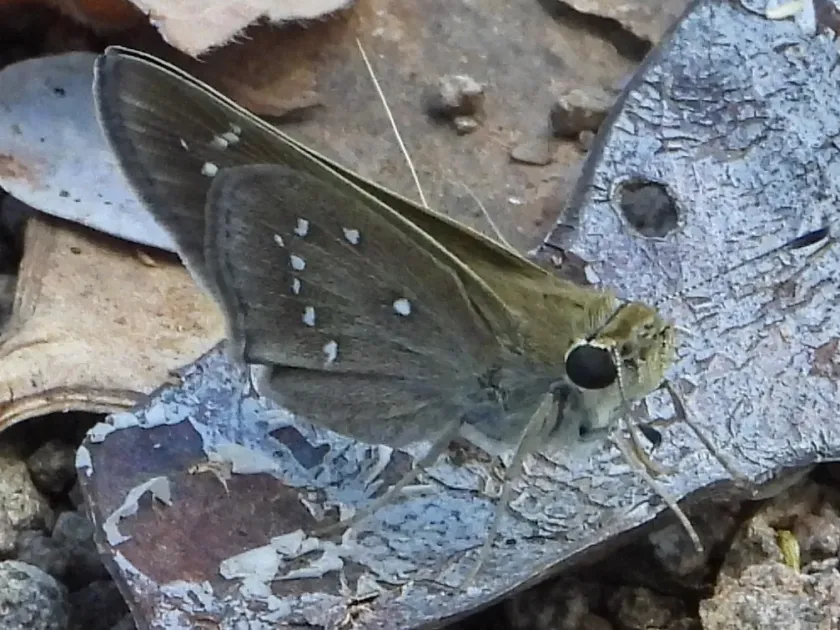
Description
How to identify
The rice swift (Pelopidas mathias) is a butterfly species belonging to the Hesperiidae family, commonly known as skippers. These insects are small to medium-sized, with a wingspan typically ranging between 30 and 40 millimeters.
The wings exhibit a dark brown or olive-brown coloration, featuring distinct translucent white spots on the forewings. These spots are crucial for field identification and distinguishing the species from other skippers.
The larvae, or caterpillars, have a pale green body with lighter longitudinal stripes. Their distinct head capsule and greenish coloration serve as primary diagnostic markers during crop health inspections.
Pupation occurs in a greenish pupa, which is cleverly concealed among the foliage of host plants, anchored by silken threads to prevent dislodgement by wind or rain.
Adult butterflies are known for their rapid, darting flight pattern. They are primarily diurnal, visiting flowers to feed on nectar, which provides the necessary energy for mating and egg-laying activities.
What it damages
The rice swift primarily feeds on rice (Oryza sativa), which is its most significant host. However, it also attacks various wild grasses within the Poaceae family that share similar habitats.
The larvae are responsible for the damage, as they feed on the leaves of the host plants. They consume the leaf blades from the margins inward, leading to reduced photosynthetic capacity.
In cases of high infestation, the caterpillars can consume substantial portions of the foliage, leaving only the midribs behind. This severe defoliation significantly impairs the plant's ability to produce grains.
Beyond direct tissue loss, the damage weakens the overall vigor of the rice plant, making it more susceptible to secondary stressors, including various fungal diseases and environmental stresses.
Economic losses arise from reduced grain fill and stunted crop growth, which directly affect the marketability and total yield of the harvest in affected areas.
Signs of infestation
The most characteristic sign of an infestation is the presence of rolled leaves. The larvae spin silk to fold the leaves, creating a protective shelter where they reside and feed.
Irregular, ragged edges on the leaves are indicative of active larval feeding. Observing these notches provides early evidence that the population is present in the field.
Frass (larval droppings) found on the leaves or at the base of the rice plants is a clear indicator of active feeding sites and helps identify high-density areas of infestation.
The premature yellowing and drying of rolled leaf segments are visual indicators that the larvae have compromised the integrity of the plant tissue.
Monitoring adult butterflies flying near the crop canopy is a key indicator of potential egg-laying activity, signaling the need for more intensive field scouting.
Control measures
Cultural control involves maintaining clean fields by eliminating weeds, which serve as alternate hosts for the rice swift, particularly during the off-season or after harvest.
Biological control methods leverage natural predators and parasitoids, such as Trichogramma wasps, which parasitize the eggs of the rice swift and significantly reduce population numbers.
Chemical control should be implemented only when infestation thresholds are exceeded. Use of registered systemic or contact insecticides is recommended to minimize population spikes.
It is essential to adopt integrated pest management (IPM) practices, alternating chemical modes of action to prevent the development of resistance within the insect population.
- Regular field scouting to detect early signs of leaf rolling.
- Conservation of natural enemies to encourage biological suppression.
- Proper timing of insecticide applications to target the most vulnerable larval stages.
Taxonomy
- Latin name
- Pelopidas mathias
- Order
- Lepidoptera (butterflies)
- Family
- Hesperiidae
- EPPO code
- PELOMA
Discussion
No discussions yet — be the first.