
Parnara pellucida
Parnara pellucida
Description
How to identify
Parnara pellucida is a butterfly belonging to the Hesperiidae family, commonly known as skippers. This insect is recognized as a significant pest in rice-growing regions.
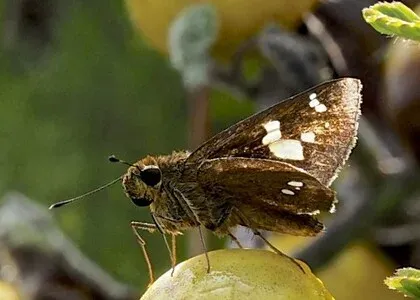
The adult butterfly is characterized by brownish wings with distinct translucent spots, which are helpful features for field identification during pest monitoring.
Larvae (caterpillars) possess a green, cylindrical body that acts as camouflage while feeding on the leaves of host plants, often staying hidden under the foliage.
The life cycle undergoes complete metamorphosis, consisting of four distinct stages: egg, larva, pupa, and adult. Each stage is temperature-dependent.
In many regions, this species can produce multiple generations per growing season, which necessitates consistent vigilance throughout the agricultural cycle.
What it damages
The primary hosts for Parnara pellucida are members of the Poaceae family, with rice (Oryza sativa) being the most economically impacted crop.
Larvae feed directly on the leaf blades, creating ragged edges and skeletonizing the tissue, which severely limits the plant's photosynthetic capacity.
The feeding behavior often involves rolling leaves and fastening them with silk threads, creating a protected micro-environment for the larva to develop.
Significant infestations lead to stunted growth, reduced tillering in rice plants, and ultimately, a substantial decrease in grain yield and quality.
Continuous feeding damage makes the plants susceptible to secondary pathogens, including bacteria and fungi that thrive on damaged plant tissue.
Signs of infestation
The most evident sign of an infestation is the presence of rolled or folded leaves, which are tied together by fine silken threads secreted by the caterpillars.
Small, dark granular frass (excrement) found on the leaves or at the base of the plant is a strong indicator of caterpillar feeding activity nearby.
Visible defoliation patterns, such as windows or irregular holes on the leaf surface, indicate where early-stage larvae have been feeding.
Patches of yellowing or withered leaves within the crop field are often the result of concentrated feeding by a growing caterpillar population.
The presence of adult butterflies fluttering low over the crop canopy during sunny periods indicates ongoing oviposition and a potential upcoming larval surge.
Control measures
Cultural control practices, such as the removal of host weeds from field borders, are essential to reduce the pest's alternative food sources and breeding sites.
Biological control using naturally occurring parasitoids, such as egg parasitoids and braconid wasps, helps to regulate population numbers in sustainable systems.
Chemical control should be implemented based on economic thresholds, using selective insecticides that minimize harm to beneficial insects in the field.
Timely application of treatments is critical, as younger larvae are much more vulnerable to contact insecticides before they roll themselves inside the leaves.
Integrated Pest Management (IPM) strategies, including field monitoring and crop rotation, are recommended to maintain Parnara populations below damaging levels.
Taxonomy
- Latin name
- Parnara pellucida
- Order
- Lepidoptera (butterflies)
- Family
- Hesperiidae
- EPPO code
- PARNPE
Discussion
No discussions yet — be the first.